Monday, May 25, 2026, 10:13 a.m
9418 readings

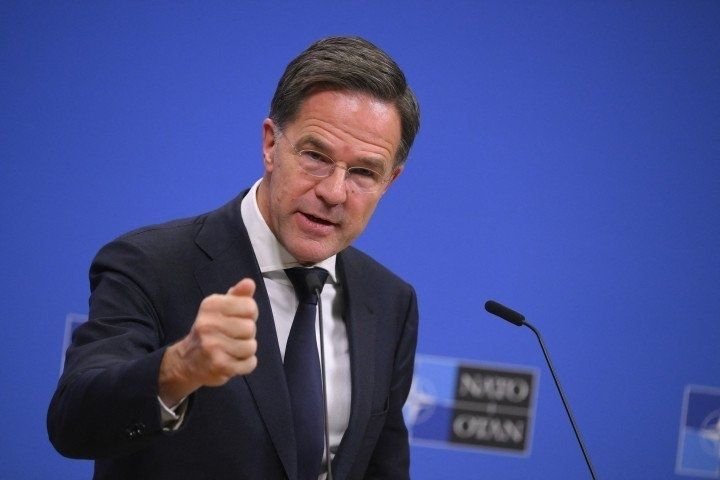
Mark Rutte, Secretary General of NATO PHOTO X/ @United24media
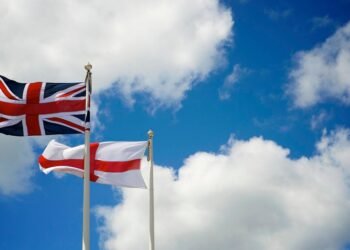
Great BritainFrance, Spain, Italy and Canada they blocked a proposal of the general secretary nato, Mark Rutteregarding the allocation of 0.25% of GDP for military support to Ukraine.
The initiative, which was to be discussed at the upcoming summit of the alliance in Ankara, lost the necessary support to be adopted unanimously, as several member states considered it unrealistic or insufficiently justified.
Mark Rutte, the alliance’s general secretary, admitted this week that his plan will not go ahead because it does not have enough support.
“I don’t think this proposal will be put forward,” he told reporters, without naming the states that objected.
The Telegraph shows that the UK, France, Spain, Italy and Canada blocked the idea when it was discussed in negotiations to increase support for Kiev.
NATO summit in Ankara
Rutte hoped to get the proposal approved at the upcoming annual NATO summit in Ankara, Turkey. Ministers began talks this week on what the alliance’s civilian chief believes should be a clear signal of support for the war-torn country.
An alliance source said at least seven member states, which already spend more than 0.25 percent of GDP on military aid to Ukraine, had expressed support for the idea.
But any proposal adopted by NATO requires the unanimous support of all member capitals.
“They are not very enthusiastic about the idea,” the source said, citing London, Paris, Madrid, Rome and Ottawa as opponents.
Unlike other allies, the size of Britain’s military contribution – the third largest after US and Germany – is not in question, even if it remains below the threshold of 0.25% of GDP. Prime Minister Keir Starmer has pledged at least £3bn a year – around 0.1% of GDP – for the foreseeable future.
Most of the criticism, however, targets France, Spain, Italy and Canada, states repeatedly accused of not taking enough responsibility. These countries, three of which are Europe’s third, fourth and fifth largest economies, have lagged behind many smaller allies in giving to Ukraine.
According to public data centralized by the Kiel Institute, Netherlands, Poland and the Nordic and Baltic states provide support equal to or greater than 0.25% of GDP. Rutte claimed that aid to Ukraine “is not evenly distributed within NATO” and many states “do not spend enough to support Ukraine”.
The NATO chief, who was prime minister of the Netherlands for 14 years, has long argued that Europe should take more responsibility for supporting Ukraine, amid criticism of Donald Trump regarding the continent’s dependence on the US. The US president has since suspended significant aid donations to Ukraine, preferring to sell US weapons to Kiev with money provided by European allies.
Ahead of a NATO meeting in Sweden this week, the Swedish prime minister called on allies to step up their support. “I wish more countries that talk so well about Ukraine would put their money where their mouth is,” Ulf Kristersson told reporters. A spokesman for the Foreign, Commonwealth and Development Office said: “The UK is continuing discussions with NATO allies on all proposals to ensure that the alliance can support Ukraine in the best possible way.”