Chief Magistrate Colin John is expected to rule on Monday at the Serious Offences Court in a case where lawyer Grant Connell is questioning the qualifications of doctors at the Mental Health Rehabilitation Centre (MHC) who signed reports saying that an accused man is fit to stand trials.
On Thursday, Dr. Alisa Alvis, Dr. Micheal Stowe and Dr. Franklyn Joseph appeared in court after Connell had told Chief Magistrate Colin John a few days earlier that all the competency reports from MHC, located in Glen, were similar despite being written about different patients.
Connell is defending, free of cost, Belair resident Kesroy Williams, a schizophrenic patient, charged that on Feb. 6, he had a prohibited weapon, a modified .32 firearm and three rounds of .32 ammunition at his home, without a licence.
This is Williams’s second firearm charge in 18 months, having been jailed in December 2024 after pleading guilty to possession of a .38 pistol and three rounds of .38 ammunition. The court allowed him to plead after an MHC report found him fit to do so.
On that occasion, the facts read that Williams had told police officers that he had two guns, “one for a wedding” and “one for a funeral”, and that he would show them the firearm if they promised to take care of it and give it back to him.

When he was eventually sent to prison for firearm possession, Williams asked if the gun would be returned to him after his sentence was concluded.
Connell told iWitness News that he was in court last month when Williams was going to be sentenced based on the recent competency report.
The lawyer said he thought it was strange that Williams was judged as competent when the facts in the case sounded “unusual”.
He said he decided to intervene and asked the chief magistrate to summon the doctors who wrote and signed off on the report to come to court and explain how they arrived at their findings.
On Thursday, all the doctors responsible for the report, Alvis, Stowe and Joseph, told the Serious Offences Court that they were not qualified psychiatrists, while Alvis said she has a PhD in psychology and was not a clinical doctor who could prescribe medication.
Stowe told the court he was doing a master’s degree in psychiatry and had done a two-week psychiatry rotation as part of his general practitioner (GP) training, while Joseph said he had done a two-month psychiatry rotation while pursuing his GP training.
Alvis testified that she is head of the Mental Health Services, not specifically attached to the MHC, but is responsible for signing off on the reports. She added that she is not responsible for medication at the MHC but said she signed a report on Williams, who was on risperidone, an antipsychotic medication used to treat schizophrenia, bipolar disorder, and irritability in autism.
Risperidone can cause memory problems, difficulty concentrating, and cognitive impairment. Connell questioned Stowe on how someone who always had this drug in their system would be able to concentrate while in court in the face of searching questions from a prosecutor.
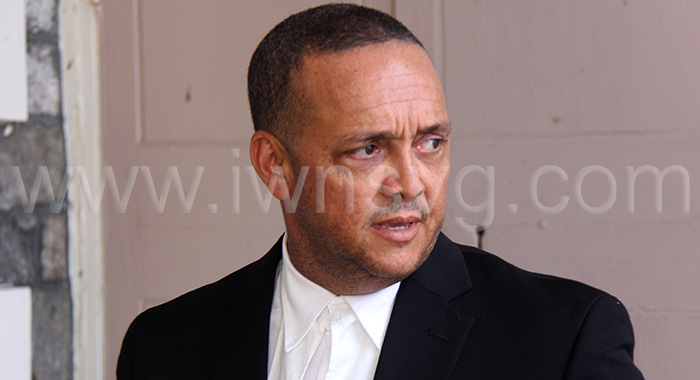
Connell said in court that it was strange that Alvis, who is not a medical doctor, signed off on a court report prepared by two medical doctors who are not psychiatrists and have no formal training in psychiatry.
“You signed off on a report by two general practitioners who have a combined expertise of four months?” Connell asked Alvis who had, two days earlier, corrected the prosecutor, Inspector of Police Renrick Cato, who had referred to her as “Miss Alvis”, telling him, “Doctor Alvis, please.”
Alvis told the court that St. Vincent and the Grenadines does not have a psychiatrist.
The witnesses told the court that Williams had other issues, but they did not know what they were and that they did not have several of the tests that were needed to make a complete diagnosis.
They also said they did not have a way to test for intelligence quotient (IQ), a total score derived from a set of standardised tests or subtests designed to assess human intelligence.
After Chief Magistrate John said he would rule on the issue on Monday, Prosecutor Cato said he would consult with the Director of Public Prosecution (DPP) on the way forward.
After the court hearing on Thursday, Connel told iWitness News that matters involving mental health patients come before the court regularly, and the court is usually guided by these reports.
“But on this occasion … the only factual matrix, what I was hearing … what actually transpired (when Williams was detained) …, I said something is out of whack, and when I spoke to the police and verified what was being said…
“I mean, which person tells you they have a firearm in their bag, and one is for a funeral, one is for a wedding, and give it to the police and ask them to give you back when you finish and make sure you take care of it?
“That was actually in the facts of the case the first time he was arrested and he went to the institution,” Connell said.
He said the current case involves Williams seeing a police vehicle passing, calling to them to give them a firearm and was ignored.
However, Williams was arrested later when he told the police that he had a firearm.
“So clearly, he needs to be checked out properly. We take this whole issue as a joke… I had just walked into court, I was there on other matters, and the young man was hearing the facts being read and was going to be sentenced… the Magistrate was trying to get a report from the institution so that he could decide if he’s fit to plea or not,” Connell told iWitness News.
“The report said he was fit to participate in court proceedings…” Connell said of what happened in March.
He told iWitness News that during the hearing last Thursday, he asked all the doctors involved how Williams could be fit for court proceedings if he’s taking an anti-psychotic drug (risperidone) every night, which has an effect of over 24 hours, during which time Williams will be in court and has to answer questions.
“… and if he’s not represented, he will be bombarded by the prosecution, and you know, that that cannot, by any stretch of the imagination, be correct…” Connell said.
He said that while he can bring the situation to the fore, nobody wins in a situation like this.
“… thank God I was there to highlight the issue. I mean, just imagine how many people have gone to jail…” Connell told iWitness News.
He added that the reports on Williams, as they came out in court, were identical, word-for-word, although written by two different doctors over 40 days apart.
“…basically, you go out there, you ask them if they’re hearing things, if they’re hallucinating. ‘No.’ If they’re seeing things. ‘No.’
“Ask them questions, which they say are logical, like for instance, ‘Do you know the prime minister?’ And if you dress properly and don’t smell a certain way, well, you’re fit to plea. That’s nonsense.
“… then, you’re on strong meds every night, and they (doctors) admitted that someone like Williams can strip their clothes off and run out the court.
“So, you’re saying this person, who’s on meds, is fit to participate in court proceedings, somebody is mad and is not the people who come before the court…” Connell said.
He said that from his experience, this has been going on for years.
“So, you know, the priority, and I haven’t heard the powers that be say anything. I mean, this is the type of Bill that should go before the Parliament to amend and adjust the present position with that institution out there.
“…it is imperative that they secure the services of not just one, maybe three psychiatrists, because for one psychiatrist to deal with this … I know several people in society that have been treated this way,” Connell added.
He added that the court was looking at how to be guided by a document that is not created by an expert in the field of psychiatry.
“…we don’t have a psychiatrist, the young doctors did their best, but as they said, on rotation, they had experienced, one of them, two months, which was an extended period, and the other one, two weeks, on rotation. So, that’s the experience you have there.
“I am not disrespecting the doctors. They’re working with the resources they have but you just can’t take that risk with peoples’ lives, literally, because when they come out (from MHC) and they put them back into the prison, and then there’s an issue round there, you have somebody with a mental issue reacting to medication, the other prisoners say, ‘Well, we think you’re a crazy man’, then the beatings start and then also … you can overdose a prisoner if you don’t know what you’re doing.
“… I know of a young man who actually died while in prison; he had side effects because of an overdose … the medication that he got,” Connell revealed.
He added that people are still human beings and must be treated with respect, even if they are prisoners or suffer from an issue.
“…I know about 10 different people who are on the same medication for different illnesses. I don’t know what exactly is going on, so I hope the powers that be will be listening and look at it, and maybe that’s a Bill that could go before Parliament with some degree of urgency in the interest of people, not politicians,” Connell said.