Sunday, June 14, 2026
    The GeoStrategic Consensus
    No Result
    View All Result
    • Login
    • HOME
    • AMERICAS
      • Argentina
      • Brazil
      • Canada
      • Chile
      • Colombia
      • Costa Rica
      • Cuba
      • Dominican Republic
      • Ecuador
      • El Salvador
      • Greenland
      • Guatemala
      • Honduras
      • Mexico
      • Nicaragua
      • Panama
      • Paraguay
      • Peru
      • United States
      • Uruguay
      • Venezuela
    • ASIA-PACIFIC
      • Australia
      • Brunei Darussalam
      • Cambodia
      • China
      • Federated States of Micronesia
      • Fiji
      • Indonesia
      • Japan
      • Kiribati
      • Laos
      • Malaysia
      • Marshall Islands
      • Mongolia
      • Myanmar
      • Nauru
      • New Zealand
      • North Korea
      • Palau
      • Papua New Guinea
      • Philippines
      • Samoa
      • Singapore
      • Solomon Islands
      • South Korea
      • Taiwan
      • Thailand
      • Timor-Leste
      • Tonga
      • Tuvalu
      • Vanuatu
      • Vietnam
    • CARICOM
      • CARICOM – Non-English
        • Haiti
        • Suriname
      • CARICOM Associates
        • Anguilla
        • Bermuda
        • British-Virgin-Islands
        • Cayman-Islands
        • Curacao
        • Turks-and-Caicos
      • CARICOM English
        • Antigua and Barbuda
        • Barbados
        • Belize
        • Dominica
        • Grenada
        • Guyana
        • Jamaica
        • Montserrat
        • Saint Kitts and Nevis
        • Saint Lucia
        • Saint Vincent and the Grenadines
        • The Bahamas
        • Trinidad and Tobago
    • EURASIA
      • Armenia
      • Azerbaijan
      • Balarus
      • Georgia
      • Kazakhstan
      • Kyrgyzstan
      • Moldova
      • Russia
      • Tajikistan
      • Turkmenistan
      • Ukraine
      • Uzbekistan
    • EUROPE
      • Albania
      • Andorra
      • Austria
      • Bosnia and Herzegovina
      • Bulgaria
      • Croatia
      • Cyprus
      • Czech Republic
      • Denmark
      • Estonia
      • Finland
      • France
      • Germany
      • Greece
      • Holy See
      • Hungary
      • Iceland
      • Ireland
      • Italy
      • Kosovo
      • Latvia
      • Liechtenstein
      • Lithuania
      • Luxembourg
      • Malta
      • Monaco
      • Montenegro
      • Netherlands
      • North Macedonia
      • Norway
      • Poland
      • Portugal
      • Romania
      • San Marino
      • Serbia
      • Slovakia
      • Slovenia
      • Spain
      • Sweden
      • Switzerland
      • United Kingdom
    • MIDDLE EAST AND NORTH AFRICA
      • Algeria
      • Bahrain
      • Egypt
      • Iran
      • Iraq
      • Israel
      • Jordan
      • Kuwait
      • Lebanon
      • Lybia
      • Morocco
      • Oman
      • Palestinian Territories
      • Qatar
      • Saudi Arabia
      • Syria
      • Tunisia
      • Turkey
      • United Arab Emirates
      • Western Sahara
      • Yemen
    • SOUTH ASIA
      • Afghanistan
      • Bangladesh
      • Bhutan
      • India
      • Maldives
      • Nepal
      • Pakistan
      • Sri Lanka
    • SUB-SAHARAN AFRICA
      • Angola
      • Benin
      • Botswana
      • Burkina Faso
      • Burundi
      • Cabo Verde
      • Cameroon
      • Central African Republic
      • Chad
      • Comoros
      • Cote d’Ivoire
      • Democratic Republic of the Congo
      • Djibouti
      • Equatorial Guinea
      • Eritrea
      • Eswatini
      • Ethiopia
      • Gabon
      • Gambia
      • Ghana
      • Guinea
      • Guinea Bissau
      • Kenya
      • Lesotho
      • Liberia
      • Madagascar
      • Malawi
      • Mali
      • Mauritania
      • Mauritius
      • Mozambique
      • Namibia
      • Niger
      • Nigeria
      • Republic of the Congo
      • Rwanda
      • Sao Tome and Principe
      • Senegal
      • Seychelles
      • Sierra Leone
      • Somalia
      • South Africa
      • South Sudan
      • Sudan
      • Tanzania
      • Togo
      • Uganda
      • Zambia
      • Zimbabwe
    • HOME
    • AMERICAS
      • Argentina
      • Brazil
      • Canada
      • Chile
      • Colombia
      • Costa Rica
      • Cuba
      • Dominican Republic
      • Ecuador
      • El Salvador
      • Greenland
      • Guatemala
      • Honduras
      • Mexico
      • Nicaragua
      • Panama
      • Paraguay
      • Peru
      • United States
      • Uruguay
      • Venezuela
    • ASIA-PACIFIC
      • Australia
      • Brunei Darussalam
      • Cambodia
      • China
      • Federated States of Micronesia
      • Fiji
      • Indonesia
      • Japan
      • Kiribati
      • Laos
      • Malaysia
      • Marshall Islands
      • Mongolia
      • Myanmar
      • Nauru
      • New Zealand
      • North Korea
      • Palau
      • Papua New Guinea
      • Philippines
      • Samoa
      • Singapore
      • Solomon Islands
      • South Korea
      • Taiwan
      • Thailand
      • Timor-Leste
      • Tonga
      • Tuvalu
      • Vanuatu
      • Vietnam
    • CARICOM
      • CARICOM – Non-English
        • Haiti
        • Suriname
      • CARICOM Associates
        • Anguilla
        • Bermuda
        • British-Virgin-Islands
        • Cayman-Islands
        • Curacao
        • Turks-and-Caicos
      • CARICOM English
        • Antigua and Barbuda
        • Barbados
        • Belize
        • Dominica
        • Grenada
        • Guyana
        • Jamaica
        • Montserrat
        • Saint Kitts and Nevis
        • Saint Lucia
        • Saint Vincent and the Grenadines
        • The Bahamas
        • Trinidad and Tobago
    • EURASIA
      • Armenia
      • Azerbaijan
      • Balarus
      • Georgia
      • Kazakhstan
      • Kyrgyzstan
      • Moldova
      • Russia
      • Tajikistan
      • Turkmenistan
      • Ukraine
      • Uzbekistan
    • EUROPE
      • Albania
      • Andorra
      • Austria
      • Bosnia and Herzegovina
      • Bulgaria
      • Croatia
      • Cyprus
      • Czech Republic
      • Denmark
      • Estonia
      • Finland
      • France
      • Germany
      • Greece
      • Holy See
      • Hungary
      • Iceland
      • Ireland
      • Italy
      • Kosovo
      • Latvia
      • Liechtenstein
      • Lithuania
      • Luxembourg
      • Malta
      • Monaco
      • Montenegro
      • Netherlands
      • North Macedonia
      • Norway
      • Poland
      • Portugal
      • Romania
      • San Marino
      • Serbia
      • Slovakia
      • Slovenia
      • Spain
      • Sweden
      • Switzerland
      • United Kingdom
    • MIDDLE EAST AND NORTH AFRICA
      • Algeria
      • Bahrain
      • Egypt
      • Iran
      • Iraq
      • Israel
      • Jordan
      • Kuwait
      • Lebanon
      • Lybia
      • Morocco
      • Oman
      • Palestinian Territories
      • Qatar
      • Saudi Arabia
      • Syria
      • Tunisia
      • Turkey
      • United Arab Emirates
      • Western Sahara
      • Yemen
    • SOUTH ASIA
      • Afghanistan
      • Bangladesh
      • Bhutan
      • India
      • Maldives
      • Nepal
      • Pakistan
      • Sri Lanka
    • SUB-SAHARAN AFRICA
      • Angola
      • Benin
      • Botswana
      • Burkina Faso
      • Burundi
      • Cabo Verde
      • Cameroon
      • Central African Republic
      • Chad
      • Comoros
      • Cote d’Ivoire
      • Democratic Republic of the Congo
      • Djibouti
      • Equatorial Guinea
      • Eritrea
      • Eswatini
      • Ethiopia
      • Gabon
      • Gambia
      • Ghana
      • Guinea
      • Guinea Bissau
      • Kenya
      • Lesotho
      • Liberia
      • Madagascar
      • Malawi
      • Mali
      • Mauritania
      • Mauritius
      • Mozambique
      • Namibia
      • Niger
      • Nigeria
      • Republic of the Congo
      • Rwanda
      • Sao Tome and Principe
      • Senegal
      • Seychelles
      • Sierra Leone
      • Somalia
      • South Africa
      • South Sudan
      • Sudan
      • Tanzania
      • Togo
      • Uganda
      • Zambia
      • Zimbabwe
    No Result
    View All Result
    Agentially
    No Result
    View All Result
    Home MIDDLE EAST and NORTH AFRICA Israel

    How Benjamin Netanyahu uses English as a tool to mock political opponents

    The Analyst by The Analyst
    June 13, 2026
    in Israel
    How Benjamin Netanyahu uses English as a tool to mock political opponents


    Gadi Eisenkot was born in Tiberias to parents who immigrated to Israel from Morocco. He grew up in Eilat, attended several schools, and at 18 was drafted into the Golani Brigade. From there, he climbed through the ranks of the Israel Defense Forces, eventually becoming chief of staff in 2015.

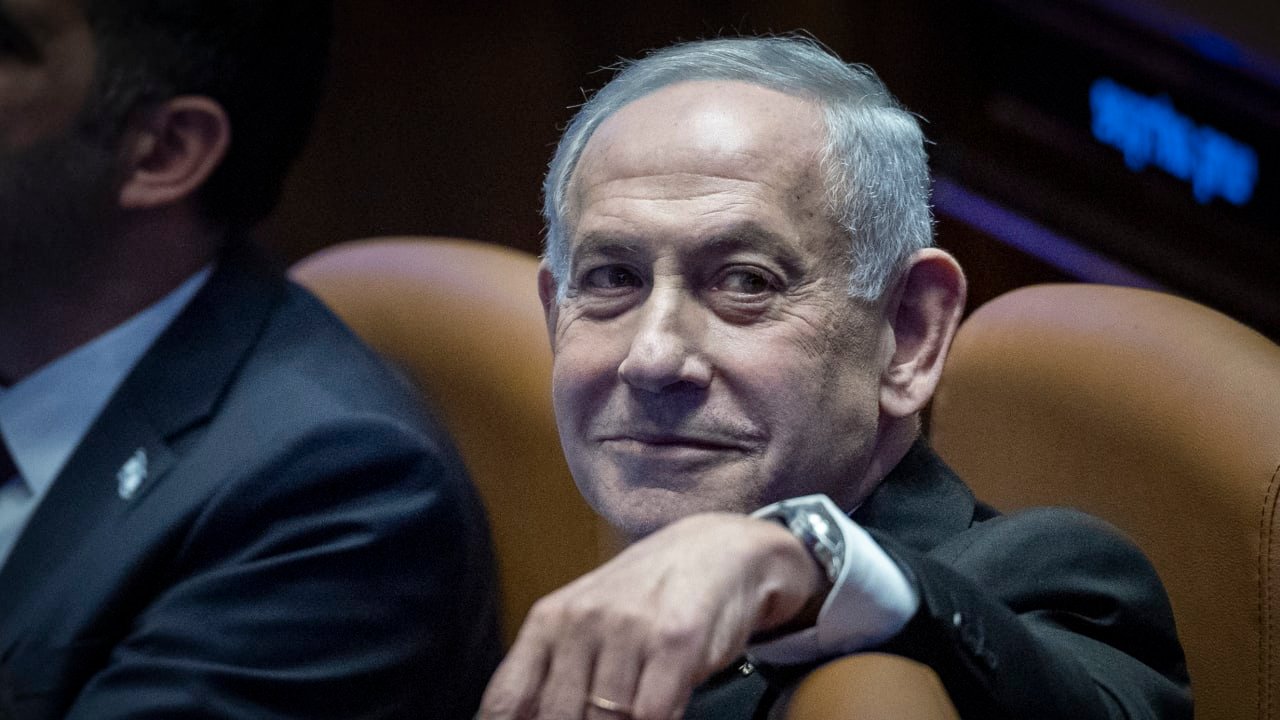
    Prime Minister Benjamin Netanyahu was born in Tel Aviv and spent his childhood in Jerusalem and in the United States. After graduating high school near Philadelphia, he returned to Israel to serve in the IDF, and then went back to the US, where he studied at MIT, worked in the private sector, and later served in Israel’s diplomatic corps.

    Two Israelis. Two very different life stories. Both accomplished and both deserving of respect.

    But if someone were asked – without knowing either man – which of the two is likely to speak English more fluently, the answer would be obvious – the person who spent formative years in the United States, the person who earned a degree there, and the person who worked there professionally for years.

    That observation is not controversial. It is simple common sense.

    GADI EISENKOT after announcing his resignation in Tel Aviv.
    GADI EISENKOT after announcing his resignation in Tel Aviv. (credit: ERIK MARMOR/FLASH90)

    This has nothing to do with Eisenkot’s intelligence; obviously, someone does not become chief of staff of the IDF without remarkable capabilities. But how much opportunity did he have throughout decades of military service to perfect his English? 

    Yes, there were foreign delegations, overseas trips, and occasional interactions with visiting officers. None of that compares to living, studying, and working for years in an English-speaking environment.

    Normally, this would not matter. In fact, it should not matter at all.

    Yet this week, Netanyahu’s senior campaign strategist, Yonatan Urich – yes, the same Urich who has been under investigation in the Qatargate affair – decided to make this an issue.

    Urich took to social media to ridicule Eisenkot’s English. He reposted an old video of Eisenkot speaking at the Washington Institute and mockingly referred to him as “Mr. Hasbara.” The intent was obvious. It was an attempt to portray Eisenkot as unqualified for national leadership because he is less fluent in English than Netanyahu.

    READ ALSO

    Hamas co-founder released from prison following October 2023 arrest

    Korah affair

    Earlier in the week, after Eisenkot challenged Netanyahu to a debate, Urich responded with another sneering reply: “Are you prepared to do it in English?”

    The absurdity is hard to overstate. There is no reason for Israeli prime ministerial candidates to debate in English. If they were to hold a debate – which sadly Netanyahu refuses to do – it would obviously be in Hebrew because they are running to lead Israel.

    Yet Urich’s point was clear: he wanted voters to think that weaker English somehow means weaker leadership.

    Is English important? Yes. Can fluency help in diplomatic meetings? Of course. But does it determine whether a leader can unite Israeli society? Does it indicate whether someone understands the threats on our borders? Does it reveal an ability to formulate military strategy, navigate economic crises, or make life-and-death decisions under pressure?

    Of course not.

    History is full of extraordinary leaders who spoke little or no English. Their effectiveness was measured by their judgment, character, vision, and ability to lead their people – not by their pronunciation.

    What makes Urich’s attack even more bizarre is that he framed it as a criticism of Eisenkot’s ability to explain Israel’s case to the world. 

    He might want to look in the mirror.

    Just a few days earlier, a Pew survey showed majorities in 36 countries – including the United States, Canada, Britain, Italy, Spain, Sweden, and Poland – holding negative views of Israel. Earlier this year, Gallup found that for the first time in a quarter century, more Americans sympathized with Palestinians than Israelis.

    These trends emerged while Israel was led by a prime minister with excellent English, and if English fluency was the secret to successful public diplomacy, those numbers should look very different.

    Tearing down opponents

    The truth is that this was never about English. It is about something far simpler: finding another way to delegitimize a political opponent.

    And it was not the only example this week. Another campaign advertisement sought to portray Israel’s Arab citizens as a threat while suggesting that any government led by Eisenkot would be dependent on them. The message was familiar from the past: sow fear, division, and demonization.

    What is striking is not merely the content of these attacks but the complete absence of anything positive. There is no attempt to explain why voters should support Netanyahu’s vision or to present a roadmap for the future. There is no discussion of policy, strategy, or national priorities.

    Instead, the focus remains one – tearing down opponents.

    Eisenkot does not need anyone to defend him. He spent more than four decades in uniform, he was wounded in combat, and he made life-and-death decisions daily.

    This is also not about him. It is about us and the political culture we are willing to accept.

    Whenever concerns like these are raised about the political culture in Israel, someone always responds that politics are ugly everywhere – in America, in the UK, and in France.

    Perhaps. But we do not live in America, Britain, or France. We live in Israel.

    Israelis are constantly telling ourselves that we are different from other countries. We point to our history, our security challenges, our shared sense of destiny, and the extraordinary circumstances under which this country exists.

    If we truly believe that, then now is the moment to prove it. We need to reject a political culture that is built entirely on ridicule, division, and personal attacks. We have to demand of our leaders to offer ideas instead of insults. Most importantly, we can refuse to allow people like Urich to define the tone of the national conversation.

    He and the party he serves need to understand that he is not the norm, but rather the exception.

    And if we care about the future of Israeli democracy, we should make sure he remains one.

    The writer is co-founder of MEAD, a senior fellow at the Jewish People Policy Institute, and a former editor-in-chief of The Jerusalem Post. His latest book, While Israel Slept, is a national bestseller in the US.





    Source link

    Related Posts

    Hamas co-founder released from prison following October 2023 arrest
    Israel

    Hamas co-founder released from prison following October 2023 arrest

    June 14, 2026
    Korah affair
    Israel

    Korah affair

    June 14, 2026
    Operation Rising Lion, one year ago, marks a shift in Israel’s thinking
    Israel

    Operation Rising Lion, one year ago, marks a shift in Israel’s thinking

    June 14, 2026
    what if i was
    Israel

    what if i was

    June 14, 2026
    Israel

    If Israel wants mass aliyah, it must end its bureaucratic gatekeeping

    June 14, 2026
    The guide to self-confidence
    Israel

    The guide to self-confidence

    June 14, 2026
    Next Post
    Azzaman daily newspaper Azzaman newspaper – an independent international daily Arabic newspaper

    Azzaman daily newspaper Azzaman newspaper - an independent international daily Arabic newspaper

    POPULAR NEWS

    Kuwait Airport Radar Targeted Again, Files Third Complaint to ICAO

    Kuwait Airport Radar Targeted Again, Files Third Complaint to ICAO

    June 14, 2026
    Mourners line Bangkok streets to pay respects to Thailand’s Princess Bha | Thailand

    Mourners line Bangkok streets to pay respects to Thailand’s Princess Bha | Thailand

    June 13, 2026
    Trump calls off latest threats to strike Iran, cites breakthrough in talks to end the war

    Trump calls off latest threats to strike Iran, cites breakthrough in talks to end the war

    June 13, 2026
    Resultados ONPE al 98.327%: Keiko Fujimori y Roberto Sánchez disputan voto a voto la Presidencia del Perú

    Resultados ONPE al 98.327%: Keiko Fujimori y Roberto Sánchez disputan voto a voto la Presidencia del Perú

    June 13, 2026
    Iran and the US in fierce attacks despite the ceasefire

    Iran and the US in fierce attacks despite the ceasefire

    June 14, 2026

    EDITOR'S PICK

    Man cleared over North Efate death as judge criticises police investigation | News

    Man cleared over North Efate death as judge criticises police investigation | News

    June 14, 2026
    Amidst anticipation of Iran’s position… Washington is preparing to sign an agreement to end the war – Saudi News

    Amidst anticipation of Iran’s position… Washington is preparing to sign an agreement to end the war – Saudi News

    June 13, 2026
    Two pro-presidential parties in Kazakhstan united before the election

    Two pro-presidential parties in Kazakhstan united before the election

    June 14, 2026
    Ariadna Montiel denounces alleged purchase of PRI votes in Coahuila elections; Each vote cost up to 500 pesos, he says

    Ariadna Montiel denounces alleged purchase of PRI votes in Coahuila elections; Each vote cost up to 500 pesos, he says

    June 14, 2026

    Recent Posts

    • Iran and the US in fierce attacks despite the ceasefire
    • Media: Controversial DR-documentary won an award from the hoax festival
    • Tropical depression Dos-E forms off Guerrero
    • Japan successfully launches a cheaper version of its H3 space rocket

      © 2026 Agentially - Navigating shifting sovereignties and global risk .

      Welcome Back!

      Login to your account below

      Forgotten Password?

      Retrieve your password

      Please enter your username or email address to reset your password.

      Log In
      No Result
      View All Result

        © 2026 Agentially - Navigating shifting sovereignties and global risk .

        This website uses cookies. By continuing to use this website you are giving consent to cookies being used. Visit our Privacy and Cookie Policy.