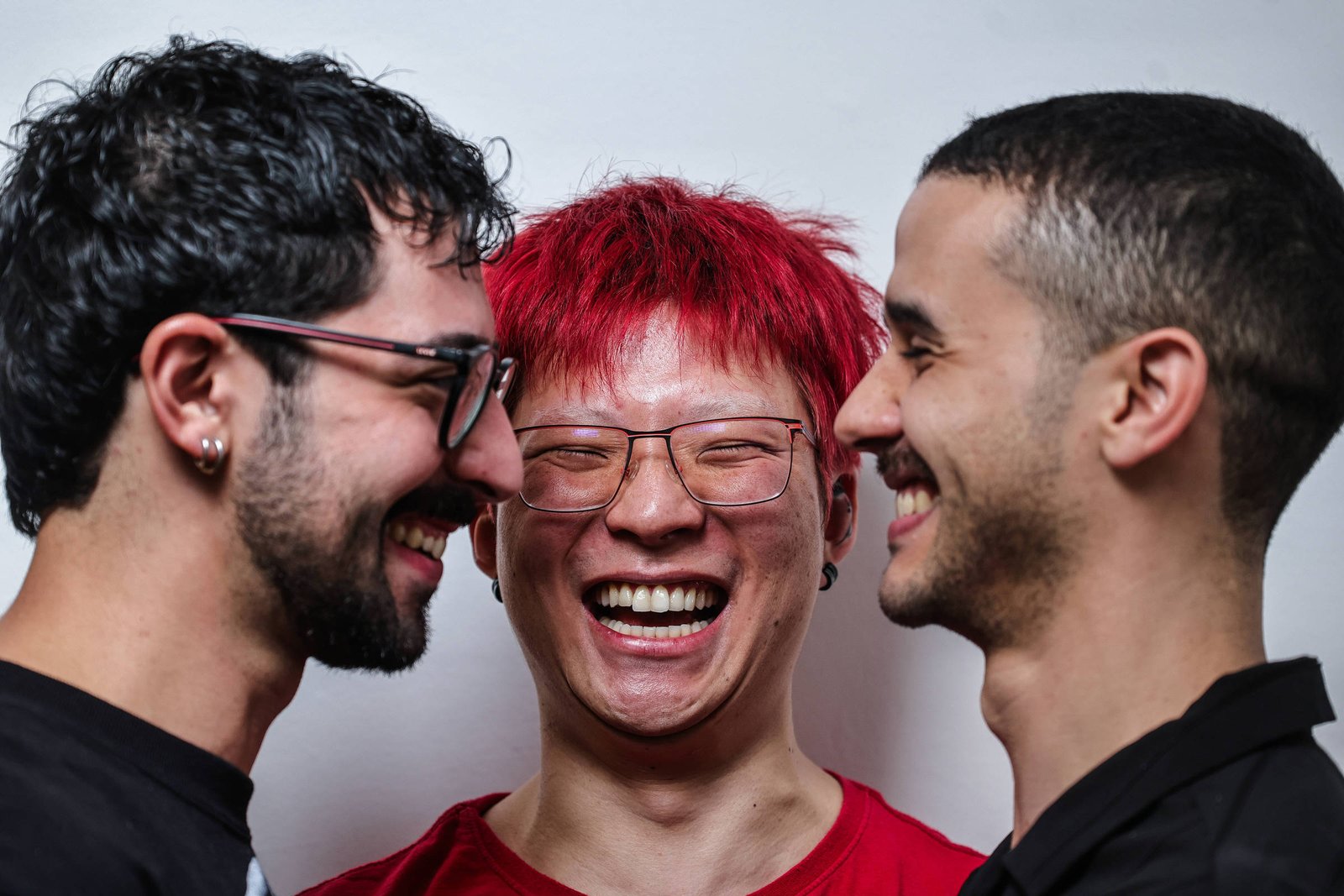
THE Valentine’s Day by public servant Vinícius Eigi, 25, will last 48 hours this year. This Friday (12), the official day of the celebration, his boyfriend Ariel Lemos, 28, will cook for him at home. With his other boyfriend, Artur Rovere, 28, he goes to a restaurant on Saturday (13).
Vinícius maintains non-monogamous relationships. She has been dating Artur, who is a lawyer, for around two years. Ariel appeared more recently. Resident doctor in psychiatry, he has been with Vinícius for about a month and a half.
The public servant, who is also an astrologer and tarot reader in his free time, says that on commemorative dates he tends to balance his schedules without difficulty. He says that Valentine’s Day doesn’t occupy such a central place in his relationships, but he takes advantage of the date to celebrate with those he loves. “I usually spend the day with one person and celebrate with another at another time, but this varies a lot. I’ve never had a rule like: this year it will be with one person, next year it will be with another.”
For Vinícius, there would also be no problem in holding a collective celebration. “I calmly imagine a celebration with Ariel and Artur together.”
In non-monogamous relationships, there is no exclusivity between those involvedeach partner can have relationships with other people simultaneously. Arthur also has another boyfriend, and Ariel can get involved with other people if she wants. The same goes for the other interviewees in this report.
The absence of a script on how relationships should work, including on commemorative dates, is one of the points that differentiates non-monogamy from a monogamous relationship, according to sociologist Marília Moschkovich, professor at USP (University of São Paulo) and researcher on the topic.
“In monogamy, people learn from an early age what they should do in a relationship. There is a very consolidated social script. When someone chooses non-monogamyyou need to build many of these agreements on your own”, says Marília, who is 39 years old and is also a supporter of non-monogamy.
For the psychoanalyst and relationship researcher Carol Tilkian, columnist for Sheetwhile monogamous relationships tend to rely on tacit agreements, other relationship models require that expectations, limits and desires be discussed more explicitly.
“No monogamyagreements are not given. They need to be built in each bond”, she says. For her, this is something that monogamous couples could also learn: talk more about the relationship without it being interpreted as a sign of crisis.
Pole dance teacher Thaís Anselmo, 39, says she has lived with a partner for 15 years and has been dating another for almost a year. For her, Valentine’s Day, a “commercial” date, usually goes unnoticed. This year, he will accompany a friend to the doctor and will not be with any of his companions this Friday.
“I’ve never had this problem of organizing the agenda for a specific date. Valentine’s Day becomes an excuse to do something nice together, but not necessarily on the day”, he says.
On more important occasions for her, the solution is often not to divide the agenda, but to bring together everyone involved. It was like that at Christmas last year, when he brought together his own parents, his long-time partner, his partner’s girlfriend, and his most recent boyfriend. “Everyone was there together.”
Thaís says that she has already lived in monogamous relationships and was quite jealous. It says that the jealousy it continues to exist, but the way of dealing with the feeling has changed. “Within a non-monogamous relationship we need to work hard to understand where this jealousy comes from, what it is, why you are feeling it.”
Tilkian remembers that non-monogamy does not eliminate feelings that may be more linked to monogamists, such as jealousy, insecurity, comparison and frustration.
“It’s not because the relationship is open that dilemmas are non-existent”, he states. “I often see people in non-monogamous relationships feeling guilty because they are jealous. Because they chose this relationship model, they believe they shouldn’t feel these types of things.”
According to the psychoanalyst, the way to deal with jealousy involves recognizing it and talking about it with your partner. She advocates that couples can talk openly, without treating their own insecurities as personal or ideological flaws. And he emphasizes that agreements must be constructed and renegotiated constantly.
Marília Moschkovich’s boyfriend for almost four years, post-doctoral student Douglas Aquino, 39, is also dating nursing technician Ana Santos, 32, whom he met just over a year ago. He says that jealousy is natural, but that some situations pose greater challenges, such as when one of the partners meets someone new.
“At the beginning is when I’m most insecure. You don’t know what’s going to happen, how that relationship is going to develop”, he says, who observes an opposite pattern in his companions. “The more the relationship progresses, the more insecurity can appear. When the person starts spending more time with someone, going out more, creating a more serious bond.”
Douglas says that he usually negotiates commemorative dates with his girlfriends. To celebrate his own birthday, for example, he spent a weekend with Ana, who like him lives in São Carlos, in the interior of São Paulo, and the next weekend he joined Marília, who lives in the capital of São Paulo. For this Valentine’s Day, the arrangement will be similar.
“We talk and organize ourselves. There is no fixed rule. This year I’m going to spend the day with Ana and, next weekend, I’ll celebrate with Marília.”