“In the beginning was the Logos” The Prologue of the Gospel according to John is not only one of the most famous texts of the Christian tradition. It is also one of the cultural foundations of the West. Not because it belongs to the faith, but because it introduces a radical idea: the world is born from a word. Not from chaos, not from force, not from war. From one word. A Word that becomes flesh.
The Greek term Logos it contains together language, reason, order, sense. It is a pronounced word and an invisible structure of reality. To say that “in the beginning was the Logos” means to affirm that the universe is not a silent accident, but something that can be named, thought about, interpreted.
Already in Genesis God says “Let there be light” and the light appears. Speaking, in the biblical tradition, means giving shape to the world, making it exist.
The theologian Dorothee Sölle observed that the biblical word is never neutral: it is always a word that calls, that sets in motion, that creates responsibility. This is also why Christianity attributes an enormous ethical weight to language. Speaking means exposing oneself, building or wounding, guarding or destroying. During the years of the Vietnam War, Sölle and a group of friends mobilized to inaugurate the Politische Nachtgebetethe political prayer vigils.
For the Jewish philosopher Martin Buber “in the beginning is the relationship”. And every relationship is born from a word addressed to someone. Even Greek thought had intuited something similar: for Heraclitus the Logos it was the profound law that holds the cosmos together. Giovanni collects these intuitions and takes a further leap: the Logos it is not just an abstract principle, but a living presence.
From here a long cultural history was born: the idea that language has moral dignity, that words can build cities, laws, communities, memory. Even European politics, at least in its best forms, inherits this trust: conflict is governed through discourse, not just through force.
Yet today we are in a crisis of the word. The Protestant theologian Dietrich Bonhoeffer, murdered by Nazism, had sensed the danger of linguistic degradation. When words become empty, he writes, even thought weakens. The loss of the sense of truth and falsehood is not just an intellectual problem: it is a condition that makes societies more vulnerable to manipulation.
Even the Bible knows this risk. In the book of Proverbs we read: “Death and life are in the power of the tongue.” A very ancient, yet very current phrase. The word can heal or destroy, found communities or set them on fire.
It is here that John’s Prologue becomes relevant again, even for those who do not believe, and retains an enormous cultural force. Because that text contains an essential question: what relationship exists between word and truth? What happens to a civilization when the word stops creating bonds and begins to produce only enemies?
The answer is before our eyes. Public language becomes brutalized and aggressive. We talk constantly, and often rant, but we say less and less. So perhaps the issue is not religious, but civil. “In the beginning was the Word” is not just an ancient verse. It is a diagnosis of the present.
If the problem of our time is the degradation of public language, then it becomes inevitable to ask which forms of speech are still capable of creating connections rather than destruction. If the word has the power to build or destroy the world, then it is crucial to ask ourselves which languages are still able to generate life instead of consumption, relationships instead of conflict.
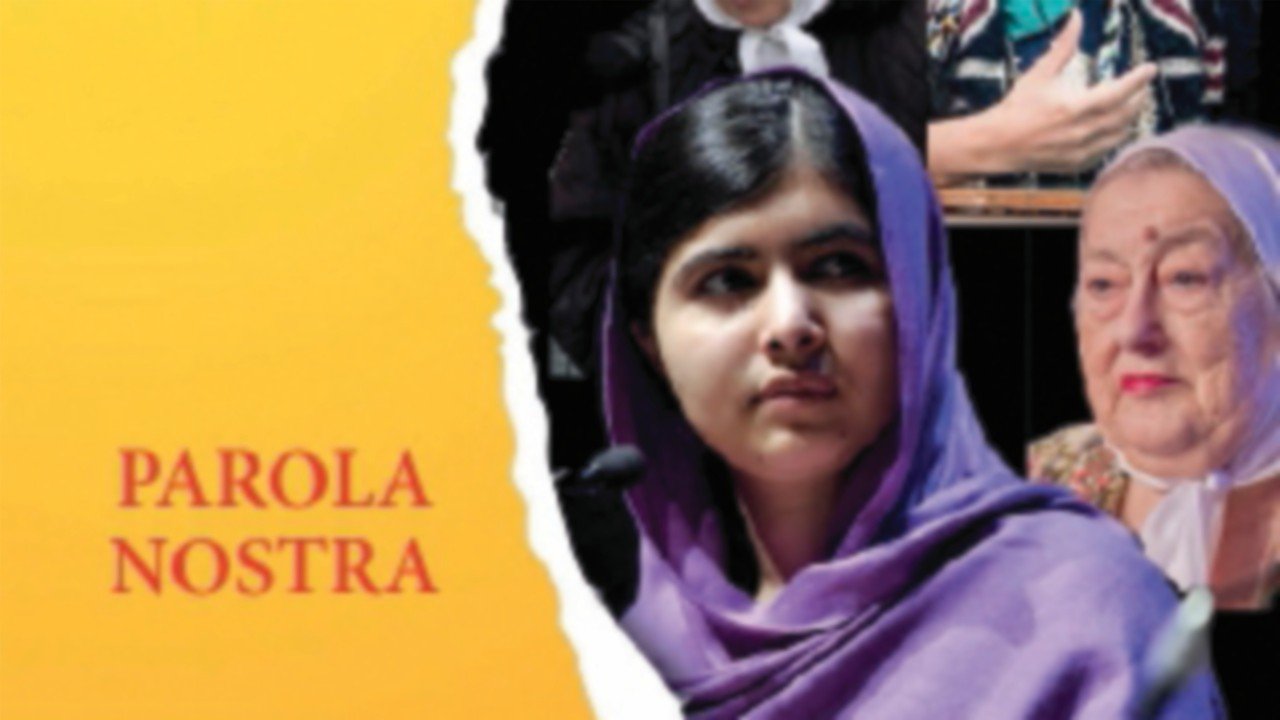
From this perspective, many contemporary reflections have shown how women’s words – in philosophical, political and cultural contexts – often have a different pace. They don’t impose themselves in the same way, they seem to seek more than affirm, open more than close. Sometimes they move as if language had to first of all breathe again, to find measure again, to rebuild a possible bond. And perhaps it is precisely in this more discreet gesture, less dominated by the desire to prevail, that the word still tries to remain alive. (rp)