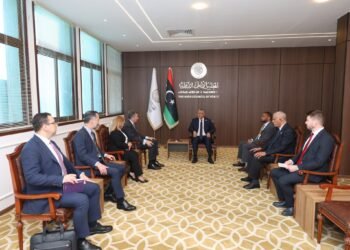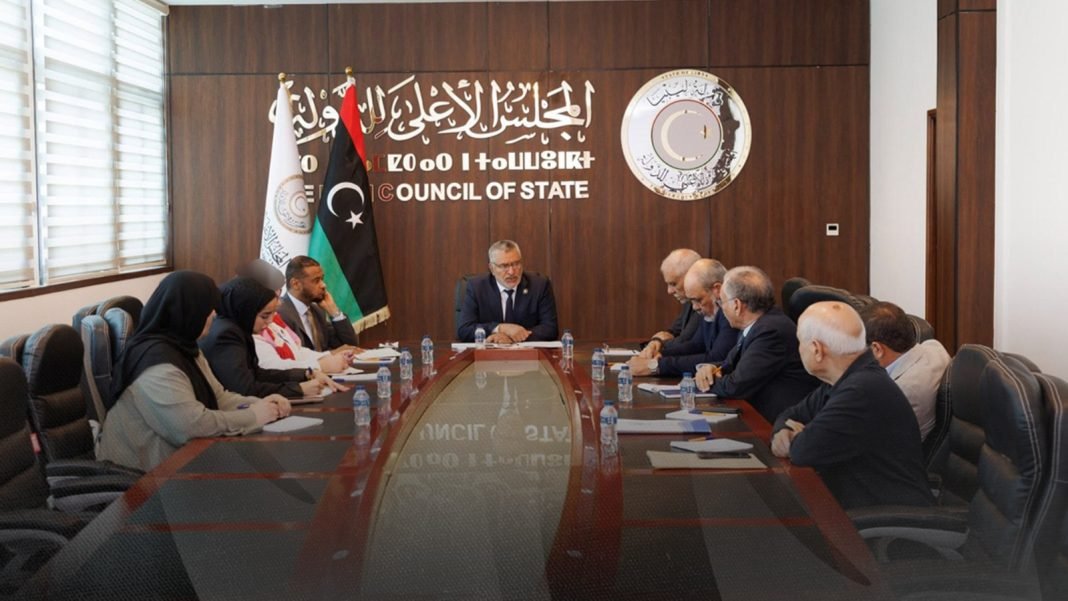
Members of the Governance Track within Libya’s Structured Dialogue told members of the High Council of State during a meeting with the Head, Mohamed Takala, that a number of participants had expressed reservations about some of the recommendations, arguing that they do not accurately reflect the discussions held during the dialogue sessions and are inconsistent with national interests.
The Governance Track members stated that the final recommendations issued by the dialogue do not represent their views, referring to a statement they had released rejecting the outcomes and explaining the reasons for their objections.
Participants in the meeting said that the boycott of the dialogue’s closing session by several national figures and elites reflected growing dissatisfaction with the way the process was managed. They stressed the importance of transparency, national consensus, and balanced participation by all parties in order to support stability and address Libya’s current challenges.
Earlier, a group of Structured Dialogue Governance Track participants announced their complete rejection of the dialogue’s final outcomes, insisting that their names should not be associated with any conclusions or recommendations that do not reflect their positions.
In a statement, the signatories described the outcomes as disappointing and harmful to national principles. They rejected granting any international actors a role in drafting or approving Libya’s constitutional foundations, arguing that the constitution and legislation are exclusively national matters that should be decided by Libyans alone.
The statement also rejected the reintroduction of the three-region model, warning that it could threaten national unity and deepen divisions. The signatories further objected to granting the proposed interim government authority over civil registry and settlement-related files, citing concerns related to national security.
The participants criticized what they described as the recycling of Libya’s political crisis through the replication of previous transitional arrangements. They reiterated their opposition to any process that undermines national ownership of the political process or grants the international community powers beyond technical support, stressing that they “will not be witnesses to any agreement that compromises Libya’s sovereignty and unity.”