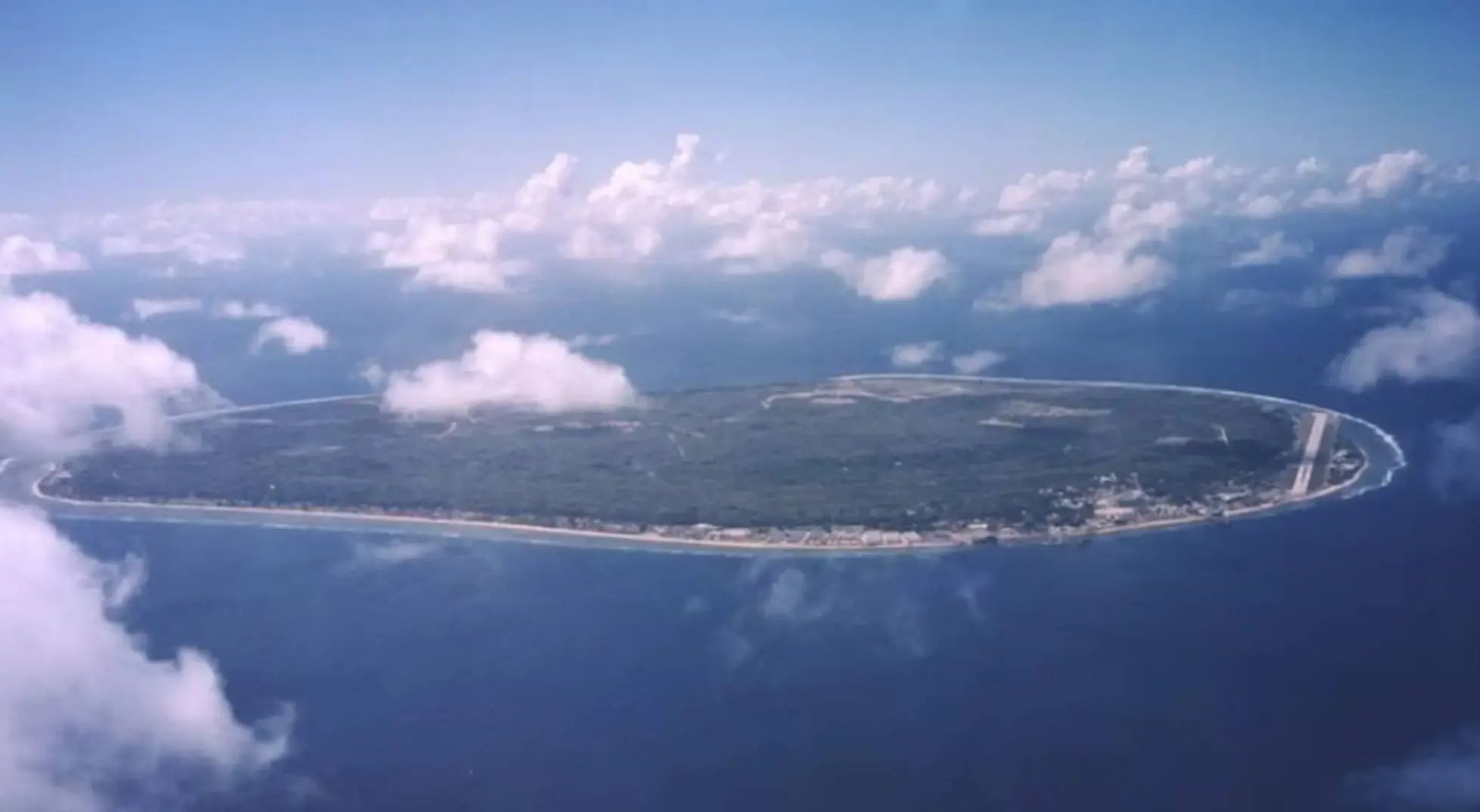
The Oceanic island nation of Nauru, known as the world’s smallest republic, is preparing to change its official name from the colonial era and adopt the indigenous name “Naoero”.
David Adeang, President of the island nation of about 13,000 people, said in a speech to parliament in January that the name “Naoero” more accurately reflects the country’s heritage, language and identity. Following the unanimous approval of the proposal by Parliament, a referendum will be held to formalize the name change.
RETURN OF THE INDIGENOUS NAME
Haberlerimizi Google’da Takip Edin
En güncel haberlere ve son dakika gelişmelerine Google üzerinden anında ulaşmak için bizi favorilerinize ekleyin.
Google’da tercih edilen
kaynak olarak ekleyin
“Naoero” (pronounced Nao-ero) is the name Nauruans use for their country in their own language. The current “Nauru” is considered to be a version that has entered the official records because foreigners cannot pronounce the local name correctly.
The government statement emphasized that the local name “was changed for the convenience of foreigners, not by the choice of the people of the country”.
TRACES OF COLONIAL PAST
Located in the Pacific Ocean, about 3,000 kilometers northeast of Australia, the island, which has a surface area of only 21 square kilometers, has been known by various names throughout history.
According to information obtained from The Guardian, the island was named “Pleasant Island” by a British sailor who reached the region in 1798. After Germany annexed the island in 1888, the name “Nauru” entered the official records. Previously, other names such as “Nawodo” and “Navoda Onawero” were also used.
In 1919, after Australia took over the administration of the island under the League of Nations mandate, the name “Nauru” continued to be preserved. The country gained its independence in 1968. Australia began using the island as a migrant detention center in 2001.
‘CHANGING PLACE NAMES WAS PART OF COLONIALISM’
Zoltán Grossman, professor of geography and Native American studies at Evergreen State College in the US, said that changing place names was a common practice of colonial governments.
“Changing place names was an important part of colonial practices to erase the existence of indigenous peoples. It is not only about the names, but also about who has the power to change the names.”
THEY TOOK TÜRKİYE AS AN EXAMPLE
In advocating for the name change, the Nauru government drew attention to countries that have taken similar steps in recent years. Türkiye’s adoption of the name “Türkiye” in the international arena, Swaziland’s adoption of the name “Eswatini” and the state of Chuuk in Micronesia moving away from the name “Truk” used in the past were cited as examples.
‘PART OF THE DECOLONIZATION PROCESS’
According to experts, the reuse of indigenous names is seen as a way for former colonies to emphasize their sovereignty and cultural identity.
Jordan Engel, founder of the “Decolonial Atlas” project, said that there is a strong trend towards the reuse of indigenous names around the world: “At the heart of the decolonization process is the right to self-determination. One of the most basic expressions of this is being able to speak your own language and use the place names given by your ancestors.”
NAURUCA LANGUAGE UNDER THREAT
UNESCO classifies Nauruca, spoken by the people of Nauru, as a “seriously endangered language”. Although the language continues to be used in daily life, it is not taught in schools.
Experts say that changing the official name of the country to “Naoero” could contribute to preserving the language and passing it on to future generations.
SUPPORT AMONG THE PEOPLE
Nauru wrestler Arcmen Willis, who represents his country in international competitions, said he supports the name change.
Stating that he wants people to get used to pronouncing the new name correctly, Willis said, “It is important that we protect our identity. Because if it disappears one day, there will be no more Nauru or Naoero.”
ALREADY IN USE
While the official change has yet to take place, the name “Naoero” is already being used by the country’s postal service, health system and public service organizations. The Australian High Commission in Nauru also uses both names in its official communications.
Willis stated that the name change is important in terms of the country’s perception in the world rather than daily life, “This is just a name change. It does not change me,” he said.

![List Of 10 Least Forested Countries In The World [2026]](https://agentially.org/wp-content/uploads/2026/06/list-of-least-forested-countries-in-the-world-1781172279270-350x250.webp)