At the end of the session on Tuesday June 10, 2026, theMASI index dropped 1.96% to close at 18,142 points, in a total transaction volume of 283 million dirhams. This new decline comes after a first week already on a downward trend and gradually erases part of the gains accumulated since the start of the year. The annual underperformance of the market now stands at -3.73%. At the final bell of the session, 45 stocks closed in the red, compared to only 13 higher, while 4 stocks remained unchanged.
Mining at the heart of the correction
Mining stocks, which had been the big winners in recent months thanks to the surge in precious metals in a context of strong geopolitical tensions in the Middle East, have once again focused the attention of investors.
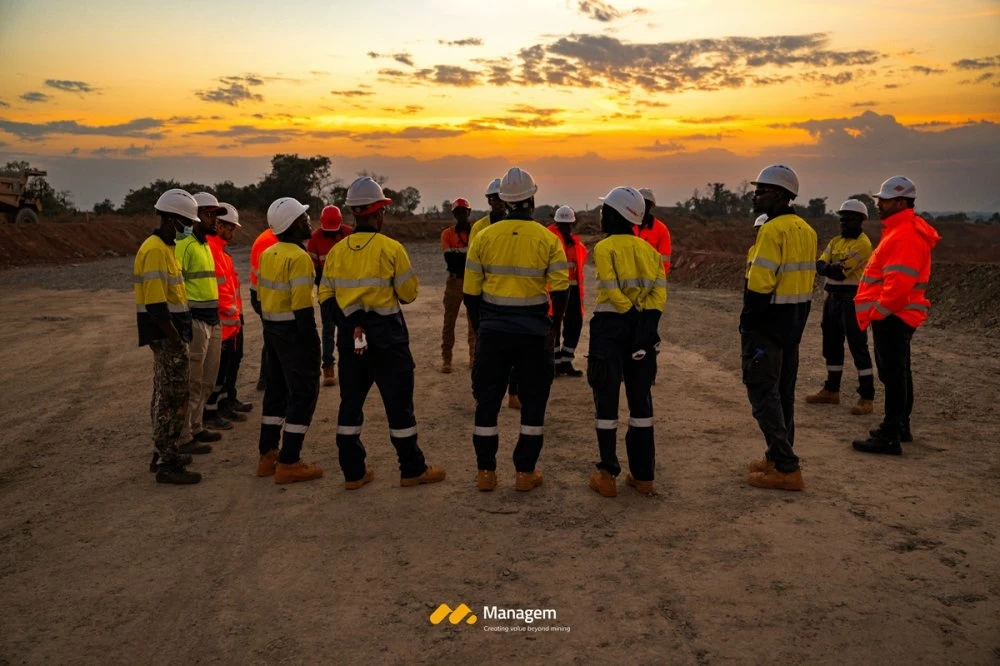
Managementwhich recently became the first capitalization of the Casablanca Stock Exchange after its spectacular stock market performance, recorded the biggest drop of the session. The stock fell 9.77% to 14,800 dirhams, alone draining a volume of 103 million dirhams, or more than a third of the day’s trading.
There Société Métallurgique d’Imiter (SMI) followed the same trend. The stock lost 9.64% to close at 7,230 dirhams, with a trading volume of 24 million dirhams, representing the second highest volume of the session.
Another active market value, Cosumar mobilized 23 million dirhams in trade, while falling 1.92% to 178 dirhams.
This correction comes after several weeks of sharp rise in mining values, fueled by the increase in the prices of gold, silver and other strategic metals on international markets.
A market divided between solid fundamentals and international uncertainties
According to analysts, the market environment remains heavily influenced by geopolitical developments in the Middle East. These tensions continue to support the prices of precious metals, thus favoring mining stocks, while penalizing sectors highly exposed to energy costs.
The mining sector had also been the main driver of the Casablanca Stock Exchange during the month of May, with a sectoral increase of 21.36% over one month, mainly driven by the performance of Managem.
On the macroeconomic level, however, several factors remain favorable to the Moroccan market. Analysts particularly highlight the success of the recent Treasury outflow on international markets as well as the maintenance of inflation at controlled levels, two elements which contribute to strengthening investor confidence.
However, the Casablanca market remains sensitive to external shocks, particularly through changes in energy prices and the potential consequences of geopolitical tensions on global supply chains.
A rebound still possible but under conditions
For analysts, the potential for continuation of the upward movement observed since the start of the year is not called into question, but several conditions remain necessary to allow the market to regain a more favorable dynamic.
Among these factors are a more frank de-escalation of tensions in the Middle Easta lasting relaxation of energy prices as well as a return to market depth. On this last point, experts note that trade volumes remain lower than those observed the previous year. The average daily volume currently stands at 255 million dirhams, compared to 378 million dirhams at the end of May 2025.
In this context, the trajectory of the MASI remains considered constructive in the medium term, but remains closely dependent on the evolution of the international macroeconomic context and the flow of geopolitical information, which continue to guide the behavior of investors in the Casablanca market.