For the majority of Bogota residents, live near public transportationtheir jobs, studies or health services is a privilege. Only 13 percent say they spend less than 30 minutes getting to their destination, while 67 percent lose an hour or more in each of their journeys, according to the ‘Biennial Citizen Culture Survey 2025’.
READ ALSO
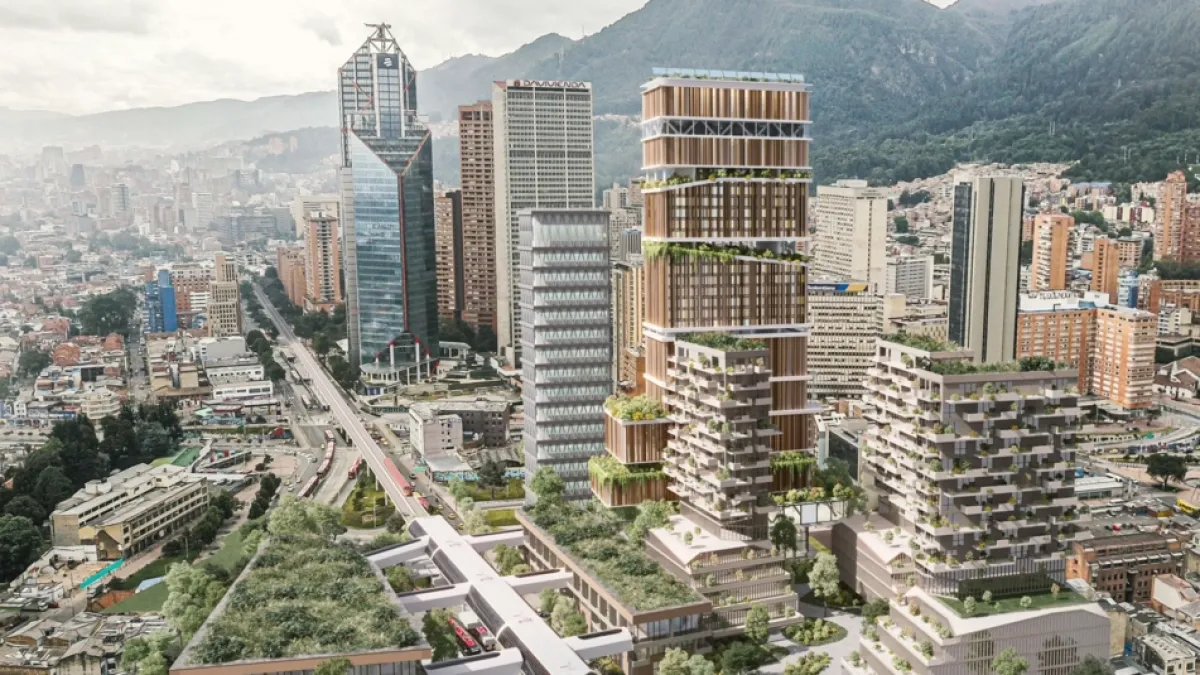
Experts believe that this panorama must change and that the mobility transformation that the city currently lives – with the construction of the first metro line and the expansion of TransMilenio— is a golden opportunity so that he Transportation comes hand in hand with housing, commerce and services.
Under that context, the District Planning Secretariat designed the ‘Metropolitan waves’ strategya project that seeks that from now on Bogotá is built in a more compact, close and sustainable way around the mass public transportation infrastructure.
TransMilenio Photo:Private file
What the District wants is for Bogota residents to be able to leave their homes now five minutes find a metro station, a TransMilenio portal, medical centers and more connected streets.
But why is it important to have a compact and close city? In an interview with EL TIEMPO, Úrsula Ablanque, Secretary of Planning, explained that “a more compact city solves the most important things at short distances and improves quality of life of the people. When everything is closer, the time is not wastedbut it is used better, there is greater satisfaction with the city and there is more time to enjoy and share with loved ones.”
Ursula Ablanque, Planning Secretary of Bogotá Photo:Planning Secretariat
This is how it would be in the subway
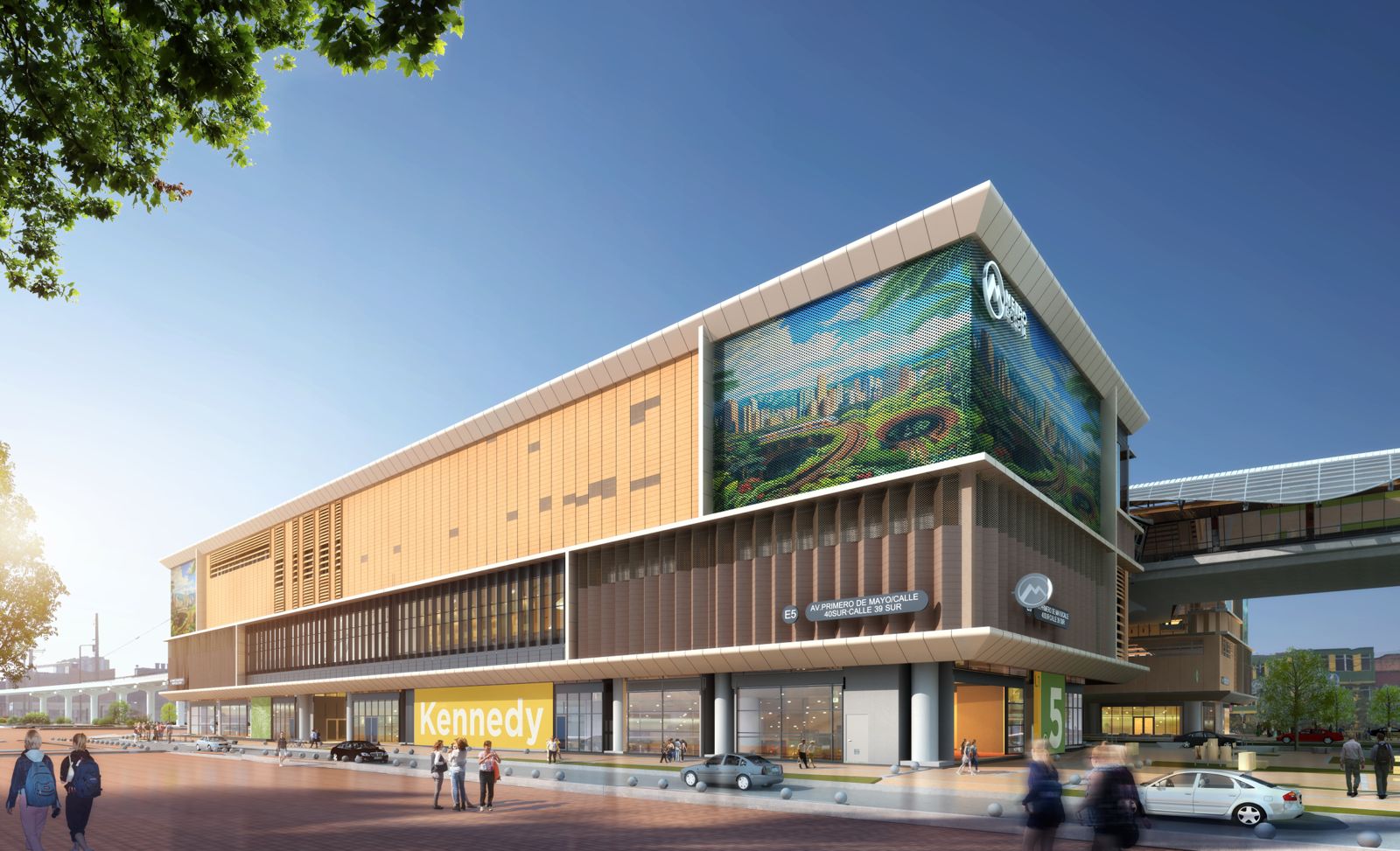
The project has already started and one of the pilot plans is season 6 of the first linejust 20 months before the trains come into commercial operation. Last Friday, the Bogotá Metro Company (EMB) launched a call for private companies to develop a real estate project at station 6 of the system.
Will use a area of 4,742 square meters in a property remaining from the infrastructure works of the station 6located at the intersection of the Boyacá Avenue with May Day, in the town of Kennedy.
Bogotá metro stations Photo:EMB
“The EMB seeks a strategic ally that, at its own risk and expense, structures, builds, operates and maintains, commercially exploits and reverses this real estate developmentby subscribing to a business collaboration contract and through the fiduciary scheme defined in the terms of reference,” the company said.
Furthermore, the initiative would generate a “shared remuneration”, explained as a scheme of fixed and variable economic benefits that ensure a joint success between the private sector, the District and citizens.
The project will have mixed vocationoffering commercial and residential uses at this key point of urban revitalization. “It will be integrated into the city’s main transportation infrastructure and will promote a improvement in quality of life of the residents and users of this area in the southwest of the city,” highlighted the EMB.
Facades of the Bogotá metro stations Photo:ML1
Experts consulted by EL TIEMPO point out that this type of real estate and commercial activation projects they were left in the city.
“I feel like we are going very behind in terms of housing and development of real estate projects regarding the progress we could have. It is not necessary to wait for the metro to come into operation then yes. improve the environment and develop projects near the stations. In these 24 months you have to put the flip flop on it”said Darío Hidalgo, mobility expert and professor of Logistics and Transportation at the Javeriana University.
Along the same lines, Felipe Mariño, director of Bogotá Como Vamos (BCV), pointed out that it is a good news that the call is outbecause it is a sign of the impact that the metro will have on the lives of Bogota residents beyond being a mode of transportation.
First tests of the Bogotá metro. Photo:MAURICIO MORENO
“Although the housing and commerce It is something that time will consolidate, it must be organized from now on. No time should be wasted on this, because solve the problem that we have as a large city: that the people are very far from health, education and work opportunities”, declared the director of BCV.
Furthermore, he was emphatic that such a proposal contributes to Bogotá becoming a long-awaited city. city 15 or 30 minutes. “From now on you must plan a people-oriented development and with significance towards the future. Is fulfill the promise that Bogotá is a city of less than 30 minutes”he added.
Secretary Ablanque pointed out that this strategy is accompanied of a component of public space and furniture for the citizens.
READ ALSO
“With a focus on transportation-oriented developmentwith Las Ondas we promote the development around the metro and TransMilenio stations. housing, commerce, institutional uses and employmentso that people have within their reach first-hand uses and services. It will also promote generation and improvement of public spacewith more accessible and tree-lined streets and active parks for people’s greater enjoyment,” the official explained.
TransMilenio and other modes
On the side of TransMileniothe most visible proposal is that of the intermediate station on Primero de Mayo Avenue, in the town of San Cristóbal.
At this point on the 10th race trunk, where they could circulate daily 44,881 usersthe District has 1.26 hectares enabled for build nearly 400 homes and 2,400 meters of public space.
Real estate project at the intermediate station av. May Day Photo:TransMilenio
According to TransMilenio, the properties on which it will be built housing and commerce in this sector they will have direct connection to the transportation system. It will practically be get on the buses from “the door of your house”.
“When it was built TransMilenio (more than 25 years ago) the development of the surrounding area was not consideredtoday we have learned a lesson, and with ‘Metropolitan waves’ we are doing a comprehensive city mobility system. It is a bet that seeks improve the environments of metro and TransMilenio stations“said the Secretary of Planning.
It is expected that the project can expand and take center stage in other brancheslike the 68th Avenue, the extension of Ciudad de Cali Avenue, 7th Street and 13th Street.
Avenida 68 reached 80 percent progress Photo:IDU
It also seeks its place in multimodal media like him aerial cable of San Cristóbal and Potosíwhich are already advancing in construction and contracting, and others that until now are appearing as San Rafael-La Calera, Toberín-Santa Cecilia and Monserrate.
Furthermore, in railway lines such as 2, 3 and 4 of the metro and the Regiotram regional projects of the North and Westboth already advanced.
NICOLAS DÍAZ MALPICA
Bogotá Editorial