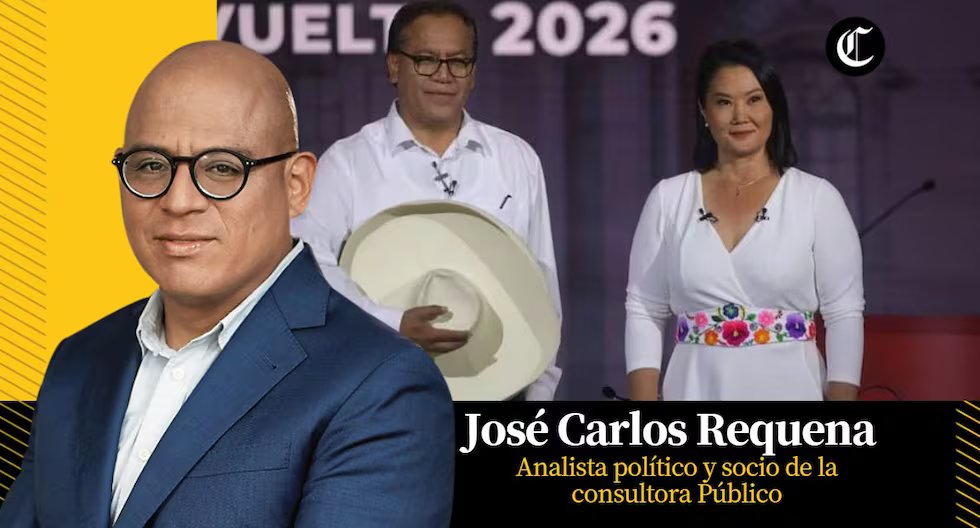

Again, the bottom line A tight runoff splits the country in half. It’s the third time it’s happened. Perhaps it is explained by the presence of the main force of political cohesion so far this millennium: anti-Fujimorism. However, whatever its outcome, there are central issues that must not be lost sight of if we want to begin a five-year period that stops the string of instability that the country has faced since 2016.
In principle, whoever wins the election must be convinced of the need to sacrifice a maximalist agenda. The thing is that both candidates support proposals that repel each other: constituent assembly or nothing, withdrawal from the inter-American court or nothing, for example. They would do well to shelve such polarization or, at worst, manage it with some intelligence.
Secondly, it is a priority to advance an agenda of institutional strengthening. It is a consensus that recent years have been particularly hard for institutions due to the use given to them by those who managed them at a certain time, be it political, media or even symbolic use. To make matters worse, while this was happening, the victims’ detractors applauded in ecstasy.
Another characteristic of recent years has been the severe deterioration of the civil service, worsened, in some sectors, since the government of Pedro Castillo. Incredibly, it was a topic that was ignored from the discussion when Roberto Sánchez was evaluated.
Finally, it is necessary to preserve the progress made on the macroeconomic front. In this sense, the next MEF must establish as a priority to confront the fiscal disorders of recent years or manage the recurring postponement of the Petro-Perú reform.
If Keiko Fujimori’s victory is confirmed (at the close of this column, everything seems to indicate this), episodes of social upheaval could be triggered. They will hardly replicate the events during the 2021 electoral process or those at the beginning of Dina Boluarte’s government, which brought prolonged weeks of protest with dozens of fatalities, but attention should be paid to them.
On the other hand, a victory for Sánchez would trigger justified alarms on the economic front, which could certainly be calmed with sensible appointments and appropriate political gestures. However, they would be an example of the internal pressures that the candidate would face even before assuming power.
In any case, this will be the backdrop of a relatively balanced Parliament in terms of its composition and counterweights, although with some strident voices and worrying pasts, such as those referred to by Jorge Nieto in an interview prior to the second round.
In short, this Congress will have the opportunity to act as a containment element when the most radical agendas of whoever wins seek an expeditious path. Only then, complaints about the “congressional dictatorship” will be a distant memory.
*El Comercio opens its pages to the exchange of ideas and reflections. In this plural framework, the Diario does not necessarily agree with the opinions of the columnists who sign them, although it always respects them.