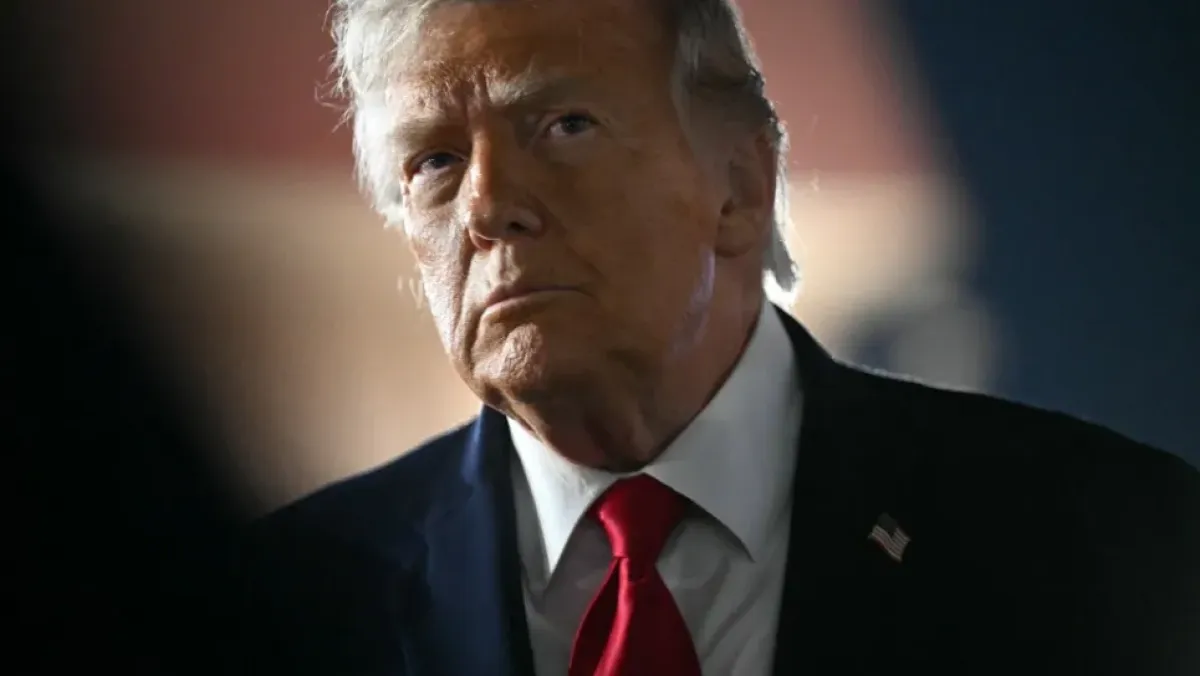
Such as the issuance by the US State Secretariat of Defense (the Pentagon) of the “National Defense Strategy” (NDS) document in a 34-page report, the first comprehensive defense strategy issued under the Trump administration, and the first since the 2022 document issued under President Joe Biden. The document, which was supposed to outline US military directions for the next four years, was not just a periodic technical update, but rather carried within it an indirect announcement of a radical redefinition of Washington’s role in the world, specifically in the Middle East, according to analyzes of American research centers. And specialized Western.
The new strategy, which is based on the principles established by President Donald Trump, most notably “America First,” is based on four main axes that were clearly announced in the document: defending the American homeland and giving it the highest priority, deterring China in the Indo-Pacific region as the main theater of strategic competition, restructuring alliances to require partners to bear greater burdens and responsibilities, and supporting the defense industry to accelerate production and achieve self-sufficiency.
However, an in-depth reading of the text, and what is between its lines, reveals far-reaching transformations, especially with regard to the Middle East and North Africa region, and in Washington’s new definition of “ally” and “partner.”
From the “last guarantor” to the “conditional partner”… a break with the previous doctrine
Perhaps the most prominent aspect of the 2026 strategy is: It is to end the era of the American role as the “last security guarantor” in the Middle East, and move to the role of a “conditional partner” that provides “decisive, but limited” support in exchange for the allies bearing the primary responsibility in confronting direct threats to them. The document explicitly states, according to what it contains, that the allies “will take the lead in confronting the threats that directly affect them, with decisive, but limited, American support.”
This transformation, according to an analysis published by the Brookings Center, moves the relationship from a framework of “protection in exchange for loyalty” to a strict contractual framework entitled “Empowerment, not Protection.” The document confirms this logic by talking about “model allies” defined as countries that increase their defense spending, invest in their own capabilities, and engage in integrated defense systems that are in line with American priorities.
This estrangement did not come from nowhere; It was preceded by the “National Security Strategy” for 2025, drawn up by the National Security Advisor at the time, Robert O’Brien, and paved the way for “armed strategic retreat” by adopting the concept of “functional restoration” of military capabilities, and focusing on investing in asymmetric defense systems and artificial intelligence. This resulted in the “Golden Dome” project in 2026 to protect American airspace, and the reactivation of the “Monroe Doctrine” to protect the Western Hemisphere, a clear indication that the priority had become the home front at the expense of the broad external deployment.
The Middle East from an “existential arena” to a “strategic burden that must be contained”
In the 2026 strategy, the Middle East was demoted from the rank of “existential arena” to the rank of “strategic burden that must be contained,” which Hudson Institute analyst Mike Doran describes as “limited economic-military deterrence.” The document states, according to analyzes of the Council on Foreign Relations (CFR), that the goal is no longer to achieve decisive victories or spread democracy, but rather to prevent a “big bang” that might disrupt energy supply chains, and to manage chronic conflicts such as the conflict with Iran and its network of allies as Situations of “sustained stalemate” are managed with smart sanctions and advanced defenses, not military decisiveness.
Elbridge Colby, one of the most prominent theorists of “harsh realism” in Washington, believes that every American soldier or “Patriot” battery in the Middle East “is a direct opponent from the balance of the potential confrontation in the Taiwan Strait,” and this explains the shift from “active hegemony” to “passive risk management,” and from open commitments to “functional partnerships” in which regional countries assume security and defense tasks, while Washington is content with providing the technological and intelligence umbrella.
Military support map: weapons in exchange for defense independence
The new strategy did not eliminate military presence or security support to the Middle East, but it fundamentally changed its nature. A Pentagon document issued in November 2025 indicates that Foreign Military Sales (FMS) and security cooperation programs are now being used “to empower partner countries rather than rely on direct American power.”
According to an analysis by the American Enterprise Institute (AEI), Washington has shifted from the role of the “strategic medic” who intervenes to save the allies, to the role of the “conditional technology provider” who builds castles for the allies and gives them maps and weapons, but does not send his soldiers to stand on the walls. Marco Rubio, one of the architects of the administration’s foreign policy, stresses that this “strict realism” refuses to compensate for the allies’ shortcomings, and makes support contingent on increasing domestic defense spending and the ability to integrate into air defense systems. Uniform.
At the heart of the document, the entity stands out as the “Model Ally” on the basis of which the parameters of strategic partnership are being redefined, and the entity has repeatedly praised its aggressive operations.
According to the analysis of the JINSA Institute, the entity model embodies the “new Strategic Partnership Agreement” (SPA), which is based on high defense investment (at least 5% of domestic product), field independence, the ability to fight “multi-front wars” without deploying American forces, and contributing to the development of joint military technology.
Vice President J.D. Vance sees Israel as the “perfect ally”; Because it is a “producer partner” and not a “consumer client,” which is the model that Washington seeks to “export” to Arab countries and other allies.