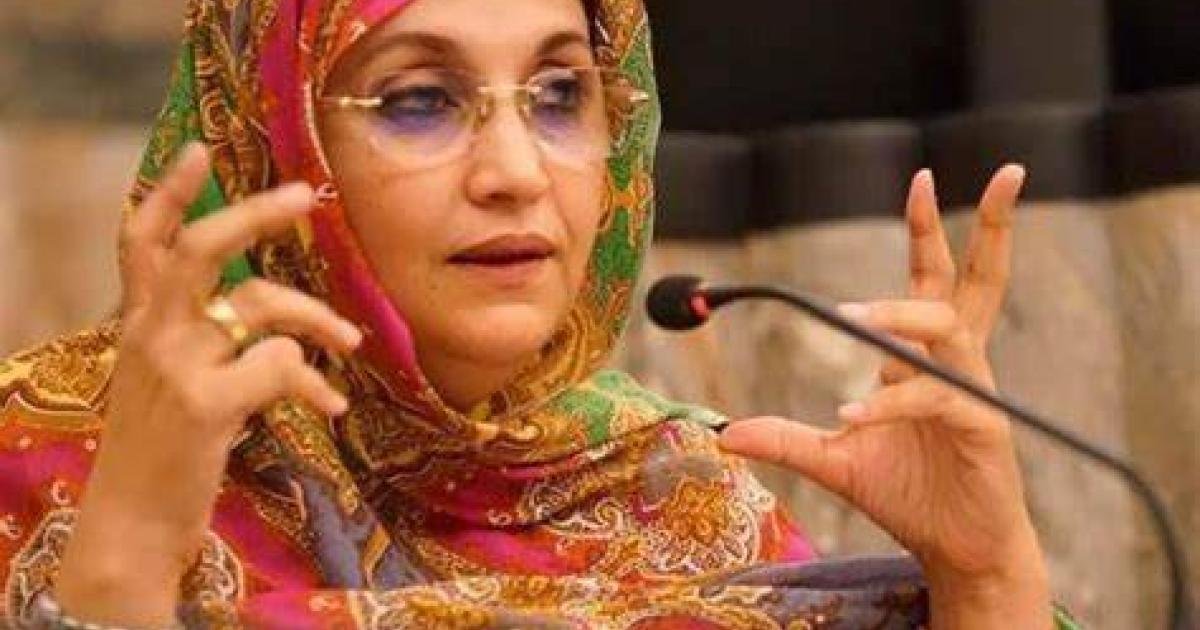
Stockholm (Sweden), June 10, 2026 (SPS) – The head of the Sahrawi Committee against the Moroccan Occupation, Aminatou Haidar, highlighted the aggravation of human rights violations in the occupied part of Western Sahara at the hands of Moroccan forces, calling on the international community to assume its responsibilities towards the Sahrawi people and enable them to exercise their legitimate right to self-determination.
In an interview with the Swedish Right Livelihood Foundation, the Sahrawi activist spoke about the tragic reality of human rights in occupied Western Sahara in light of the continued Moroccan repression.
Aminatou Haidar said that when she is asked to imagine her occupied country, what comes to her mind are prisons, torture, arbitrary arrests, and daily repression, even against children, women, and the elderly, pointing out that the Moroccan authorities continue to practice torture and violence against demonstrators, arbitrary arrests, and issuing harsh sentences against Sahrawi detainees.
She stated that Western Sahara is still living under Moroccan occupation since 1975 and that the Sahrawis are still deprived of their right to manage the affairs of their country and determine their fate, and that Moroccan settlers continue to control wealth and economic opportunities, at a time when the Sahrawis suffer from marginalization, poverty and exclusion.
She added that the Sahrawi people “have been waiting for more than five decades to organize a self-determination referendum, but the absence of any tangible progress has led to the erosion of confidence in the international community.”
In this context, she criticized “the absence of international will to end the Moroccan occupation and enable the Sahrawi people to exercise their inalienable right to self-determination,” calling on the international community to “assume its responsibilities towards the Sahrawi issue.”
At the conclusion of the dialogue, Aminatou Haidar invited the media, activists and international public opinion to visit the occupied Sahrawi territories and see the reality of the Sahrawi population up close, calling for “to raise voices against the ongoing injustice, and to press for a just and lasting solution to the conflict in Western Sahara.” (SPA)