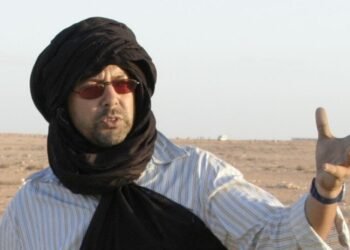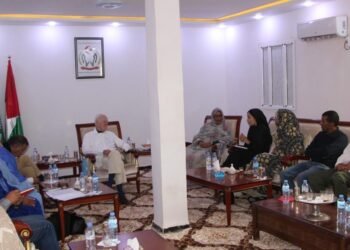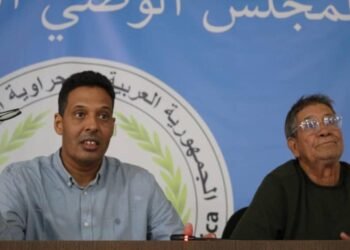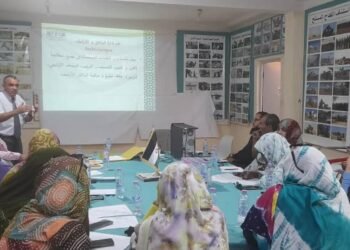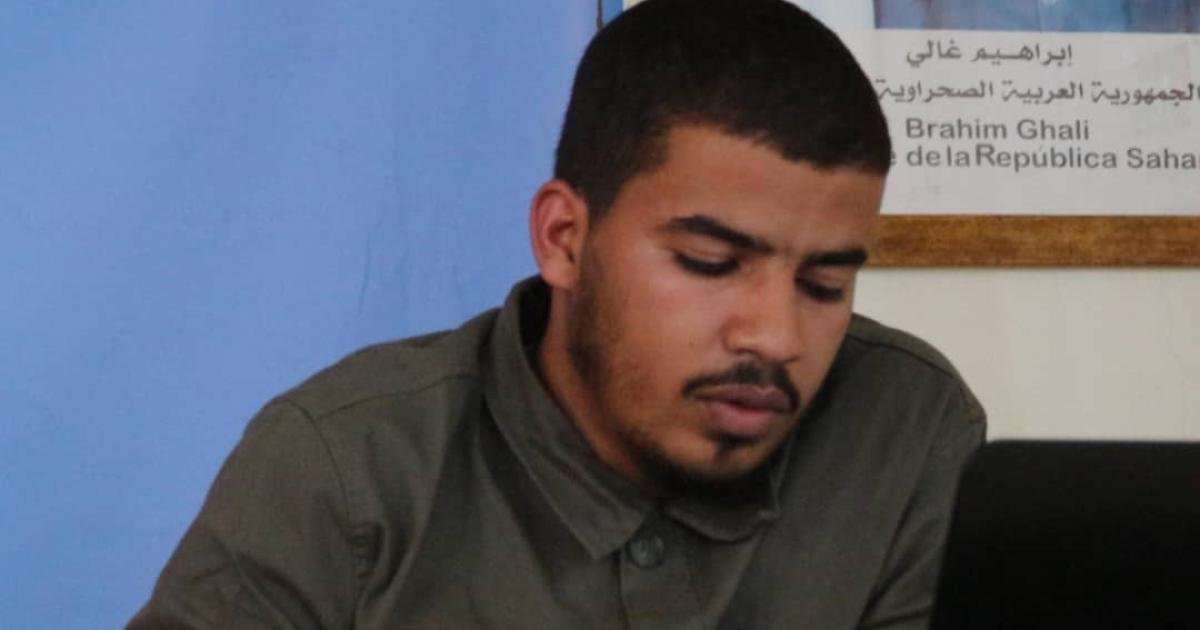
Martyr Al-Hafiz, June 8, 2026 (SPS) – Today, Monday, academic researcher Abdi Mahmoud Abdi presented an anthropological lecture before members of the National Council as part of the spring session.
It dealt with the personality of the bomber of the Sahrawi revolution, the martyr Wali Mustafa al-Sayyid (1948–1976), as a humanitarian, cultural and political phenomenon, through an anthropological approach that goes beyond historical narrative and traditional political analysis.
In his introduction to the lecture, the researcher started from the famous saying of the martyr Al-Wali: “Because there is a people, there is inevitably a homeland,” as it is a key to understanding his vision of national identity and nation-building.
The lecture highlighted the impact of the desert environment and Bedouin culture on shaping the character of the guardian, with the values it carries of freedom, independence, strategic patience, and social solidarity. It also discussed the role of the resistance heritage in building his early awareness. It stopped at his educational and intellectual path, which combined traditional religious education with modern university training, which allowed him to absorb various intellectual currents without losing his desert cultural specificity.
The lecture also analyzed the leadership charisma of Governor Mustafa El-Sayed from the perspective of political sociology, considering that his leadership was not just an individual talent, but rather the product of an interaction between an exceptional personality and a historical moment that the Sahrawi people experienced during the colonial period. His pivotal role in moving Sahrawi social cohesion from traditional ties to a comprehensive national horizon was discussed, and his contribution to the establishment of the Polisario Front as a new political and social space that united the various components of Sahrawi society.
On the intellectual side, the lecture reviewed his vision of the relationship between the leadership and the masses, based on integration and shared responsibility, and his warning against opportunism and dependence as they are among the most dangerous challenges facing liberation movements.
The lecture also discussed the impact of the martyrdom of Wali Mustafa al-Sayyid in 1976 in consolidating Sahrawi national awareness and enhancing collective cohesion, highlighting how his intellectual and political presence remained alive in the collective memory of successive generations.
The lecture concluded that the historical impact of Governor Mustafa al-Sayyid does not lie only in his political and military role, but rather in his success in transforming Sahrawi culture, its values and heritage into a national liberation project, and in his contribution to building a collective awareness that is still effective in the present.
She also stressed that the current challenge is not only to preserve his memory, but to be inspired by his values and principles and translate them into practices and projects that serve the future of the Sahrawi people. (SPA)