Akash Samaroo
Lead Editor – Politics
As the Government moves to extend the State of Emergency (SoE) for a further three months, the Opposition People’s National Movement (PNM) is warning that the current administration could keep Trinidad and Tobago under emergency powers for years by exploiting what it describes as a constitutional loophole.
However, the Prime Minister dismissed the criticism, scoffing at the quality of attorneys within the PNM.
Under Section 10 of the Constitution of Trinidad and Tobago, an SoE can be extended by the House of Representatives for up to three months at a time using a simple majority. However, if the Government wants to extend the SoE beyond an initial cumulative period of six months, a special majority is required. The extension must then be approved by a three-fifths majority vote of all members of both the House of Representatives and the Senate.
Despite governing under States of Emergency for a combined nine and a half months, the UNC administration has not yet had to seek a special majority in Parliament.
The first SoE ran from July 18, 2025, to January 31, 2026, while the second began on March 3 and is due to expire on June 17. In both cases, the Government remained within the initial six-month period during which only a simple majority is required for extensions.
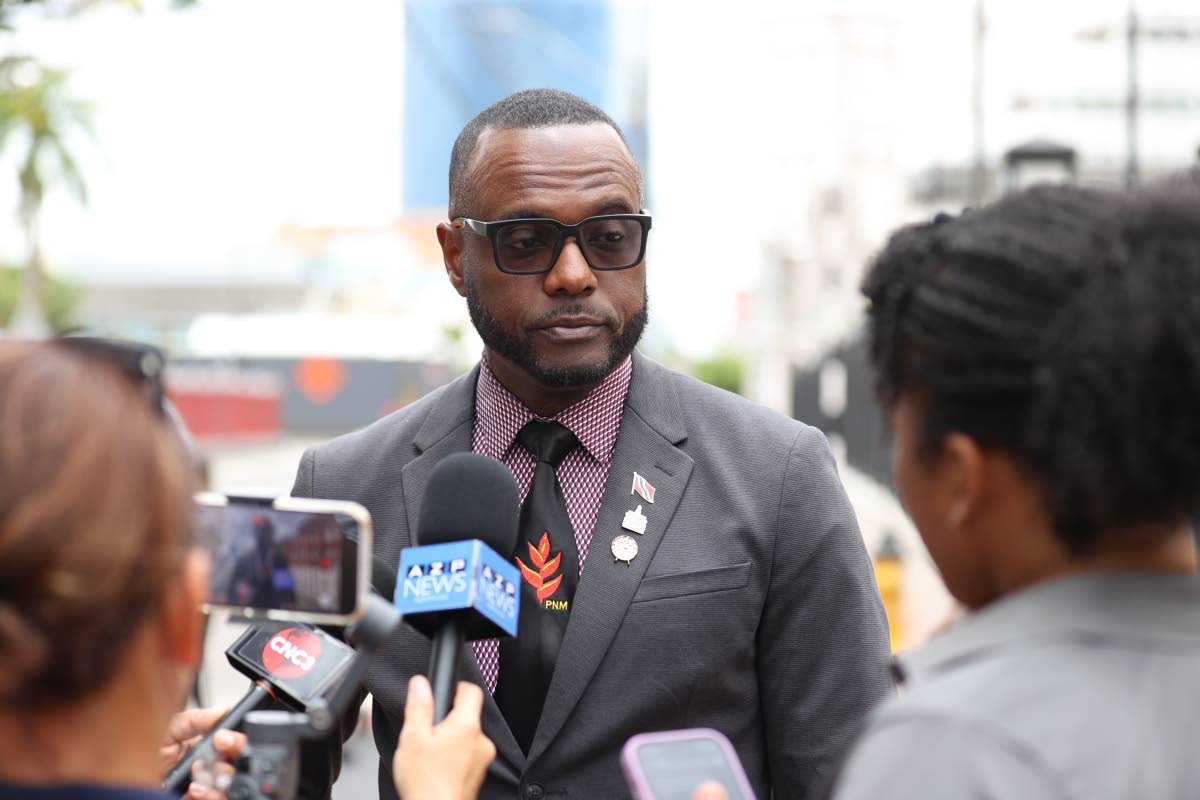
PNM chairman Marvin Gonzales told Guardian Media that by seeking a further three-month extension before reaching the six-month threshold of the current SoE, the Government can continue to rely on its parliamentary majority and avoid the need for special-majority approval.
He said the party is closely monitoring whether the UNC will, as it did previously, secure its three-month extension, end the SoE in September and then return with a fresh SoE, thereby restarting the process.
Speaking on CNC3’s The Morning Brew yesterday, Gonzales said, “Our attorneys have already started looking at the matter, looking at the Constitution, especially whether the framers of the Constitution had intended, by giving the State extensive powers under a state of emergency, for a state of emergency to be utilised by the executive arm of the State to treat with normal everyday criminality in our country.”
He added, “We will go to the Parliament tomorrow (today). We will listen to the Government and the information that they present, and we are going to use that information to guide us as to the action we plan to take with respect to the legality and constitutionality of this state of emergency.”
Panday: SoE extension about silencing dissent
Patriotic Front leader Mickela Panday is questioning the Government’s decision to seek a three-month extension of the State of Emergency, arguing that the move is less about combating crime and more about restricting public criticism and protest.
In a video statement ahead of today’s parliamentary debate, Panday said she does not believe the proposed extension is necessary to fight crime, claiming many citizens share her concerns.
“The Government says that this extension of the State of Emergency is about fighting crime. I don’t believe it,” she said.
Panday pointed to the May 27 protest outside the Office of the Director of Public Prosecutions and the simultaneous announcement of 15 “no-protest zones” as evidence of what she described as a growing effort to suppress dissent.
She argued that as nurses, workers, unions and citizens became more vocal in demanding answers from the Government, authorities moved to seek additional emergency powers before the current SoE expires on June 17.
Questioning the effectiveness of the emergency measures, Panday asked whether citizens genuinely feel safer and whether crime has been significantly reduced.
“If this State of Emergency is working, why do you need another three months? And if it isn’t working, why should the people of this country surrender another three months of their freedoms?” she asked.
The Patriotic Front leader also dismissed suggestions by Government officials that criticism of the administration is rooted in racism, prejudice or political hostility.
Panday further accused the Government of applying a double standard to public demonstrations, noting that protests outside the homes and offices of public officials occurred under previous administrations and were then viewed as legitimate expressions of democracy.
Maintaining that citizens have a constitutional right to hold leaders accountable, Panday urged the public to continue speaking out on national issues.
“Silence is not democracy. Accountability is,” she said, adding that while the Government may command a parliamentary majority, “the people still have a voice.”
Seepersad: SoEs reduce crime but cannot become permanent governance
Criminologist Dr Randy Seepersad says States of Emergency have been effective in reducing violent crime but warned that governments must work towards ending them rather than allowing emergency powers to become a permanent feature of governance.
Speaking on the Government’s proposal to extend the current SoE by a further three months, Seepersad described emergency powers as a tool that should be reserved for exceptional circumstances.
“A state of emergency has a time and place. Ideally, it should be a very limited time and place for the use of a state of emergency as a strategy,” he said.
While acknowledging that emergency measures can be justified when law enforcement requires wider powers to tackle serious criminal threats, Seepersad cautioned that no country should depend on an SoE indefinitely.
“You have to work very diligently towards transitioning out of a state of emergency,” he said.
He noted that prolonged reliance on emergency powers can negatively affect a country’s international image, potentially influencing perceptions among investors and tourists by creating the impression that crime and instability are out of control.
Despite those concerns, Seepersad said the crime data shows clear benefits. According to him, violent crime, burglaries, larcenies and sexual offences tend to decline during periods of emergency rule and rise again once restrictions are lifted.
While insisting that the current SoE is making a difference, Seepersad argued that lasting crime reduction will ultimately depend on addressing the root causes of criminal behaviour, particularly through interventions aimed at young people.