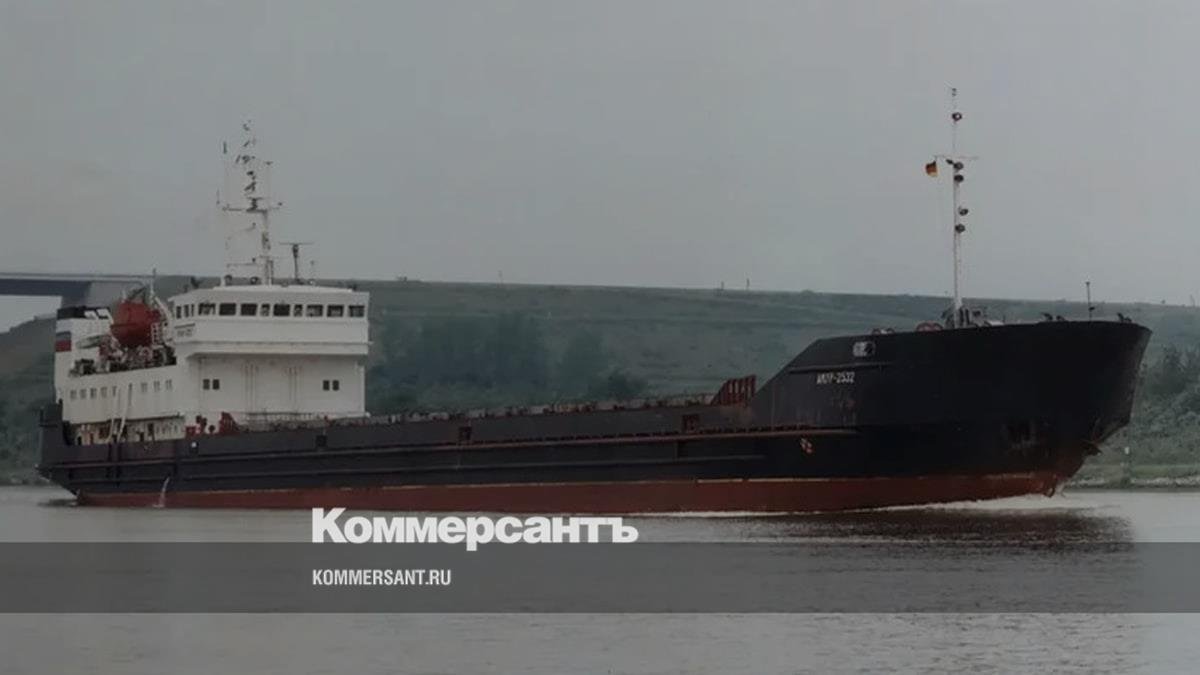
The Azerbaijani Foreign Ministry clarified information about the number of dead and the condition of wounded citizens of the republic who were part of the crews of two dry cargo ships attacked by Ukrainian UAVs in the waters of the Taganrog Bay of the Sea of Azov. At the same time, there was no condemnation of the attacks from Baku. Romania, also affected by the drone war at sea, fully supported Ukraine’s actions. And only the third victim – Greece – has achieved an official apology from Kyiv and is trying to protect commercial shipping from drone attacks through diplomatic means.
On the weekend, the Ministry of Foreign Affairs of Azerbaijan clarified information about the dead and wounded citizens of the country during the June 5 attack on two dry cargo ships in the Sea of Azov. It turned out that four Azerbaijanis were killed. The fifth victim turned out to be a Russian citizen. Four Azerbaijani sailors were injured. The bodies of the dead crew members of the bulk carrier Natra Rajab Akhadov and Mahammad Aliyev were discovered. The issue of transporting bodies to Azerbaijan is being resolved. The bodies of two more victims have not yet been brought ashore. They were on board the second cargo ship attacked, Zirkon, which Russian border guards were holding at the scene of the attack as of Sunday because a fire on board threatened to cause a fuel explosion. The Azerbaijani Foreign Ministry notes that Russian rescuers are taking measures to eliminate the fire and deliver the ship to the port.
The wounded Samid Ibadzade and Rashad Madatkhanov were discharged from the hospital in Yeisk (Krasnodar Territory). The other two wounded Azerbaijani citizens are in satisfactory condition and will be discharged after completion of treatment. About two dozen uninjured Azerbaijani citizens from the crews of the attacked ships are housed in hotels in Yeisk and are awaiting departure to their homeland.
Baku is avoiding the question of who is responsible for what happened. Foreign Ministry representative Aykhan Hajizade emphasized that the ships were not the property of Azerbaijan.
The Azerbaijani media note that citizens of the republic worked on dry cargo ships carrying out transportation in the war zone under private contracts at their own peril and risk.
Bulk carriers Natra and Zirkon, according to statement official representative of the Russian Foreign Ministry Maria Zakharova, were traveling from Turkey to the port of Rostov-on-Don under the flags of Belize and Palau, respectively.
“According to available data, the ships were attacked by Ukrainian drones, which once again confirms the terrorist nature of the Kyiv regime, which is increasingly choosing civilians and civilian infrastructure as its targets,” Maria Zakharova noted in her commentary.
In Kyiv, by the way, they do not deny attacks on merchant ships, considering them to belong to the so-called shadow fleet of Russia. Although neither Natra nor Zirkon appear on published sanctions lists. The commander of the forces of unmanned systems of Ukraine, Robert Brovdi (sentenced in absentia in Russia to life imprisonment for terrorism), said that just on June 5, Ukrainian UAVs hit five merchant ships in the Sea of Azov.
Meanwhile, in Romania, discussions continue on the June 5 explosion of a Ukrainian unmanned boat (BEC) in the port of Constanta. The Romanian authorities admitted that on that day, four naval drones lost control due to the influence of Russian electronic warfare systems. In addition to the one that exploded in Constanta, three more drones detonated far from the Romanian coast.
Romanian President Nicusor Dan blamed Russia for the incident. IN answer The Russian Embassy in Bucharest states: “In view of the deliberately incomplete information disseminated by the Romanian Ministry of National Defense regarding the maritime drone that exploded in the port of Constanta, as well as three other similar drones drifting towards Romanian territorial waters, the Russian Embassy in Romania informs the Romanian public that we are talking about Ukrainian maritime unmanned vehicles used by the Kyiv regime to carry out terrorist acts against civilian ships and creating threats to the safety of navigation in the Black Sea. Any attempts to directly or indirectly “link” these drones to Russia and hold it responsible for this incident are without the slightest basis.”
Meanwhile, the Romanian authorities admit that the country, in fact, has no protection from “lost” Ukrainian unmanned boats. The Romanian Ministry of Internal Affairs notes that the SCOMAR maritime drone tracking system is completely unsuitable for countering Ukrainian BECs, because they belong “to a completely different technical category of targets than those for which SCOMAR was designed and configured.”
Against this background, the position of Greece, another country that suffered from Ukrainian attacks on civilian ships, stands out significantly.
After the discovery of a “sleeping” Ukrainian sea drone off the coast of the Greek island of Lefkada in May, Athens protested to Kyiv and demanded that measures be taken to prevent such incidents from happening in the future.
On May 6, Kyiv officially apologized. How reports TASS, Ukrainian Foreign Ministry spokesman Georgiy Tikhy wrote on social network X: “After the incident with a naval drone discovered off the Greek island of Lefkada… the Ukrainian side apologizes.”
The apology came shortly after Greek Foreign Ministry spokeswoman Lana Zohue said on June 3 made public list of complaints against Kyiv.
- First: sending a naval drone to the shores of Greece is tantamount to transferring military operations to the Mediterranean Sea, far from the front line, which poses a threat to the national security of Greece.
- Second, the presence of drones in Greek territorial waters threatens shipping, can lead to the death of civilians and damage the environment.
- Third: Greece, while respecting Ukraine’s right to self-defense, believes that it cannot serve as a justification for such actions.
- Fourth: Athens calls on Kyiv to henceforth refrain from transferring military operations to the Mediterranean Sea.
Lana Zohiu also outlined the position of Athens as a whole on resolving the conflict in Ukraine: “Greece supports the cessation of hostilities. And, as the Minister of Foreign Affairs (Georgios Gerapetritis) said— “Kommersant”), expansion (of military operations.— “Kommersant”) you won’t end the war.”