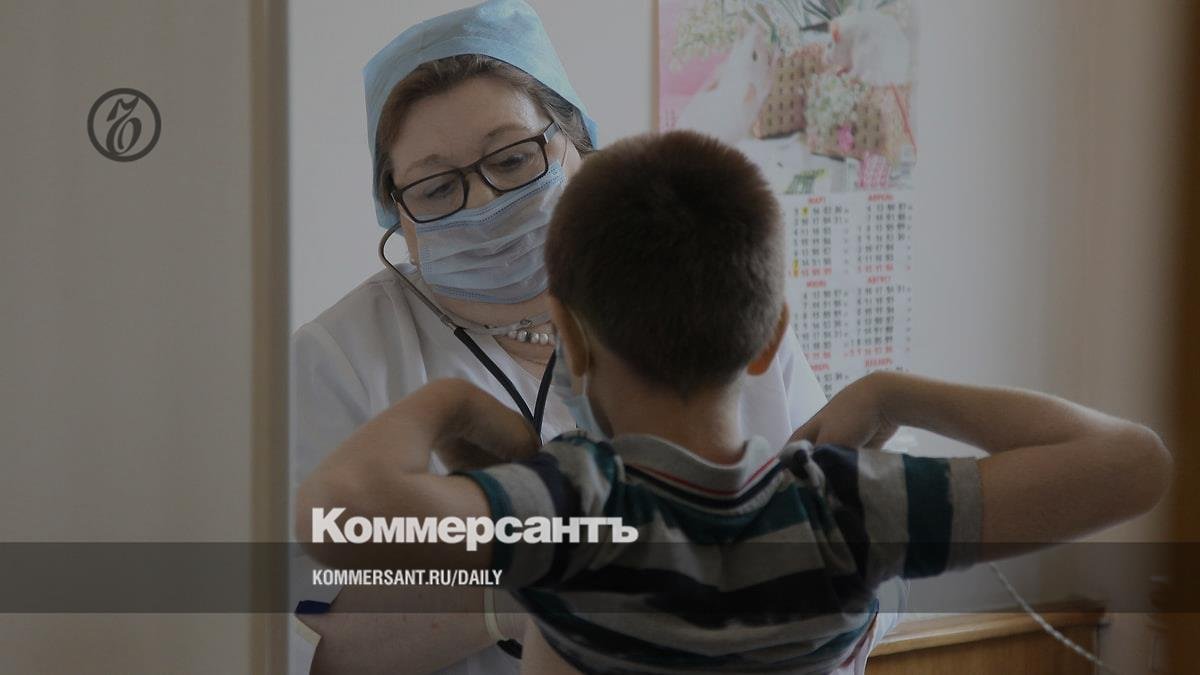
The Ministry of Health wants to give the state fund “Circle of Goodness” a new function – collecting and analyzing information on the results of treatment of children with serious and rare diseases. This data will be supplied to the organization from medical institutions. If it turns out that the drug is ineffective for certain categories of children, the expert council will exclude the drug from the list of products purchased by the fund. Such a mechanism, according to experts, will help make the most efficient use of funding. Moreover, the annual budget of the fund, amounting to almost 200 billion rubles, has been spent almost completely for two years in a row.
The Ministry of Health published on regulation.gov.ru draft presidential decree and government resolution changing the operating procedure of the Circle of Good Foundation. It is planned that the organization will collect and analyze information on the results of the use of drugs and medical devices. Regional and federal clinics will begin to transmit information about treatment results to the fund through a specialized information resource, or, in the absence of such a possibility, “via a secure communication channel.” If the drug turns out to be ineffective for certain categories of children, the expert council will exclude it from the list of products purchased by the fund. Specialists from the Federal Medical and Biological Agency and expert organizations will be involved in the assessment.
Fund “Circle of Good” was created in 2021 to support children with severe and rare (orphan) diseases. Since the foundation began its work, more than 30 thousand children have received assistance. 133 types of medicines, medical devices and rehabilitation products are purchased for them, and nine types of high-tech operations are paid for. In 2025, the fund’s budget amounted to 182.3 billion rubles. (in 2024 – 200.5 billion rubles), of which 181.5 billion (in 2024 – 198.3 billion rubles) was allocated for the purchase of medicines and rehabilitation products.
Russian doctors have accumulated extensive experience in organizing assistance, using drugs and medical devices, the press service of the fund told Kommersant. “The generalization of this experience will allow us to expand the foundation’s contribution to the development of domestic science,” they say. “This will stimulate increased access to innovative technologies and the growth of the pharmaceutical industry, and will also help even more children.”
“Given that for the second year in a row the fund’s budget for expenses has been fulfilled almost 100% (that is, it has no extra money), it is necessary to make the most efficient use of the available funding,” notes Aleksey Fedorov, an expert at the All-Russian Patients’ Union. “Especially taking into account the high cost of a significant part of the drugs from the fund’s lists.” Already, the expert explains, drugs are included in the list based on clinical trial data. But often, explains Alexey Fedorov, the amount of data is limited due to the rarity of diseases and little experience in using drugs. Now the fund will study data from real clinical practice, the effectiveness and safety of drugs – and, taking into account the assessment, will make a decision on the fate of a particular drug, says Alexey Fedorov.
The published draft also introduces the obligation of the chairman of the foundation’s board to annually submit to the president a report on the organization’s work with proposals for development. In addition, the document approves the new composition of the fund’s board of trustees. It is proposed to exclude from it, among others, the director of the Moscow Multidisciplinary Center for Palliative Care Nyuta Federmesser, the general director of the Dmitry Rogachev National Medical Research Center for Pediatric Hematology, Oncology and Immunology Galina Novichkova and the singer Yulia Samoilova. At the same time, the council will include several heads of large Russian media, including the general director of Channel One Konstantin Ernst, as well as the general directors of MIA Rossiya Segodnya Dmitry Kiselev, Gazprom Media Holding Alexander Zharov, VGTRK Oleg Dobrodeev and TASS Andrey Kondrashov.