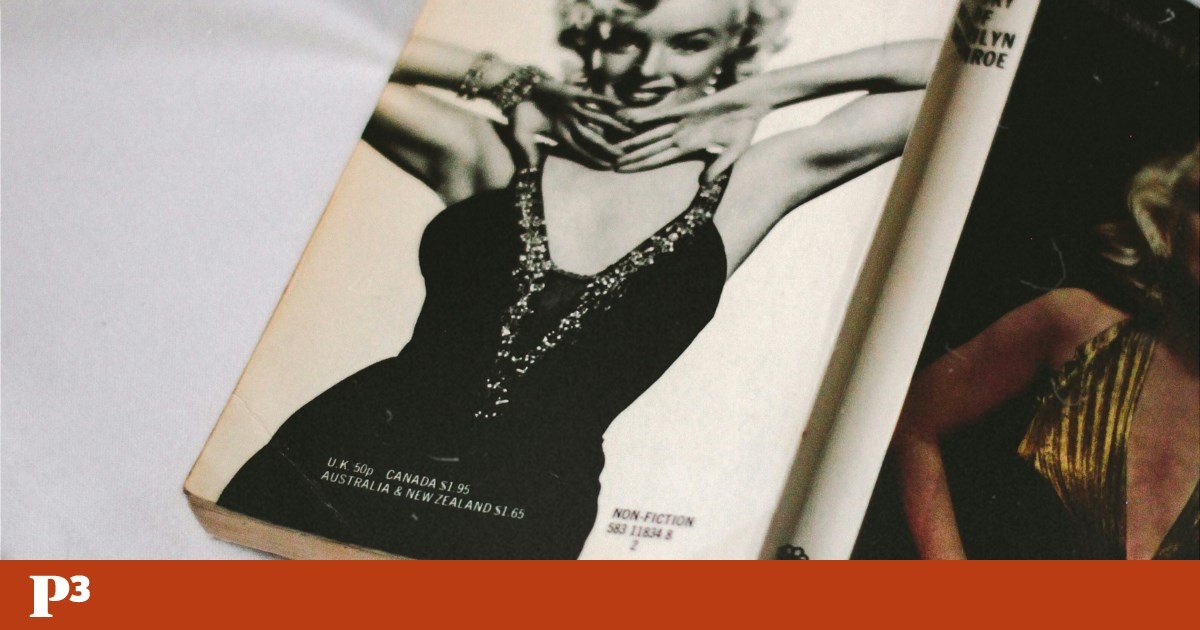
The golden age of Hollywood shone in the aura of great and talented actresses with dream careers. It was a time of talents and beauties perhaps greater than Marilyn Monroe. However, none became as representative of old Tinseltown as she did. This Monday, June 1, 2026, Monroe would have turned 100 years old and deserves to be remembered here for the talented actress and the unavoidable figure she became in the history of cinema.
Endowed with incandescent beauty, with a difficult life story, a unique, magical and delightfully magnetic personality (which only Greta Garbo can match), monroe captivated a legion of fans that continues to grow today. Monroe participated in a few films, most of which were quite forgettable. However, it became a shining star, a kind of swan song, at a time when the studio system and the star system their days were numbered. Despite being part of the final stretch of cinema’s glorious era, she is probably the most famous woman of the 20th century. Much has been written about his difficult childhood, in foster homes and with a mentally fragile mother. Little Norma Jeane Mortenson (her real name) took refuge in the cinema, allowing herself to be enchanted by the first platinum blonde in Hollywood, Jean Harlow, her idol who she tried to imitate, and by her favorite actor, Clark Gable, fantasizing about him being her “father” (Monroe never got to know her real father).
At a very young age, Monroe began working as a model. pin-upfor which he had obvious talent and from there to cinema was a small leap. She changed her name to Marilyn at the request of agent Ben Lyon and got a six-month contract with 20th Century Fox, a major studio that had a special predilection for promoting blonde actresses in musical comedies, from the extraordinary Shirley Temple, to Alice Faye, Betty Grable and June Haver.
Incomprehensibly, Fox boss Darryl F. Zanuck didn’t see any potential in Monroe as an actress. But it was by playing small roles in two great films that she captured the attention of critics and the public: The Asphalt Jungle (1950) and above all All About Eve (1950) put it on the map. Then, under a new contract with Fox, Monroe made a B film, Don’t Bother to Knock (1952), where he was able to demonstrate some dramatic talent, but it was in the following year that he became a great comedy star in his own right, his true “stuff”.
Apart from Niagara, which is a noir in technicolor without much dimension and with a less than satisfactory performance, she was fantastic in two comedies, Gentlemen Prefer Blondes and How to Marry a Millionaire. It’s in the first one that Monroe appears in her fabulous hot pink “cai cai” dress (created by the iconic Travilla) and sings the emblematic Diamonds are a Girl’s Best Friend. It must be said that, just like Rita Hayworth and Lana Turner, monroe is a glamorous star whose filmography is not abundant in great films, but who has great iconic moments. After the scandalous scene of the white dress that flutters as the subway passes, revealing her elegant legs, in the sexual comedy The Seven Year Itch (1955), Monroe became immortal above all through the famous I Wanna Be Loved By You (poo poo pee doo) in Some Like It Hot (1959), for the long shot in Niagara that shows his sensual and peculiar way of walking and, of course, for mischievously singing congratulations to the birthday president John F. Kennedy.
Despite the box office successes, Monroe felt little fulfillment with the light and sensual films they offered her, wanting to be taken seriously as a dramatic actress, something that caused scorn from others. Thus, in a gesture of humility, Monroe went to study acting at the renowned Actors Studio school in New York. He later managed to appear in a more prestigious film, bus stop (1956), where he successfully played a considerably dramatic role. However, the public wanted to see her in comedies and, for that reason, the actress returned to the genre, with one of her best performances in the reasonable The Prince and the Showgirl (1957).
Undoubtedly, his best film is Some Like It Hota sexually daring and also humanly tolerant comedy, a work for which he deservedly received a Golden Globe. Monroe would then make a film where he was able to demonstrate with greater vehemence his dramatic talent, the beautiful but depressing The Misfits (1961), a film that, in a way, ends Hollywood’s golden period. In fact, it would be the last film for Monroe and Clark Gable, her “father”. Gable died shortly after filming ended. Monroe would only live two more years, leaving us on the fateful night of August 4, 1962, in a context that is still shrouded in mystery today.
Monroe died and with her died old Hollywood. The years that followed her death were those of a new world, popularized by the hippie and feminist movements (which embraced her as an icon representing victimization by patriarchy and resistance against it) and counterculture. Monroe no longer knew this reality and it would be very interesting to see how she would fit into it, although her latest films allow us to guess. Over the years, several actresses have tried to replicate the star, but they have never managed to be more than a pale copy of Monroe’s sensuality, either too voluptuous or with a fausse-naive annoying that only enhanced the true innocent and mischievous charm of Monroe, a mortal diva… immortal too. And unforgettable.