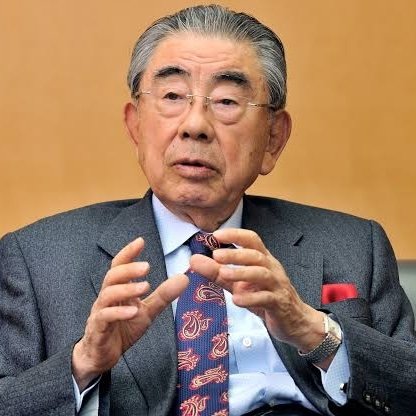

Toshifumi Suzuki, founder of 7-Eleven Japan / PHOTO: X@Osint613
Toshifumi Suzuki, the founder of 7-Eleven Japan and considered the father of the convenience store industry in Japandied on May 18 of heart failure, Seven & i Holdings announced. He was 93 years old.
Born in Nagano Prefecture in 1932, Suzuki began his career in a book distribution company before joining the retailer Ito-Yokado in 1963.
In the early 1970s, at a time when the idea seemed risky to many Japanese investors, Suzuki partnered with American company Southland Corp, operator of the 7-Eleven chain, to bring the concept to Japan.
Seven-Eleven Japan was established in 1973, and the first store opened in Tokyo a year later.
Suzuki is credited with radically transforming Japanese commerce by introducing a model based on rapid product turnover, data-driven inventory management and an emphasis on ready-to-eat food.
Under his leadership, convenience stores have become an essential part of everyday life in Japan, offering products and services adapted to an urban lifestyle and busy work pace.
Idea imported from US
In interviews over the years, Suzuki said the idea came to him during a trip to United Stateswhere he was negotiating a deal for the Denny’s restaurant chain. That’s when he discovered 7-Eleven stores and decided that the model could also work in Japan.
At the time, many were skeptical. Suzuki recalled that he was going “against the tide,” but continued the project, adapting the American concept to the Japanese market—for example, replacing the bread on American shelves with onigiri, the traditional Japanese rice balls.
His vision proved a major success. Convenience stores have become indispensable for millions of Japanese, especially for families with long working hours.
Seven-Eleven’s success was quickly followed by the emergence of competitors such as Lawson and FamilyMart. However, Seven-Eleven remained the largest chain in Japan, with nearly 22,000 stores nationwide and approximately 85,000 worldwide.
In 1990, Suzuki led the acquisition of American parent company Southland Corp after it went bankrupt due to huge debts. He subsequently accelerated the global expansion of the business, including the American market.
In 2005, Suzuki created the holding company Seven & i Holdings, transforming the company into a retail conglomerate with extensive activities.
Convenience stores in Japan today offer a wide range of services, from ATMs and bill payments to postal services, pharmaceuticals and ready meals. They also play an important role in emergency situations or natural disasters.
However, the company also faced internal management disputes.
In 2016, Suzuki surprised the Japanese and international business community when he abruptly resigned as chief executive following a conflict with board members and US activist investor Daniel Loeb.
Suzuki had then tried to oust Ryuichi Isaka, in charge of the convenience store division, amid speculation that he wanted to groom his own son as his successor.
In announcing his retirement, Suzuki said he took responsibility for the failure of the management reorganization. Ryuichi Isaka later became CEO, later replaced by Stephen Dacus.
In recent years, Seven & i Holdings has attracted the interest of foreign investors. In 2025, the Canadian company Alimentation Couche-Tard launched a takeover bid worth 6.77 trillion yen, equivalent to about 44 billion dollars. The offer was abandoned after strong opposition from the Japanese leadership.
Under current management, the group aims to continue expanding in the United States, although in the meantime it is closing hundreds of stores in the American market. The company announced in April that it was delaying plans for a US IPO until 2027.
In parallel, Japanese convenience stores have become an attraction for tourists. According to research firm JapanConsuming, almost all 7-Eleven stores in Japan were visited by foreign tourists in fiscal year 2024.