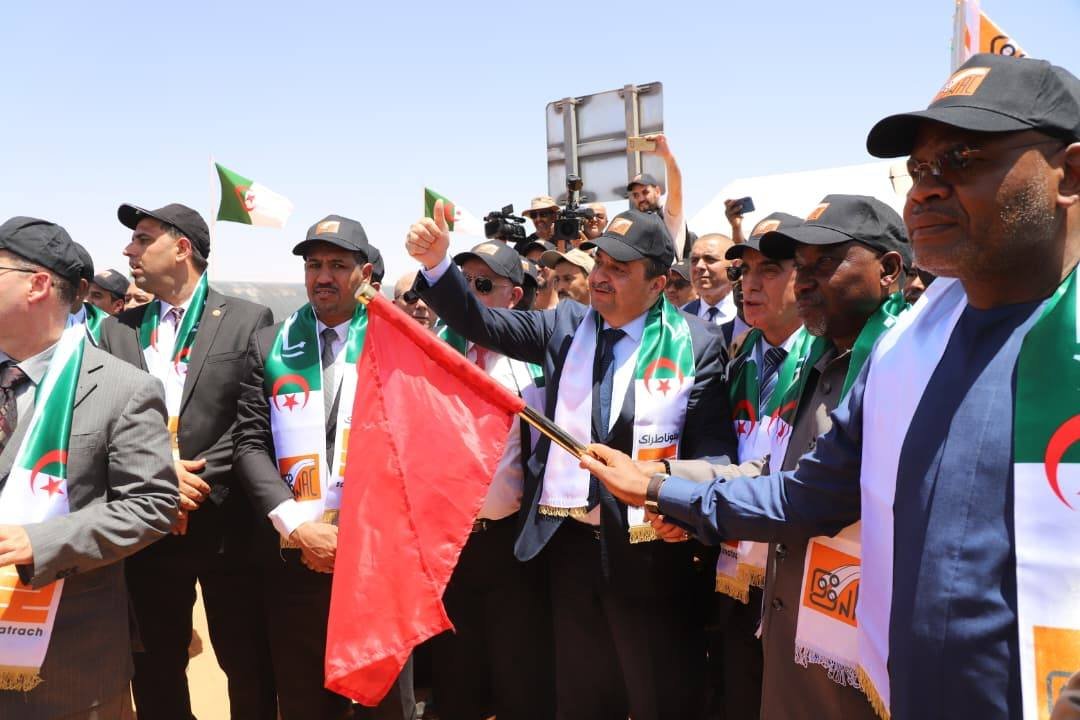
Today, Thursday, June 4, the official launch of the work to complete the Algerian part of the trans-Saharan gas pipeline project took place in the Ulf region of Adrar Province.
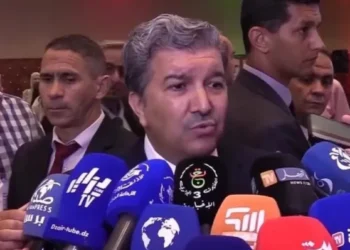
The operation was supervised by the Minister of State and Minister of Hydrocarbons, Mohamed Arkab, the Minister of State for Petroleum Resources in charge of Gas in the Federal Republic of Nigeria, Ekperekpe Ekpo, and the Minister of Petroleum of the Republic of Niger, Hamadou Teni.
The three ministers stressed that this project embodies the joint political will of the leaders of Algeria, Niger, and Nigeria to build a model African energy partnership based on integration, solidarity, and achieving common interests, noting that moving to the completion stage represents a decisive step in the process of embodying one of the largest structured energy projects on the level of the African continent.
According to what the Ministry of Hydrocarbons reported, “This historic event comes following the holding of the fifth ministerial meeting of the Steering Committee of the Trans-Saharan Gas Pipeline Project in Algiers, which culminated in the joint approval of the final report of the feasibility study completed by the PENSPEN Study Office and the adoption of its results and recommendations, allowing the transition to the practical and implementation stages of the project.”
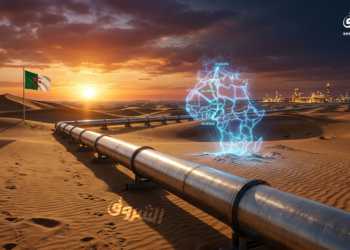
The launch of the works on the Algerian part constitutes a “turning stage” in the implementation of this strategic continental energy project, which aims to transport between 20 and 30 billion cubic meters of natural gas annually from Nigeria through Niger to Algeria, and from there to regional and international markets, relying on the advanced infrastructure that Algeria has in the field of natural gas transportation, processing and export.
This part will also enable “the absorption and transportation of future quantities of natural gas coming from Nigeria via Niger, as well as the transfer of additional quantities of gas produced in Algeria from a number of existing, discovered and new gas basins, especially the Ahnat Basin, which will enhance the capabilities of transportation, assembly and export, and contribute to valuing the gas resources of the three countries.”
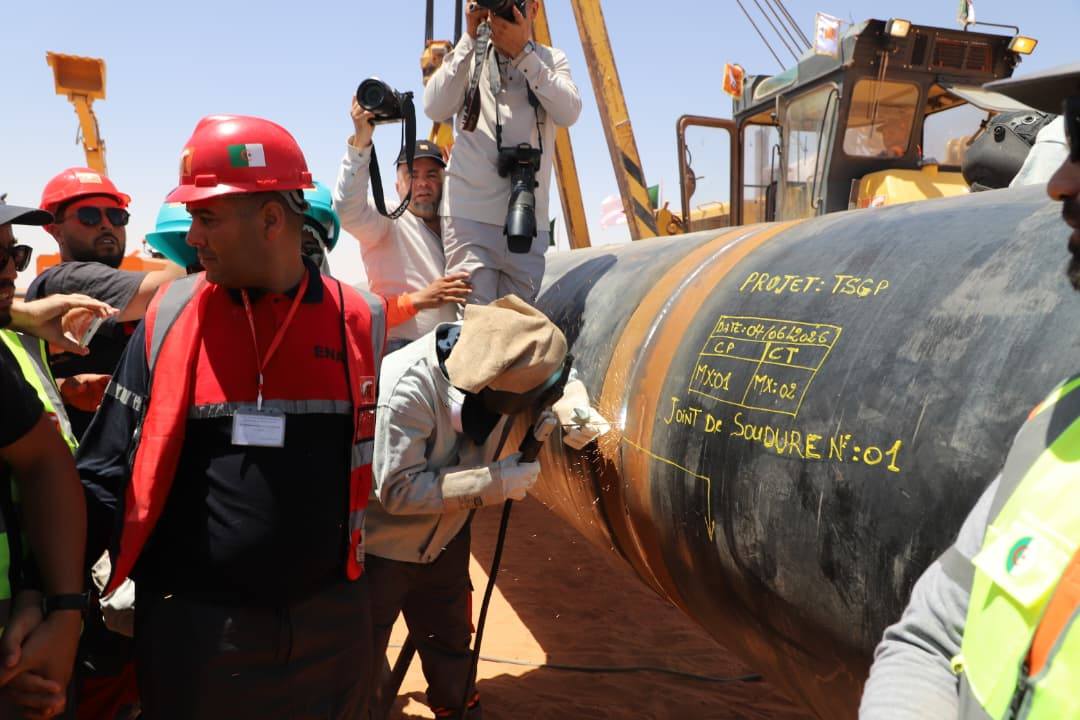
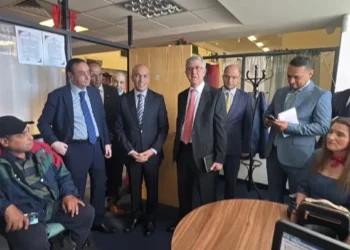
Picture of the process. Image: Ministry of Hydrocarbons and Mines (Networks)
The ministers stressed that the transition to the executive stages of the project reflects “the level of trust and coordination that exists between the three countries, and confirms their joint determination to complete the various future stages of the project according to the highest standards.”
In this context, the Minister of State for Petroleum Resources in charge of Gas in the Federal Republic of Nigeria affirmed his country’s full commitment to moving forward with the implementation of the trans-Saharan gas pipeline project, stressing that Nigeria will do everything in its power to make this project a success, which carries great strategic importance for the three countries and the African continent.
As for the Minister of Petroleum of the Republic of Niger, he highlighted, for his part, that the Trans-Saharan Gas Pipeline Project is a pivotal project in cooperation between Algeria, Niger and Nigeria, stressing that its positive effects will not be limited to the three countries only, but will extend to the entire African continent, in a way that supports economic development, regional integration and enhancing the exploitation of African energy resources.
The ministers also renewed their praise for the support given by the President of the Republic, Mr. Abdelmadjid Tebboune, to African cooperation projects and the promotion of South-South partnerships, stressing that this project falls within the common vision aimed at promoting continental integration and developing strategic infrastructure that serves the sustainable development of the peoples of Africa.