Friday and Saturday 19/20 Dhu al-Hijjah 1447 AH – 5/6 June 2026 AD
Under the direct supervision of the leadership… a brilliant and renewed success for the Hajj season
A safe and reassuring atmosphere
Serving the Two Holy Mosques and their visitors is a firm priority for the Kingdom
The Kingdom of Saudi Arabia has reaffirmed its global position in managing the Hajj season and serving the guests of God, after an exceptional season characterized by success, smoothness and high efficiency of performance in its various stages. This success came as an extension of the directives of the Custodian of the Two Holy Mosques King Salman bin Abdulaziz and His Highness the Crown Prince and Prime Minister Prince Mohammed bin Salman – may God protect them – which harnessed all human, organizational and technical capabilities to serve the pilgrims and enable them to perform their rituals in security, ease and reassurance. The Hajj system this year reflected an advanced level of integration between early readiness, the efficiency of field implementation, the development of infrastructure and health and digital services, in addition to security, organizational and volunteer efforts, in an integrated scene that consolidated the Kingdom’s ability and potential in managing the largest human gatherings in the world, embodying accumulated organizational experience in serving the visitors of the Two Holy Mosques, and confirming its ability to employ strategic planning, institutional integration and modern technologies in an exceptional season characterized by precision, fluidity and readiness. Exceptional.
Crown Prince
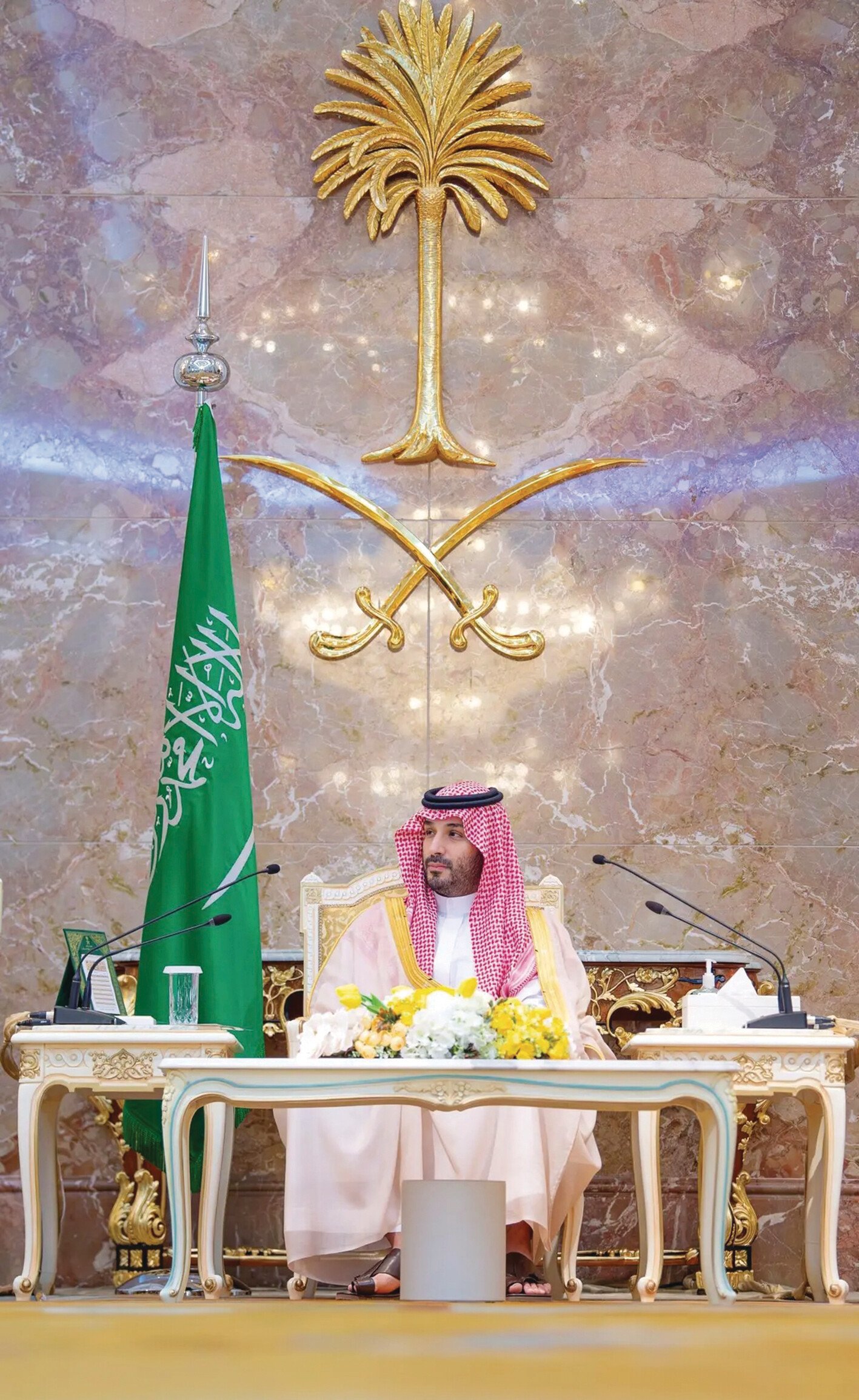
In a scene that embodies the care that the Saudi leadership gives to the Two Holy Mosques and the guests of God, and the continuous keenness to follow up on the services provided to pilgrims on the ground, the presence of His Highness the Crown Prince and Prime Minister, Prince Mohammed bin Salman – may God protect him -, in Mina, emerged as a direct confirmation of the leadership’s interest in the comfort and safety of pilgrims, and the readiness of the holy sites and the services provided therein, in a way that reflects the position that the service of the Two Holy Mosques and their visitors represents in the priorities of the Kingdom of Saudi Arabia and its leadership. The reception of the Crown Prince, on behalf of the Custodian of the Two Holy Mosques, King Salman bin Abdulaziz – may God protect him -, at the Royal Court in Mina Palace, to Their Excellencies and state dignitaries, Islamic dignitaries, heads of delegations and pilgrim affairs offices who are performing Hajj this year, was an extension of this direct follow-up, and a message that reflects the Kingdom’s continuous care for the guests of the Most Gracious, and its keenness to provide everything that will help them perform their rituals in an atmosphere of reassurance and ease, as In his speech during the ceremony, His Highness the Crown Prince affirmed that serving the Two Holy Mosques and the Holy Sites and caring for those who visit them will remain a firm priority for the Kingdom, as an extension of the approach established by the state since the era of the founding King Abdulaziz bin Abdulrahman Al Saud – may God rest his soul – stressing the continuation of efforts in serving the guests of the Most Gracious, praying to God to accept the pilgrims’ Hajj and return them to their homelands safely.
Guidance and readiness
The success of the season was a direct extension of the directives of the wise leadership – may God protect it -, which emphasized from an early stage the harnessing of all human, organizational and technical capabilities, to ensure that pilgrims were able to perform their rituals in an atmosphere of security, tranquility and tranquility. This was reflected in an interconnected work system in which various governmental, security, health, service and volunteer sectors participated, in an integrated scene that accompanied the pilgrim from his departure from his country until the completion of his ritual and his return to his country. His homeland, and since the first days of the season, comprehensive readiness indicators appeared clear at various air, land and sea ports, within a precise operational system aimed at facilitating entry procedures, accelerating arrival movement, and providing logistical and guidance services in several languages. This readiness reflected the level of early planning and broad coordination among the concerned authorities, at a time when airports, land and sea ports witnessed a remarkable smoothness in receiving pilgrims, through advanced organizational paths that relied on digital systems and electronic verification technologies, and the affiliated field teams contributed. Multiple ministries and agencies, such as passports, security, health, and support services in accelerating procedures and facilitating movement around the clock, with special attention to the elderly and people with needs, and providing immediate support for various cases, in an image that highlighted the organizational and humanitarian dimension at the same time. In this context, the “Mecca Road” initiative continued its presence as one of the most prominent qualitative Saudi projects in developing and facilitating the Hajj journey since its inception. The initiative allowed the guests of God coming from the countries included in it to complete their procedures before leaving their homelands. Starting from issuing visas and verifying vital data, passing through passport procedures and health requirements, all the way to coding and sorting luggage according to residence locations and transportation plans within the Kingdom. The initiative contributed to shortening the arrival time, reducing pressure on international ports, and giving pilgrims a smoother and more comfortable experience from the first moments, reflecting the development of the Saudi Hajj system, which is no longer limited to managing the holy sites within the Kingdom, but rather begins from outside its borders and accompanies the pilgrim until the completion of his journey. The initiative also embodies an advanced level of Partnership and coordination between the Kingdom and the participating countries, to turn into a practical model for institutional cooperation in serving the guests of God, in a way that raises the quality of services and enhances operational efficiency and flow.
Quality of services
In Mecca and the Holy Sites, the effects of early preparations were clearly present, whether at the level of infrastructure or operational readiness, and transportation networks appeared at high organizational levels, with the strengthening of paths designated for crowds, and raising the readiness in stations and service centers, which contributed to the smooth movement of pilgrims between Mecca and the Sites, and between Mina, Arafat, and Muzdalifah, according to precise plans to manage movement and distribute densities on well-studied timetables, and municipal services, cleanliness, and environmental sanitation also registered a presence. Broadly, through field teams and continuous operating mechanisms in various locations, in addition to raising the efficiency of water, energy and cooling networks, which enhanced the comfort of pilgrims during the peak of the season and raised the quality of the operational environment in the Holy Sites. At the health level, the health system emerged with high efficiency, through hospitals, medical centers and emergency teams spread in Mecca and the Sites, supported by advanced readiness to deal with emergency cases and provide preventive and curative care and supportive medical services. This readiness came within precise proactive plans that take into account the nature of the season. And its intensity, and depends on the speed of response and the efficiency of intervention, which enhanced the level of health safety and increased the ability to deal immediately with various cases, and digital services constituted one of the most prominent features of this year’s Hajj, in a clear extension of the objectives of the Kingdom’s Vision 2030. The Kingdom continued to develop the technical environment related to Hajj through smart applications and platforms that allowed pilgrims to access information and services quickly and easily, starting from digital permits, all the way to instant guidance, interactive maps, and alert messages for transportation and transportation, and it also strengthened the technical systems. Used for security efforts
In crowd management, there is the ability to read data and analyze field movement moment by moment, which contributed to raising the efficiency of the organization and improving the pilgrim experience, in a model that reflects the use of technology to serve humanity and raise the quality of public services.
After humanity
In the field, the human presence was prominent throughout the sites, with the participation of various security, organizational and service sectors, in direct follow-up inside the feelings and on the movement paths and gathering sites, with real-time coordination between the relevant authorities, which contributed to the implementation of the recruitment plans according to the specific objectives. Volunteers also attended in a remarkable humanitarian scene, through thousands of participants who were distributed in the various sites to provide guidance, support, translation and basic services, which reflects a societal culture rooted in serving the guests of God, and enhances the integration between institutional work and the spirit of initiative. In the community, and in the Jamarat facility, as in the main roads inside Al-Mashaer, the levels of organization and coordination appeared to be a direct reflection of the accumulated Saudi experience in managing large crowds. Precise plans were implemented, supported by field follow-up and technical systems, with a flexible distribution of movement and thoughtful organization that contributed to reducing densities, enhancing the safety of pilgrims and giving them more reassurance while performing the rituals. The success of the season was not limited to the organizational aspects alone, but rather extended to the human dimension, which remained an integral part of the Hajj experience, whether in the scenes. The reception, or in the nature of field dealings, or in the efforts made to provide a safe and comfortable environment for pilgrims coming from different nationalities and cultures, as the Kingdom reflected its Islamic, humanitarian and civilizational mission in serving the visitors of the Two Holy Mosques, within a model that combines efficient organization, generous hospitality, and the depth of historical responsibility.
Universal model
This year’s Hajj season confirms the Kingdom’s continued provision of an advanced global model for Hajj management, based on advanced infrastructure, organizational experience accumulated over decades, continuous investment in technology and human resources, and a strategic vision that makes the development of the Hajj system a renewed work that develops year after year. With each new season, the Kingdom continues to establish an established fact that serving pilgrims is not only a seasonal task, but a historical commitment and an extended responsibility, harnessing all capabilities for one goal: to serve the pilgrims. Their rituals are in security, tranquility and ease, and this season the scene seems clearer than ever before, with a system that works precisely, preparations that begin long before the pilgrim arrives, services that develop steadily, and an integrated experience that confirms that the Kingdom is moving confidently towards establishing Hajj as an advanced global model in management and organization, and a renewed humanitarian message in the service of Islam and Muslims.
Hajj certificates
At the end of the season, the testimonies of pilgrims coming from various countries of the world reflected the level of satisfaction and satisfaction with the level of organization and services provided by the Kingdom during the Hajj season, stressing that what they witnessed on the ground embodies the amount of care that Saudi Arabia gives to the guests of God, and reflects an advanced level of readiness, planning and integration in the various stages of the faith journey. The pilgrims unanimously agreed that what they experienced from the moment of arriving in the Kingdom, through movement between the holy sites, and until the completion of the rituals, reflected high organizational efficiency and precise preparations. The Kingdom has harnessed all its capabilities to it, through an integrated system that combined field organization, health and guidance services, and means of transportation, in addition to modern technical solutions that contributed to facilitating movement and raising the level of flow within the holy sites. A number of pilgrims confirmed that the services provided this year gave them more reassurance and comfort, and enabled them to devote themselves to performing their rituals in a safe and organized atmosphere, praising the continuous field presence of the concerned authorities, the efforts of the security personnel, and the role of volunteers in providing guidance and support, including It enhanced the quality of the experience and left a positive impact on the pilgrims of different nationalities and cultures, pointing out that what was achieved in this year’s Hajj season embodies the position that the Kingdom holds in serving the Two Holy Mosques, and confirms its accumulated experience in managing large crowds, in addition to its ability to develop the Hajj system year after year, keeping pace with the needs of pilgrims and improving the quality of services provided to them.

Security efforts


Volunteer efforts

Instructions for the guests of God