The Constitutional Chamber gave rise to an unconstitutionality action that questions the current Financing rules for political parties in Costa Rica. The management presented it Massimo Esquivel Tessoni, former candidate for deputy for third place in the National Integration Party (PIN) in San José.
The process, under file 25-039019-0007-CO, challenges articles 91 to 96 of the Electoral Code, as well as the Regulation on the Financing of Political Parties of the Supreme Electoral Tribunal (TSE). Also, it points out regulations of the General Superintendency of Financial Entities (Sugef) because it considers that they create Discriminatory barriers to equitable access to resources in campaigns.
These are the articles that determine the individual cost of the vote, according to the number of votes obtained by each party, as well as the classification of justifiable expenses and the use of reserves for organization and training of political groups.
This public financing works under a reimbursement schemesince the State recognizes campaign expenses, once the elections are overonly to the parties that exceed the threshold of 4% of votes validly cast either manage to elect at least one deputy.
Esquivel argues that the regulations omit effective mechanisms to guarantee the electoral equity in terms of financing, which operates as disproportionate barrier that excludes emerging parties.
The lawsuit states that, for example, financial institutions systematically reject political debt bonds as autonomous collateral for electoral credits. The plaintiff indicates that the banks require additional real collateral, which leaves out parties without historical heritage.
“This practice generates a vicious circle: without financing, there is no viable campaign; without a campaign, there are not enough votes; Without votes, there is no political debt materialized,” says the document presented to the Court.
According to the plaintiff, the practice forces them to sell bonds with discounts of up to 60% or to resort to non-transparent donations.
Esquivel mentioned that the Organization of American States (OAS) recommended on five occasions breaking the dependence on private and banking resources in campaign financing in the country.
The OAS pointed out, after the recent February campaign, that the country maintains historical challenges related to inequity of the current financing system and that this reality, added to the dependence on private money, increases the vulnerability of the electoral process.
That organization also warned about the possible infiltration of organized crime, including resources linked to drug traffickingin the political-electoral financing of Costa Rica.
The unconstitutionality action maintains that these norms They distort political pluralism. The appellant argues that the country is failing to establish conditions that equalize the conditions of all the parties in conflict.
The plaintiff requests that the contested regulations be annulled and the TSE and Sugef are ordered to establish mechanisms aligned with international standards.
The Chamber granted a audience for 15 days at Attorney General’s Office and the president of the Legislative Assembly, the TSE and the Sugef.
The resolution clarifies that the filing of this action does not suspend the general validity of the questioned laws. However, the judges determined that a final resolution cannot be issued in processes where the application of these rules is discussed until the Constitutional Chamber issue your ruling

How are political parties financed?
The financing system of political parties in Costa Rica it’s mixedsince it combines public and private resources. On the one hand, The State allocates a part of the national budget to cover the expenses of the groups.
On the other hand, Parties can receive private contributions —such as donations or credits— within the limits and controls imposed by electoral regulations.
For the 2026 elections, the Supreme Election Tribunal (TSE) set ¢39,292 million the total amount of the state contribution which will be distributed among the participating groups.
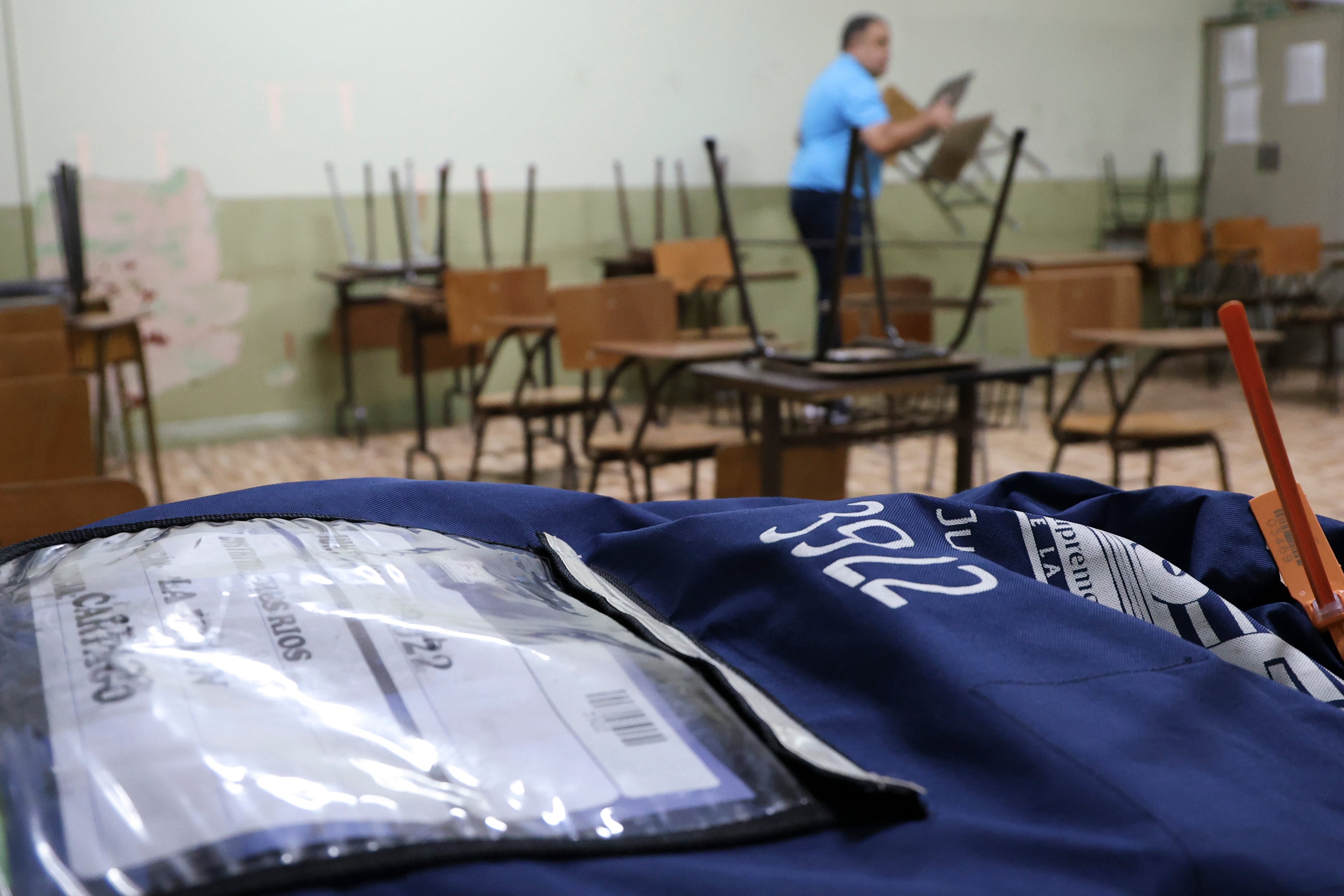
For the 2026 electoral campaign, all political debt is distributed between five parties: Sovereign People (PPSO), National Liberation (PLN), Broad Front (FA), Citizen Agenda Coalition (CAC) and Christian Social Unity (PUSC).
Last October, the head of the TSE’s Party Financing Department, Ronald Chacón, pointed out that the electoral financing system has weaknesses.
“Because at a time when political parties are using the most moneyto rent premises, hire external signs, pay for advertising in the media or on the Internet, which is a really large expense, They do not have public financing, except the possibility of opting for advance financing”he added.
However, advance financing is also difficult to access, as political parties They must present a liquid guarantee for the equivalent of the amount they request. For the TSE, it is a loan.
What does the TSE say about the action?
The TSE maintains a critical position regarding the current financing modelwhich he describes as deficient and inequitable.

“There are many of the issues that the Court has consistently pointed out, for example, that Costa Rica is deficient as a country in a (electoral) financing system“, he explained to The Nation Andrei Cambronero, spokesperson for the institution.
Cambronero explained that the country lacks a robust indirect financing system, and recalled previous proposals for the State to manage media advertising, but that They have not been approved by the deputies.
For example, the spokesperson said that the TSE has systematically qualified the transfer certificates, known as bonuses, as “perverse mechanisms” of electoral financing.
Cambronero indicated that the OAS has reiterated it. He explained that these instruments subject access to resources to voting intention surveyswhich only benefits the parties in better positions. According to the official, banks operate under criteria of financial risk and not equity, which generates a structural inequality that the TSE has tried to correct through various bills.
“The court has already pointed out that inequity that the system as a whole has,” said the spokesperson.
Cambronero confirmed that the TSE has not yet issued an official criterion. The magistrates entrusted that document to Juan Luis Rivera Sánchez, Coordinator of the Body of Lawyers of the TSE