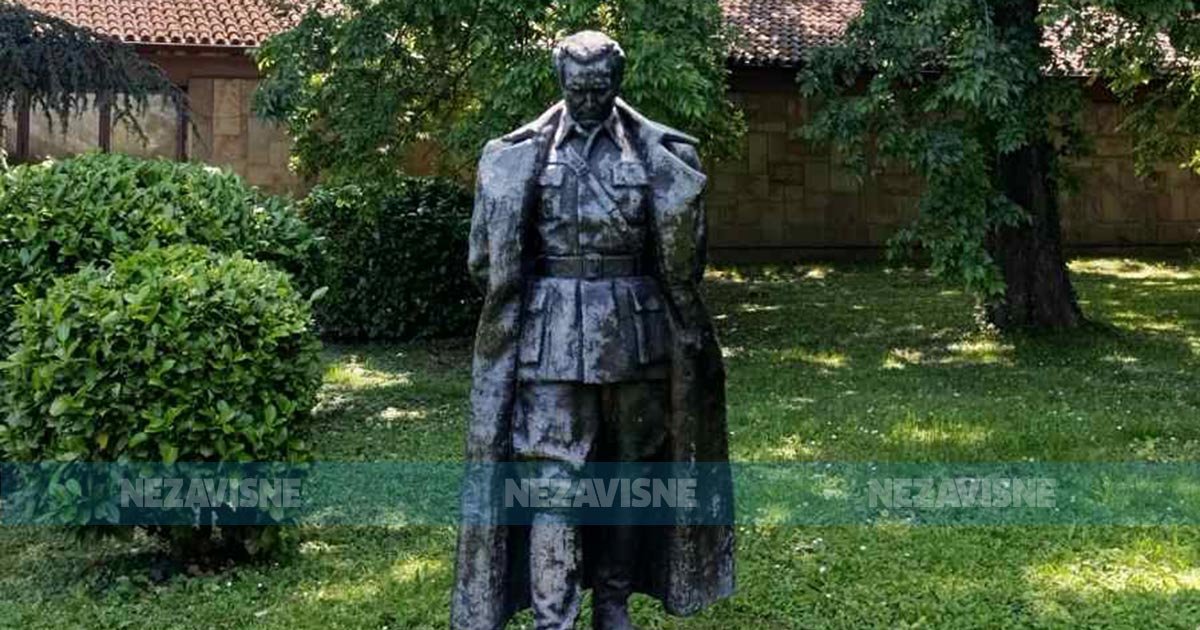
There are historical figures whose real names are almost forgotten over time. When you say Tito, few people do not first think of Josip Broz.
It was this nickname that became a symbol of an era, state and political power that shaped the lives of millions of people in the former Yugoslavia for decades.
However, behind the short and easy-to-remember sonorous name lies a story of illegal work, secret identities and a time when pseudonyms were a matter of survival. For decades, various theories circulated, from those that the name was created by accident, to almost cinematic stories about the fact that “Tito” is not actually one person, but a secret organization.
This is precisely why the question of how Josip Broz Tito got his nickname still attracts enormous attention today, because few political nicknames in the Balkans carry so much mystery, symbolism and historical weight.
A nickname that first appeared in 1934
According to historical records, the name Tito officially appears for the first time on August 10, 1934 in party documents. In the minutes of the sessions of the Central Committee of the KPJ, in the column “present”, that name is entered.
As stated by Ivo and Slavko Goldštajn in the book “Tito”, pseudonyms were mandatory at that time due to conspiratorial work. The leaders of the illegal movement had to use several different identities to avoid being tracked and arrested.
It is interesting that Josip Broz himself later claimed that there was no big secret behind the nickname.
“I have had the name Tito since 1934-36, I don’t remember exactly when. There were no special reasons why I chose that particular name. Simply, that name is very common in my hometown in Zagorje,” said Tito.
It is in this detail that the answer is hidden that disappointed many, but also intrigued, because while some expected great symbolism, historians mostly believe that the nickname was actually chosen very practically, to sound familiar to the people of Hrvatski Zagorje and not cause suspicion.
A theory that has been circulating among the people for years
However, people have always preferred more interesting versions of the story.
One of the most famous, although completely unfounded, theories said that Broz constantly issued orders to his associates, saying: “You do this, and you do that…” Allegedly, this is why his friends nicknamed him Tito.
This story has been retold throughout the former Yugoslavia for decades, mostly because it sounds almost like a movie and is easy to remember. However, historians state that there is no evidence for such a claim.
Nevertheless, it was precisely such legends that contributed to the creation of the myth of Titus, a man around whom mysteries were constantly woven.
Tito had many false identities
Few people know that the name Tito was not the only one that Josip Broz used during his life.
According to historical sources and party documents, he used numerous pseudonyms, among them Valter, Rudi, Oto, Viktor, Tomanek, Spiridon Mekas, and even Karlson.
While staying in Moscow and communicating with the Comintern, he often used the name Valter. In other situations, he posed as an engineer or traveled with passports under completely different identities.
Such a way of life was part of the political reality of that time. The illegal work of the communist movement meant a constant change of identity, hiding and vigilance.
Over time, the name Tito became the most recognizable and influential among all his pseudonyms.
A nickname that confused foreign powers during the war
During the Second World War, the name Tito acquired an almost mythical status.
According to Nacional.hr, some foreign services were not sure who was actually hiding behind that name for a long time. There were even theories that Tito was not a single person, but a name for the collective leadership of the communists in Yugoslavia.
His way of working created an additional mystery. Because of the strict conspiracy, few people knew what the man leading the partisan movement really looked like.
This is precisely why the name Tito very quickly became much more than an ordinary nickname – it turned into a political symbol that outlived its owner.
The conspiracy theories that never stopped
As his power grew, so did the stories about his origins. Some claimed that he was Russian, others that he was Polish, German or Hungarian. A document from the American National Security Agency also attracted special attention, in which it is stated that he could have Russian or Polish origins based on his accent.
However, serious historians generally reject such claims.
The fact that he used a large number of pseudonyms, that he worked illegally for a long time and that he rarely spoke about certain parts of his life further fueled the conspiracy theories that still intrigue the public today.
Perhaps that is precisely why the story of how Josip Broz became Tito has never lost its interest, because behind only four letters remains one of the biggest political mysteries from this area.
(Ona.rs)