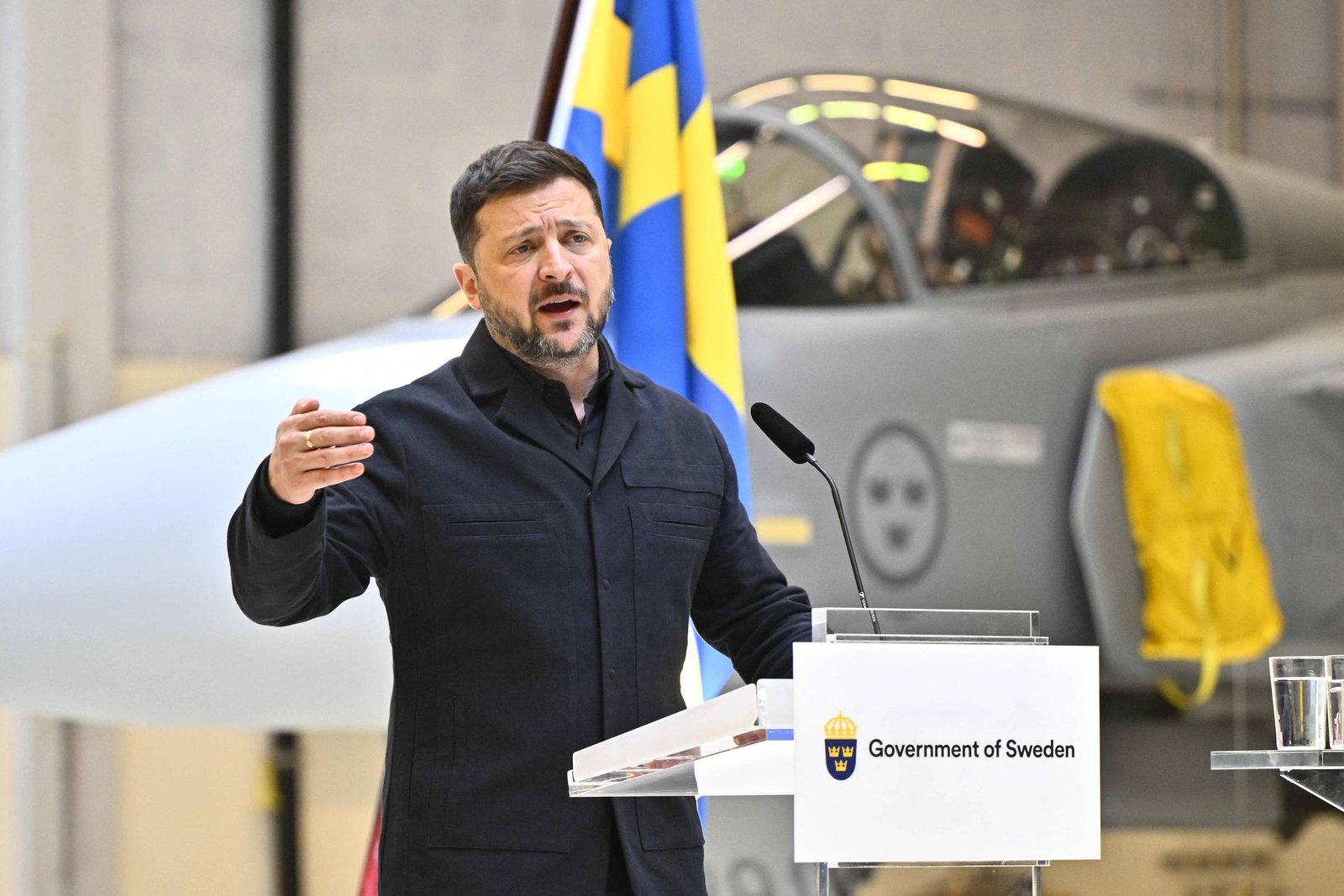
The Ukrainian president, Volodymir Zelenskyproposed this Thursday (4) a meeting with his Russian counterpart, Vladimir Putinin an open letter in which he also offers a “complete ceasefire” during peace negotiations.
“THE Ukraine proposes to end this war through a direct commitment between you and us. I propose a meeting”, wrote Zelenski in the letter, published on the Ukrainian Presidency’s website. It is one of the few occasions on which the president addressed Putin directly since the Russian invasion of 2022. Kiev said it was “ready for a total ceasefire while the negotiations last”.
The proposal comes at a time when Ukraine finds itself relegated to the background of American agenda. With the Trump administration consumed by crisis node Iranthe Ukrainian conflict has largely fallen off the country’s radar.
On Wednesday (3), one day after Russian attacks kill 23 people on Ukrainian territoryZelenski lamented the loss of Washington’s attention. “Iran is the number one issue for the US, and then comes the issue of Ukraine. Unfortunately, we are at the end of the line in these wars,” said the president during a visit to Kiev by NATO Secretary General Mark Rutte.
The American Secretary of State, Marco Rubioadmitted this week that the US-led negotiations were at an impasse. “Unfortunately, neither party was willing to make concessions, especially the Russian side,” he told the House Foreign Affairs Committee.
Rubio also warned that Ukrainian attacks on targets on Russian territory were likely to provoke a more aggressive response from Moscow. “The risk of escalation is real, more real than two years ago,” he said.
The Kremlin responded positively to Zelensky’s proposal. Spokesman Dmitri Peskov said the Ukrainian president could come to Moscow “at any time”, although he said Putin had not yet read the letter.
In St. Petersburg for an economic forum, Putin said he was “always willing to negotiate” based on what was discussed with Trump in Anchorage in August 2025 — but reiterated Moscow’s demands: political and territorial concessions from Kiev, including complete withdrawal from the Donetsk region.
The Ukrainian government rejects these conditions as capitulation. Putin also did not rule out expanding the use of the Oreshnik hypersonic ballistic missile against Ukrainian cities, reiterating that the weapon, already used three times against Ukraine, is capable of carrying nuclear warheads.
THE US President Donald Trumpreacted enthusiastically to the possibility of a meeting between the leaders. “I think it would be great if they met. They should work it out,” he told reporters at the White House.
Researchers, however, are skeptical about the prospects for advancement. Elina Beketova, from the Center for European Policy Analysis, assesses that the Kremlin has little genuine interest in negotiating. “The recent attacks against Ukraine indicate that Russia is not ready for de-escalation,” he says.
For her, a window for negotiations will only open if the situation in battlefield change — with Ukraine strengthened, and Russia worn out militarily and economically.
On the battlefield, Putin said Russian troops were advancing “along the entire front line.” Data from the Institute for the Study of War (ISW), however, shows that Ukraine recovered around 282 km² of territory in May, reducing for the second consecutive month the area controlled by Moscow — reversing a trend of Russian advance that lasted from the end of 2023 until the beginning of this year.
In May, Russia and Ukraine had begun a three-day ceasefire as part of the efforts of USA to negotiate the end of the war between the countries, which has been ongoing for more than four years. On the second day, the two sides exchanged accusations of violating the agreement and reported further attacks.
At the time, Zelensky said Moscow had avoided large-scale air and missile attacks but continued ground offensives in areas where Russian troops were advancing. The Russian Defense Ministry, in turn, accused Kiev of disrespecting the truce. Moscow said it had shot down 57 Ukrainian drones and had responded “in kind” on the battlefield.