The Minister of State for Prime Ministerial and Cabinet Affairs, Mohammed bin Ghalbon, followed up yesterday on the executive procedures related to completing the new Ministerial Complex during a meeting held at the headquarters of the Libyan Investment and Development Company (LIDCO).
The Ministerial Complex, which aims to house all the Tripoli Libyan government’s ministries, is located at Airport Road’s Bab Trablus (Tripoli Gate) project. Currently, many ministries are housed in inappropriate locations and in residential areas and villas.
The meeting focused on assessing the complex’s readiness for operation in the coming phase. Discussions covered the technical, operational, and administrative requirements of the ministries and public entities slated to relocate to the complex. Mechanisms for allocating their offices within the designated buildings to ensure optimal space utilization and operational efficiency, were also discussed.
Attendees also explored a proposal to consolidate several ministries and entities with overlapping responsibilities in shared premises. This approach aims to enhance institutional integration, optimize the use of facilities and services, and maximize the utilization of the complex’s infrastructure.
The meeting emphasized the necessity of finalizing and approving the remaining requirements of the targeted ministries and entities. This will pave the way for commencing the remaining work according to the approved implementation plan, ensuring the ministerial complex’s readiness and commencement of operations in the next phase.
The meeting was attended by the head of the executive team for the President’s initiatives and strategic projects, Mustafa Al-Manea, the Director General of the Administrative Centres Development and Improvement Authority, the Director of the Libyan Development and Investment Holding Company, Tariq Al-Shaafi, and several directors of the company’s relevant departments.
The Tripoli Gate Project
The developers of the sprawling Tripoli Gate project highlight the fact that the project is marked by the importance of its location, easily accessible by all roads leading to Tripoli, including the Airport Road and the Third Ring Road. The location also has the advantage of being within close proximity some of the most important construction projects located nearby. This includes phase two of the Tripoli Gate project.
It was the first major project of its kind in Libya to include a wide range of administrative buildings in one place with ample parking. Most current ministerial buildings have inappropriate parking space, especially those in residential areas.
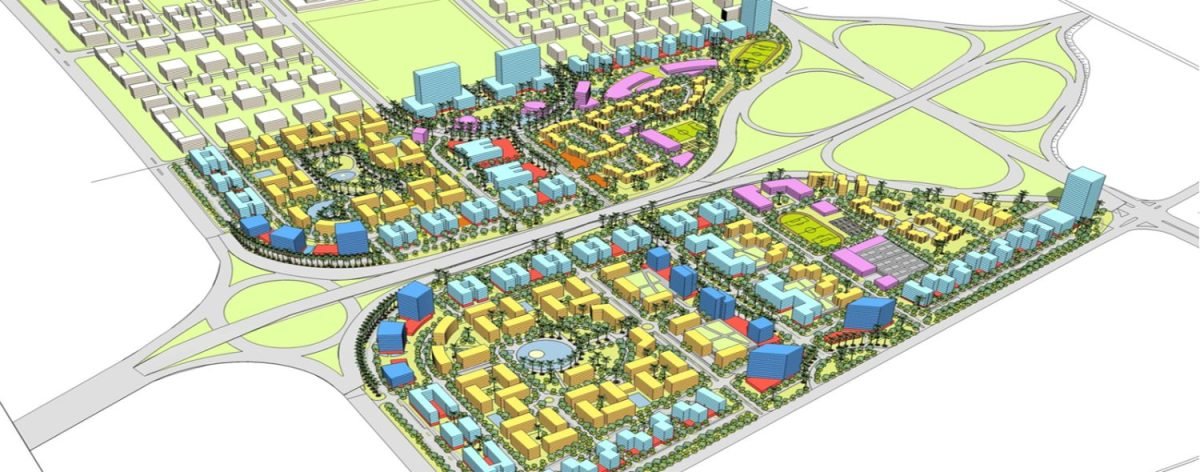
The Tripoli Gate project is constructed on a 67 hectares site, divided into 22 areas which include a range of towers and administrative and service buildings, in addition to residential buildings to be used by those who work and use these office buildings.
.
LTT to provide high-speed fibre-optic network to LIDCO’s Bab Tarabulus project