Watch the video interview with Dr. Metko Žan on the importance of indigenous breeds and the future of Slovenian agriculture:
Slovenia is one of the countries with an extremely rich biodiversity, and part of this heritage is also indigenous breeds of farm animals that have adapted to the local environment, climate and farming methods over the centuries. Today, many of them are threatened with extinction. That is why initiatives for their preservation are becoming increasingly important, including the ARK network, the system of ARK farms and ARK centers, which connects breeders, experts and the general public in the protection of Slovenian native breeds. It is a model that is also known to other European countries, and Slovenia is developing it under the auspices of the Public Service of Gene Bank Tasks in Livestock Breeding at the Department of Animal Husbandry, Faculty of Biotechnology, University of Ljubljana.

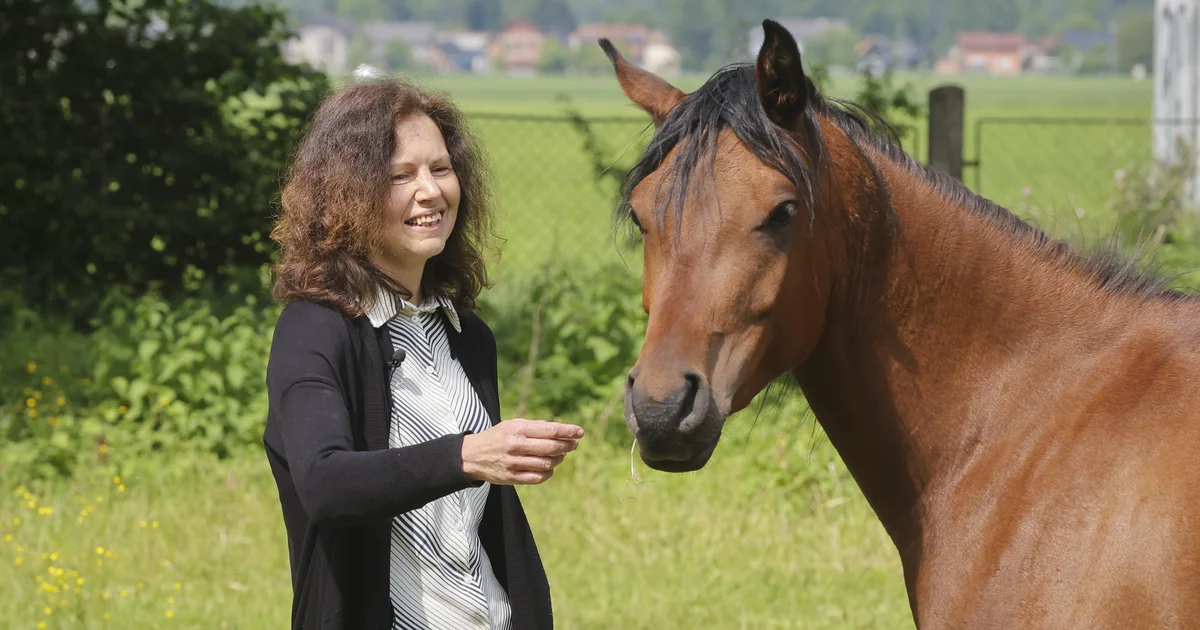
dr. Metka Žan, Department of Animal Husbandry, Faculty of Biotechnology, University of Ljubljana. PHOTO: Jože Suhadolnik
We talked about the importance of preserving native breeds, the role of the ARK network and the challenges of modern agriculture with dr. Metko Žan from the Department of Animal Husbandry, Faculty of Biotechnology, University of Ljubljana, where he participates in the work of the Public Service of the task of the gene bank in animal husbandry. Her field of research and professional work is aimed at preserving biodiversity in animal husbandry, monitoring the threat of Slovenian indigenous breeds and connecting science, animal husbandry and sustainable rural development. The Faculty of Biotechnology plays an important national role in this field, as it runs programs for the long-term protection of genetic resources of domestic animals under the auspices of the Ministry.
As the interlocutor points out, with indigenous breeds it is not just a question of tradition or nostalgia, but above all a question of the future of food security and the resilience of agriculture in times of climate change. “When we talk about indigenous breeds, we talk about the future on the solid foundations of the past,” emphasizes dr. Bullet Žan. Indeed, these breeds have developed resistance to local conditions, poorer feed and diseases, which can make a significant contribution to a more sustainable and flexible agriculture of the future.
The data show that the situation is worrying. Among the 14 recognized native breeds of domestic animals in Slovenia, as many as eight are critically endangered. The disappearance of an individual breed means much more than just the loss of one animal species. “If we lose the breed, it means not only the loss of the breed, but a great irreversible damage to the entire agriculture,” warns the interlocutor. With the disappearance of breeds, we are losing genetic diversity, the knowledge of past generations and an important part of the Slovenian cultural landscape.
Ark is an internationally established term that translates to ark, also a chest. It informs that promoting the breeding of indigenous breeds in the local environment prevents the extinction of breeds. Therefore, ark farms and ark centers are farms that preserve and raise Slovenian indigenous breeds of farm animals. They are intended to raise awareness among the general public about the importance of preserving biodiversity in agriculture, preserving indigenous breeds of farm animals and marketing their products. They are also found in some other European countries, where they are organized under similar rules.
Ark Farms and Ark Centers act as lifeboats and at the same time represent a collection – a chest of valuable animal genetic resources. Ark farm is intended to combine the activities of farming and conservation of Slovenian indigenous breeds of domestic animals, while the Ark center is intended for the breeding of Slovenian indigenous breeds of domestic animals, primarily for the purposes of education and public awareness.

Slovenian autochthonous domestic animal breeds are an important part of biodiversity and cultural heritage. PHOTO: Faculty of Biotechnology
The ARK network has become a place for connecting people, knowledge and the countryside. The farms included in the network are not only dedicated to raising animals, but also to raising public awareness, educating young people and developing local products with added value. Exactly in this dr. Metka Žan sees significant potential for the future of the Slovenian countryside: in the integration of sustainable agriculture, local identity and the modern consumer, who increasingly appreciates the origin of food, quality and a responsible attitude towards nature.
The ARK network includes farms that breed at least three indigenous breeds of domestic animals that are included in the breeding program or come from controlled herds, herds across Slovenia. We currently have 14 ARK farms and 10 ARK centers in Slovenia.

Among the 14 indigenous breeds in Slovenia, as many as eight are critically endangered. PHOTO: Faculty of Biotechnology
How do you monitor the state of indigenous breeds and who ensures that their populations are maintained?
In Slovenia, the breeding of indigenous breeds on ark farms/breeding centers is monitored within the framework of the Public Service of the Gene Bank tasks in livestock breeding. Of course, the main role in the preservation of these breeds is played by the breeders who breed them in their original environment, where they have been formed through thousands of years of breeding and have adapted to specific breeding conditions, meager feed and various diseases.
As part of the Public Service, we carry out monitoring by filling in data in the Register of Breeds with a zootechnical evaluation once a year. Once a year, we also assess the threat of these breeds based on the international criteria of the Food and Agriculture Organization of the United Nations (FAO), which mainly include the size of the population, the geographical distribution of the animals or breeds and the degree of kinship.
Breeders play a key role in the preservation of breeds, because without their work we would not be able to keep these breeds alive.
What role does the Faculty of Biotechnology play in this?
In 1996, Slovenia ratified the Convention on Biological Diversity and thereby also joined the preservation of biodiversity in agriculture, including the preservation of Slovenian indigenous breeds of farm animals.
This area is regulated by law in Slovenia and is carried out as a Public Service of Gene Bank tasks in animal husbandry at the Department of Animal Husbandry of the Faculty of Biotechnology of the University of Ljubljana.
The public service was granted a concession by the Ministry of Agriculture, Forestry and Food. Within the framework of long-term programs for the protection of biodiversity in animal husbandry, it realizes its main mission, i.e. the preservation of domestic animal breeds, with a special emphasis on the preservation of Slovenian indigenous breeds in their original environment.
What is the role of the state in preserving Slovenian indigenous breeds?
The role of the state in preserving Slovenian indigenous breeds of farm animals is very important. Indigenous breeds are included in the Animal Husbandry Act, where it is written that they are under special protection of the state. Through this law and by-laws, the state determines the status of indigenous breeds and prescribes the methods of their protection. Through the Ministry of Agriculture, Forestry and Food, the Public Service finances the tasks of the gene bank in animal husbandry. The professional work of the Public Service is based on long-term programs for the preservation of biodiversity in animal husbandry. In this way, it is ensured that the preservation of Slovenian indigenous breeds of domestic animals is carried out systematically and in accordance with international conventions.
As indigenous breeds are usually less productive compared to highly specialized non-native breeds, the state provides financial compensation to breeders under the Strategic Plan of the Common Agricultural Policy. Subsidies (payments for the breeding of local – indigenous endangered breeds) are crucial for: covering the loss of income due to smaller breeding, but primarily for encouraging breeders to persist in breeding indigenous animals.

The ARK network connects breeders, experts and local communities in the preservation of indigenous breeds. PHOTO: Faculty of Biotechnology
Why should we care if a breed disappears? What do we lose?
In the past, we had many more native breeds in Slovenia, or in today’s area of Slovenia, than we have today. Especially in the second half of the 20th century, the introduction of highly specialized foreign breeds, the creation of uniform agricultural landscapes, the specialization of agricultural production and the abandonment of farming in areas with natural limitations led to the fact that indigenous breeds began to disappear, and some were also irretrievably lost.
If we lose a breed, it means not only the loss of one breed, but a great irreversible damage to the entire agriculture. It is about the impoverishment of the ecosystem and the loss of the breeds that over the centuries have best adapted to our local breeding conditions. With this, we are also losing a very important potential for the future and food security in the increasingly unpredictable conditions that an uncertain future brings.
In times of climate change, we talk a lot about resilience. Do indigenous breeds have a particular advantage in this?
Of course, indigenous breeds have a distinct advantage in the context of climate change, as their value is based precisely on the genetically determined resistance that they have acquired over centuries of natural selection in the local environment. Their key advantages are: adaptability to extreme weather conditions, efficient utilization of local feed, greater resistance to diseases, small environmental footprint. These breeds are e.g. crucial for grazing in areas that would otherwise become overgrown and thus directly contribute to fire prevention and biodiversity conservation. In a future increasingly characterized by climate change, extreme weather events and new diseases, these breeds will be very important for the future of agriculture. Highly specialized non-native breeds are vulnerable in adverse conditions; indigenous breeds, due to their resistance, are the answer to the uncertain conditions that await us. They are important for ensuring food security and sovereignty, because with the loss of indigenous breeds, we lose not only the past, but above all the resilience and adaptability that we will absolutely need for food security in the future.

dr. Metka Žan warns that the loss of an individual breed means irreversible damage to the future of agriculture. PHOTO: Jože Suhadolnik
How important are young breeders in the preservation of breeds?
Young breeders are very important in the preservation of Slovenian indigenous breeds of domestic animals, as they ensure that the breeding of these breeds will continue. They bring innovation, an entrepreneurial mindset and new ideas to the breeding process, with which they make sense of the importance of indigenous breeds in modern agriculture. By introducing modern approaches to breeding and marketing, young breeders are proving that the breeding of native animals can be economically justifiable and profitable. Some also achieve excellent results of the arrangement. Social networks also play an important role in this, where young breeders use creative content to strengthen the reputation of native breeds, educate the general public about their importance and directly address the modern consumer. The success of young breeders is the best guarantee for the future: the more they prove with their practices that Slovenian breeds are competitive and economically stable, the more likely it is that biodiversity in our area will not only be preserved, but also strengthened.
Where do you see the biggest challenges in maintaining these breeds in the coming years?
In Slovenia, we are currently raising 14 native Slovenian breeds of domestic animals intended for farming. Eight of them are critically endangered, five are endangered, and one is vulnerable. From this point of view, we should be very concerned about what will happen to these breeds in the future.
These are mainly small populations, so one of the biggest challenges is preventing inbreeding. In addition, a big challenge is how to ensure the financial sustainability and motivation of breeders to continue to preserve these breeds.
Additional financial incentives and help in creating boutique products with added value would be very important, as this would also motivate the younger generations to keep these breeds going.
Consumers can also do a lot by purchasing products from indigenous breeds. With this, we not only buy the product, but also support the preservation of these breeds, biodiversity in animal husbandry, and the Slovenian natural and cultural heritage and national identity.

He creates the content Content studio Delo mediji doo