Thursday, June 4, 2026
    The GeoStrategic Consensus
    No Result
    View All Result
    • Login
    • HOME
    • AMERICAS
      • Argentina
      • Brazil
      • Canada
      • Chile
      • Colombia
      • Costa Rica
      • Cuba
      • Dominican Republic
      • Ecuador
      • El Salvador
      • Greenland
      • Guatemala
      • Honduras
      • Mexico
      • Nicaragua
      • Panama
      • Paraguay
      • Peru
      • United States
      • Uruguay
      • Venezuela
    • ASIA-PACIFIC
      • Australia
      • Brunei Darussalam
      • Cambodia
      • China
      • Federated States of Micronesia
      • Fiji
      • Indonesia
      • Japan
      • Kiribati
      • Laos
      • Malaysia
      • Marshall Islands
      • Mongolia
      • Myanmar
      • Nauru
      • New Zealand
      • North Korea
      • Palau
      • Papua New Guinea
      • Philippines
      • Samoa
      • Singapore
      • Solomon Islands
      • South Korea
      • Taiwan
      • Thailand
      • Timor-Leste
      • Tonga
      • Tuvalu
      • Vanuatu
      • Vietnam
    • CARICOM
      • CARICOM – Non-English
        • Haiti
        • Suriname
      • CARICOM Associates
        • Anguilla
        • Bermuda
        • British-Virgin-Islands
        • Cayman-Islands
        • Curacao
        • Turks-and-Caicos
      • CARICOM English
        • Antigua and Barbuda
        • Barbados
        • Belize
        • Dominica
        • Grenada
        • Guyana
        • Jamaica
        • Montserrat
        • Saint Kitts and Nevis
        • Saint Lucia
        • Saint Vincent and the Grenadines
        • The Bahamas
        • Trinidad and Tobago
    • EURASIA
      • Armenia
      • Azerbaijan
      • Balarus
      • Georgia
      • Kazakhstan
      • Kyrgyzstan
      • Moldova
      • Russia
      • Tajikistan
      • Turkmenistan
      • Ukraine
      • Uzbekistan
    • EUROPE
      • Albania
      • Andorra
      • Austria
      • Bosnia and Herzegovina
      • Bulgaria
      • Croatia
      • Cyprus
      • Czech Republic
      • Denmark
      • Estonia
      • Finland
      • France
      • Germany
      • Greece
      • Holy See
      • Hungary
      • Iceland
      • Ireland
      • Italy
      • Kosovo
      • Latvia
      • Liechtenstein
      • Lithuania
      • Luxembourg
      • Malta
      • Monaco
      • Montenegro
      • Netherlands
      • North Macedonia
      • Norway
      • Poland
      • Portugal
      • Romania
      • San Marino
      • Serbia
      • Slovakia
      • Slovenia
      • Spain
      • Sweden
      • Switzerland
      • United Kingdom
    • MIDDLE EAST AND NORTH AFRICA
      • Algeria
      • Bahrain
      • Egypt
      • Iran
      • Iraq
      • Israel
      • Jordan
      • Kuwait
      • Lebanon
      • Lybia
      • Morocco
      • Oman
      • Palestinian Territories
      • Qatar
      • Saudi Arabia
      • Syria
      • Tunisia
      • Turkey
      • United Arab Emirates
      • Western Sahara
      • Yemen
    • SOUTH ASIA
      • Afghanistan
      • Bangladesh
      • Bhutan
      • India
      • Maldives
      • Nepal
      • Pakistan
      • Sri Lanka
    • SUB-SAHARAN AFRICA
      • Angola
      • Benin
      • Botswana
      • Burkina Faso
      • Burundi
      • Cabo Verde
      • Cameroon
      • Central African Republic
      • Chad
      • Comoros
      • Cote d’Ivoire
      • Democratic Republic of the Congo
      • Djibouti
      • Equatorial Guinea
      • Eritrea
      • Eswatini
      • Ethiopia
      • Gabon
      • Gambia
      • Ghana
      • Guinea
      • Guinea Bissau
      • Kenya
      • Lesotho
      • Liberia
      • Madagascar
      • Malawi
      • Mali
      • Mauritania
      • Mauritius
      • Mozambique
      • Namibia
      • Niger
      • Nigeria
      • Republic of the Congo
      • Rwanda
      • Sao Tome and Principe
      • Senegal
      • Seychelles
      • Sierra Leone
      • Somalia
      • South Africa
      • South Sudan
      • Sudan
      • Tanzania
      • Togo
      • Uganda
      • Zambia
      • Zimbabwe
    • HOME
    • AMERICAS
      • Argentina
      • Brazil
      • Canada
      • Chile
      • Colombia
      • Costa Rica
      • Cuba
      • Dominican Republic
      • Ecuador
      • El Salvador
      • Greenland
      • Guatemala
      • Honduras
      • Mexico
      • Nicaragua
      • Panama
      • Paraguay
      • Peru
      • United States
      • Uruguay
      • Venezuela
    • ASIA-PACIFIC
      • Australia
      • Brunei Darussalam
      • Cambodia
      • China
      • Federated States of Micronesia
      • Fiji
      • Indonesia
      • Japan
      • Kiribati
      • Laos
      • Malaysia
      • Marshall Islands
      • Mongolia
      • Myanmar
      • Nauru
      • New Zealand
      • North Korea
      • Palau
      • Papua New Guinea
      • Philippines
      • Samoa
      • Singapore
      • Solomon Islands
      • South Korea
      • Taiwan
      • Thailand
      • Timor-Leste
      • Tonga
      • Tuvalu
      • Vanuatu
      • Vietnam
    • CARICOM
      • CARICOM – Non-English
        • Haiti
        • Suriname
      • CARICOM Associates
        • Anguilla
        • Bermuda
        • British-Virgin-Islands
        • Cayman-Islands
        • Curacao
        • Turks-and-Caicos
      • CARICOM English
        • Antigua and Barbuda
        • Barbados
        • Belize
        • Dominica
        • Grenada
        • Guyana
        • Jamaica
        • Montserrat
        • Saint Kitts and Nevis
        • Saint Lucia
        • Saint Vincent and the Grenadines
        • The Bahamas
        • Trinidad and Tobago
    • EURASIA
      • Armenia
      • Azerbaijan
      • Balarus
      • Georgia
      • Kazakhstan
      • Kyrgyzstan
      • Moldova
      • Russia
      • Tajikistan
      • Turkmenistan
      • Ukraine
      • Uzbekistan
    • EUROPE
      • Albania
      • Andorra
      • Austria
      • Bosnia and Herzegovina
      • Bulgaria
      • Croatia
      • Cyprus
      • Czech Republic
      • Denmark
      • Estonia
      • Finland
      • France
      • Germany
      • Greece
      • Holy See
      • Hungary
      • Iceland
      • Ireland
      • Italy
      • Kosovo
      • Latvia
      • Liechtenstein
      • Lithuania
      • Luxembourg
      • Malta
      • Monaco
      • Montenegro
      • Netherlands
      • North Macedonia
      • Norway
      • Poland
      • Portugal
      • Romania
      • San Marino
      • Serbia
      • Slovakia
      • Slovenia
      • Spain
      • Sweden
      • Switzerland
      • United Kingdom
    • MIDDLE EAST AND NORTH AFRICA
      • Algeria
      • Bahrain
      • Egypt
      • Iran
      • Iraq
      • Israel
      • Jordan
      • Kuwait
      • Lebanon
      • Lybia
      • Morocco
      • Oman
      • Palestinian Territories
      • Qatar
      • Saudi Arabia
      • Syria
      • Tunisia
      • Turkey
      • United Arab Emirates
      • Western Sahara
      • Yemen
    • SOUTH ASIA
      • Afghanistan
      • Bangladesh
      • Bhutan
      • India
      • Maldives
      • Nepal
      • Pakistan
      • Sri Lanka
    • SUB-SAHARAN AFRICA
      • Angola
      • Benin
      • Botswana
      • Burkina Faso
      • Burundi
      • Cabo Verde
      • Cameroon
      • Central African Republic
      • Chad
      • Comoros
      • Cote d’Ivoire
      • Democratic Republic of the Congo
      • Djibouti
      • Equatorial Guinea
      • Eritrea
      • Eswatini
      • Ethiopia
      • Gabon
      • Gambia
      • Ghana
      • Guinea
      • Guinea Bissau
      • Kenya
      • Lesotho
      • Liberia
      • Madagascar
      • Malawi
      • Mali
      • Mauritania
      • Mauritius
      • Mozambique
      • Namibia
      • Niger
      • Nigeria
      • Republic of the Congo
      • Rwanda
      • Sao Tome and Principe
      • Senegal
      • Seychelles
      • Sierra Leone
      • Somalia
      • South Africa
      • South Sudan
      • Sudan
      • Tanzania
      • Togo
      • Uganda
      • Zambia
      • Zimbabwe
    No Result
    View All Result
    Agentially
    No Result
    View All Result
    Home ASIA-PACIFIC Papua New Guinea

    Human disease without borders | The National

    The Analyst by The Analyst
    June 4, 2026
    in Papua New Guinea
    Human disease without borders | The National


    HEALTH

    FOR much of human history, infectious diseases have traveled silently alongside civilisation.

    They moved with traders crossing deserts, sailors navigating oceans, armies marching into foreign lands, and families seeking new beginnings.

    READ ALSO

    Good books from Doulos Hope

    Sumptuous buffet and lively hula

    This simple reality reminds us that long before the world became interconnected by aircraft and digital technology, disease had already mastered globalisation.

    From isolated tropical villages burdened by malaria to worldwide pandemics that reshaped nations, infectious diseases have repeatedly reminded humanity of both its vulnerability and resilience. Today, despite extraordinary advances in science and medicine, the world continues to battle diseases that remain endemic in some regions, epidemic in others, and occasionally pandemic on a global scale.

    Endemic, epidemic or pandemic?

    Understanding the language of disease is therefore important. Public health experts commonly use three important terms to describe how diseases spread: endemic, epidemic, and pandemic. These terms are often misunderstood and used interchangeably. In their proper use, they denote distinct aspects of disease presence and spread.

    An endemic disease is one that exists continuously within a certain population or geographical region. For instance, in many tropical countries, diseases such as malaria and tuberculosis remain persistent public health challenges. These illnesses become deeply woven into the everyday realities of communities and, therefore, remain endemic in those specific localities.

    An epidemic occurs when cases of a disease suddenly rise above expected levels within a region or population. Outbreaks of Ebola virus disease in parts of Africa and periodic cholera outbreaks in disaster-stricken regions are examples of epidemics.

    A pandemic, however, transcends borders and continents. It affects millions of people across the globe. The recent Covid-19 pandemic demonstrated how rapidly an infectious disease can spread through a connected world, disrupting economies, education systems, healthcare services, and social life itself.

    Hence, when an epidemic spread across multiple countries or continents, it becomes a pandemic.

    Disease altering history

    Throughout history, some infectious diseases have altered the course of human history. The Black Death of the 14th century devastated Europe, Asia, and Africa, killing millions and permanently transforming social and economic structures. Entire villages disappeared, labour shortages reshaped economies, and hierarchical political and social systems weakened under immense pressure.

    Centuries later, the 1918 influenza pandemic infected an estimated one-third of the world’s population. At a time when the world was already weakened by war, the virus spread with astonishing speed, overwhelming healthcare systems and leaving profound psychological scars.

    In more recent decades, the emergence of HIV/Aids became one of the greatest global public health crises of the modern era. Beyond its medical impact, HIV/Aids reshaped discussions surrounding stigma, sexuality, public health education, and human rights.

    Each pandemic has left behind more than statistics. They have left stories of grief, courage, sacrifice, fear, innovation, and survival.
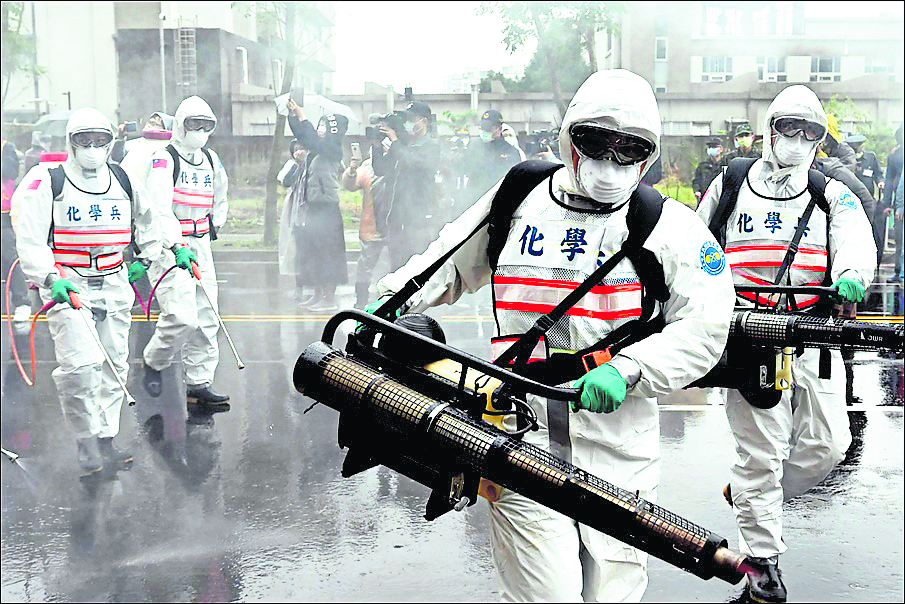
    This picture may be mistaken for a scene in a science fiction movie. It shows a team of health professionals during the Covid-19 pandemic a few years ago.

    Why disease persists

    Yet even in this modern era, with all the sophistication of science, medicine, and technology, an important question remains: why do some diseases continue to persist?

    The simple answer is, many infectious diseases remain endemic not because humanity lacks scientific understanding, but because social conditions continue to create favourable environments for their spread.

    Poverty, overcrowded living conditions, malnutrition, poor sanitation, limited healthcare access, and weak health systems provide fertile ground for disease transmission.

    Climate and geography also play major roles. Mosquito-borne diseases flourish in warm tropical environments, while respiratory infections spread more rapidly in densely populated settlements.

    Across much of the developing world, infectious diseases remain closely intertwined with broader social realities. Tuberculosis, for example, is often associated with poverty, undernutrition, and inadequate housing.

    TB and PNG

    In Papua New Guinea, tuberculosis (TB) remains one of the country’s major public health challenges. Yet the burden of TB is not merely biological. Cultural beliefs, social stigma, and traditional interpretations of illness strongly influence how communities respond to disease.

    In some communities, symptoms such as chronic coughing, weight loss, weakness, or coughing blood may sometimes be interpreted through beliefs surrounding witchcraft or sorcery rather than bacterial infection. This can delay diagnosis and treatment, reduce adherence to medication, and complicate public health interventions.

    Such realities highlight an important lesson: disease control is never purely scientific. It is also cultural, social, educational, and deeply human.

    Human understanding of infections and disease evolved gradually over centuries. Before the rise of modern microbiology, societies across the world explained illness through spiritual or supernatural interpretations.

    Disease was often attributed to curses, divine punishment, evil spirits, or “bad air.” Even today, some communities across the globe continue to interpret illnesses through such belief systems, including our own country.

    The emergence of the “germ theory of disease” revolutionised medicine by demonstrating that microorganisms could cause disease.

    Scientists such as Louis Pasteur and Robert Koch transformed humanity’s understanding of infection. This scientific breakthrough paved the way for sterilisation, vaccination, antibiotics, laboratory diagnosis, and modern public health systems.

    Vaccination campaigns, antibiotics, improved sanitation, and public health programs have since saved millions of lives across the world. Diseases such as smallpox were eradicated globally, while others like polio have been pushed to the brink of elimination in many regions. These achievements demonstrate what humanity can accomplish when science, political commitment, and public cooperation work together. In our race against germs and diseases, trust, education, communication, and cultural understanding remain equally essential.

      Shared vulnerability

    The world today is more connected than at any other time in history, and this connectedness exposes humanity to shared vulnerability.

    Modern transportation has dramatically accelerated the movement of infectious diseases. A virus emerging in one corner of the world can now reach distant continents within days—or even hours.

    Urbanisation, environmental destruction, deforestation, climate change, and increasing human interaction with wildlife have also increased the likelihood of emerging infectious diseases. In the light of this, many experts believe future pandemics are not a matter of “if” but “when.”

    At the same time, misinformation spreads almost as rapidly as disease itself. During outbreaks, fear and rumor can undermine public trust in vaccines, treatments, and health authorities.

    The battle against infectious diseases, therefore, extends beyond hospitals and laboratories.  It also involves education systems, governments, media organisations, community leaders, churches, and ordinary citizens.

    At this stage, it would be proper to say that perhaps the greatest lesson infectious diseases teach humanity is that health is profoundly interconnected. The illness of one community can quickly become the concern of the world.

    As seen recently, pandemics expose the inequalities that already exist beneath society’s surface. They reveal disparities in healthcare access, housing, sanitation, education, and economic opportunity. They remind humanity that scientific advancement alone cannot guarantee protection if social systems remain fragile.

    Best of humanity

    Yet outbreaks also reveal humanity at its best: doctors and nurses working beyond exhaustion, scientists racing against time to develop vaccines, communities caring for the vulnerable, teachers educating frightened children, and families sacrificing for one another.

    It is undeniable that infectious diseases have accompanied humanity throughout history, but so too have resilience, compassion, and innovation.

    The struggle against disease is ultimately more than a medical battle. It is a reflection of how societies value human life, knowledge, solidarity, and the responsibility people share toward one another in an interconnected world where diseases seem to spread without borders.

    Acknowledgment

    This article draws on insights from various publications on the spread of infectious diseases. The author acknowledges the contributions of researchers whose work has informed this reflection.

    • Gelinde Narekine is a lecturer at the University of Papua New Guinea School of Medicine and Health Sciences.



    Source link

    Related Posts

    Good books from Doulos Hope
    Papua New Guinea

    Good books from Doulos Hope

    June 4, 2026
    Sumptuous buffet and lively hula
    Papua New Guinea

    Sumptuous buffet and lively hula

    June 4, 2026
    Electoral processes weakened | The National
    Papua New Guinea

    Electoral processes weakened | The National

    June 4, 2026
    Home of Bully Beef Club will be a university
    Papua New Guinea

    Home of Bully Beef Club will be a university

    June 3, 2026
    New laws expected to benefit all in industry
    Papua New Guinea

    New laws expected to benefit all in industry

    June 3, 2026
    Papua New Guinea

    Let people decide: Bird | The National

    June 3, 2026
    Next Post
    Not exactly poles apart

    Not exactly poles apart

    POPULAR NEWS

    E-scooter rules vary widely across Finnish cities, report finds | Yle News

    E-scooter rules vary widely across Finnish cities, report finds | Yle News

    June 3, 2026
    The EAEU countries called on Armenia to hold a referendum on joining the European Union

    The EAEU countries called on Armenia to hold a referendum on joining the European Union

    June 3, 2026
    Zelensky proposes meeting with Putin in open letter

    Zelensky proposes meeting with Putin in open letter

    June 4, 2026
    The Misfits: Marilyn Monroe’s final film showed her capacity for playing painfully knotty characters | Marilyn Monroe

    The Misfits: Marilyn Monroe’s final film showed her capacity for playing painfully knotty characters | Marilyn Monroe

    June 4, 2026
    BBC Audio | A History of the United States in 100 Objects

    BBC Audio | A History of the United States in 100 Objects

    June 4, 2026

    EDITOR'S PICK

    TravelMatKanner: Best play cafés for babies and toddlers in and around Luxembourg

    TravelMatKanner: Best play cafés for babies and toddlers in and around Luxembourg

    June 3, 2026
    A President must be more careful than this

    A President must be more careful than this

    June 4, 2026
    San Marino becomes the capital of spiritual tourism

    San Marino becomes the capital of spiritual tourism

    June 3, 2026
    Netanyahu has to fear arrest in Hungary again

    Netanyahu has to fear arrest in Hungary again

    June 3, 2026

    Recent Posts

    • Zelensky proposes meeting with Putin in open letter
    • The Misfits: Marilyn Monroe’s final film showed her capacity for playing painfully knotty characters | Marilyn Monroe
    • BBC Audio | A History of the United States in 100 Objects
    • Annual and seasonal precipitation trends in Andorra in the thirty years 1996-2025

      © 2026 Agentially - Navigating shifting sovereignties and global risk .

      Welcome Back!

      Login to your account below

      Forgotten Password?

      Retrieve your password

      Please enter your username or email address to reset your password.

      Log In
      No Result
      View All Result

        © 2026 Agentially - Navigating shifting sovereignties and global risk .

        This website uses cookies. By continuing to use this website you are giving consent to cookies being used. Visit our Privacy and Cookie Policy.