MOSCOW, May 28. /TASS/. Persian Gulf states may seek to limit the use of US military bases in the region for offensive operations; Russia and France continue to maintain limited diplomatic communication channels, while Moscow says it remains open to dialogue with both Paris as well as the EU; and Donald Trump’s newly created Board of Peace is facing growing uncertainty. These stories topped Thursday’s newspaper headlines across Russia.
Following the end of the war with Iran, Persian Gulf countries intend to discuss with the United States the future role and functioning of American military bases in the region, Kommersant learned. Diplomatic sources in Arab countries told the newspaper that the role of military facilities, which Tehran subjected to massive bombardment beginning on February 28, should be limited by prohibiting the Pentagon from using them in offensive operations against Iran. Reducing the US military presence in the Middle East has been one of Tehran’s primary objectives since the start of the war.
As a diplomatic source in one of the Persian Gulf countries noted in a conversation with Kommersant, Washington’s regional allies intend to raise with the US administration the question of whether American bases should continue to be used for offensive operations. “I think that within the framework of the postwar regional security architecture, the Gulf states and the United States will reach an agreement not to use the bases for any direct attacks on Iran that could endanger the security of these states,” the source told the newspaper.
Senior researcher at the Russian Center for Analysis of Strategies and Technologies Yuri Lyamin told Kommersant that the events surrounding Iran demonstrated that American bases not only fail to guarantee full protection for Arab countries, but also become a reason for drawing those countries into conflict.
“At the same time, these states maintain decades-long ties with the United States, including military, military-technical, political as well as economic cooperation,” the expert explained. “Under such circumstances, it will be difficult for America’s Arab allies to demand a reduction in the functional role of US bases, especially when it comes to smaller states for which the American presence has long been one of the cornerstones of defense and security policy,” he added.
Meanwhile, Anton Mardasov, expert at the Russian International Affairs Council, told the newspaper that the conflict with Iran has, on the one hand, increased Middle Eastern countries’ demand for deeper military cooperation with the United States. “But on the other hand, Iran demonstrated a willingness to significantly expand the regional costs of any conflict,” the expert noted. “Under these conditions, Arab capitals have engaged in behind-the-scenes contacts with Tehran regarding a ‘non-aggression pact,’ and within this framework they may well discuss reducing the US military presence in the region,” he noted.
Russia and France continue to maintain communication channels, although both the intensity and level of contacts have declined significantly, the Russian Embassy in Paris told Izvestia. At the same time, Russian diplomats emphasized that Moscow remains ready for negotiations not only with France but also with the European Union. Brussels is currently attempting to determine a negotiator capable of representing the interests of the entire bloc in dialogue with Russia.
Despite the complicated geopolitical situation, Russia continues to maintain contacts with France, the Russian Embassy in Paris told the newspaper. “Working communication channels remain in place through the foreign ministries and embassies, although the intensity and level of contacts have declined significantly,” the diplomatic mission told Izvestia in response to a question about whether the two sides still maintain working channels on issues related to Ukraine and European security.
At the same time, the refusal of French president Emmanuel Macron to develop direct dialogue with Russian president Vladimir Putin may be linked to Paris lacking any new proposals for Moscow, Doctor of Public Law in France and president of the Comitas Gentium France-Russia association Karine Bechet told Izvestia.
“I think he simply has nothing to offer Putin. If there are no new arguments, then why call? He also does not need an open conflict with Putin, so it is better to maintain a pause,” she said.
According to Sergey Fyodorov from the Russian Academy of Sciences’ Institute of Europe, Paris would have to abandon its current course and return at least to a more neutral approach toward the sides of the Ukrainian conflict in order to restore Russian-French relations.
Nevertheless, even under current circumstances, Moscow remains prepared to continue dialogue with France and other unfriendly states. “The Russian side has repeatedly stated its readiness for negotiations and has not closed the door to anyone, even the European Union. As Vladimir Putin recently emphasized, in order to engage in dialogue with Russia, Europeans need to determine a leader they trust and who, as our president noted, has not made offensive remarks about us,” the Russian Embassy in Paris said.
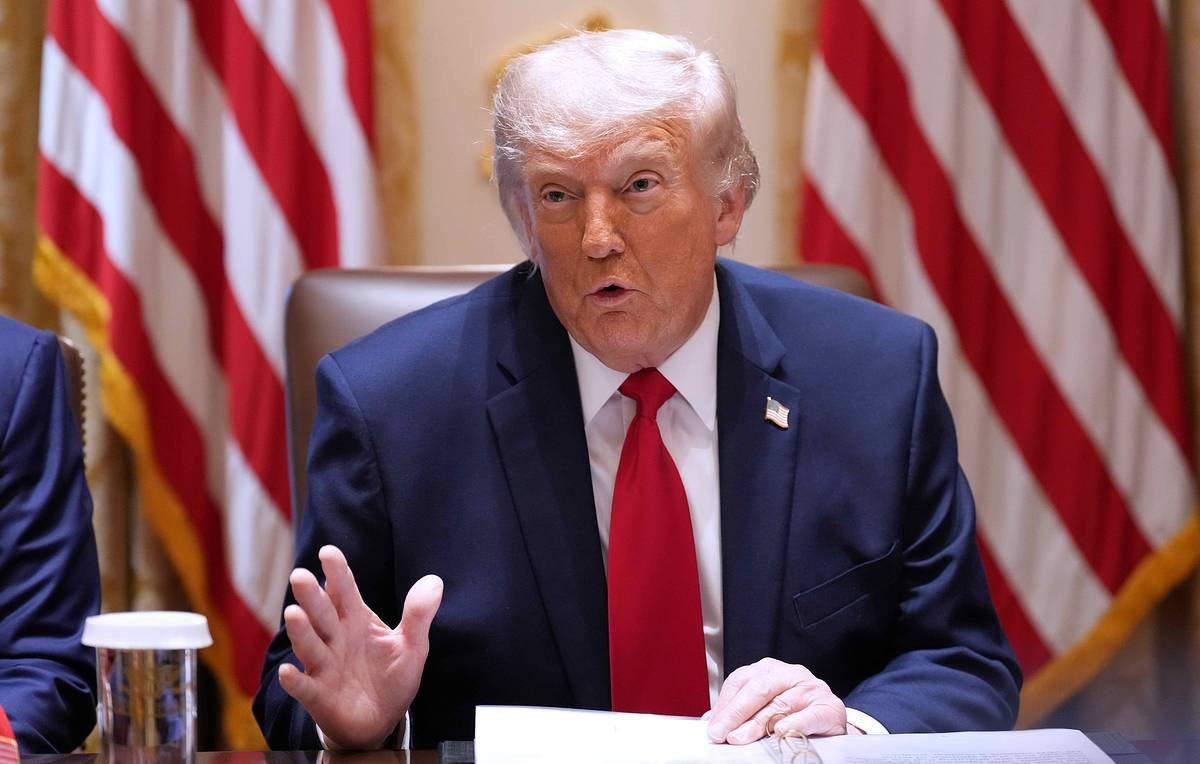
Not a single cent of the promised $17 bln for the Board of Peace, founded by US President Donald Trump, has appeared in the organization’s accounts, the Financial Times reported, citing sources. However, this concerns the organization’s fund managed by the World Bank. Sources told the newspaper that another account opened for the organization at JPMorgan received up to $123 mln, including $3 mln from Morocco and $120 mln from the United Arab Emirates. Unlike transactions conducted through the World Bank, operations through JPMorgan are not subject to transparency and reporting requirements. Experts interviewed by Vedomosti believe the Board lacks clear structures, authority or legitimacy, making its long-term viability and practical effectiveness highly questionable.
As for the larger sums pledged to the organization, they have not yet been transferred. The United States promised $10 bln, while the other nine members of the Board of Peace, including Saudi Arabia, Qatar, Kazakhstan, Azerbaijan, the UAE, and Morocco, collectively pledged up to $7 bln. It should also be noted that on January 21, Russian President Vladimir Putin suggested transferring $1 bln from frozen Russian assets to the council. Moscow neither accepted nor rejected the invitation to join the format.
From the very first days of the Board’s creation, its future has remained uncertain because the organization’s structures and rules of operation are still unclear, leading researcher at the Center for Comprehensive European and International Studies at the Higher School of Economics Lev Sokolshchik told Vedomosti. Unlike the United Nations, the creation of the new international organization excluded a broad range of participants and effectively emerged at the whim of the American president, the expert noted.
In his view, the Board was originally created not to resolve problems in the Middle East, but rather to replace existing universal international institutions and legitimize White House decisions regarding the region. According to Sokolshchik, Trump sought through the new international organization to push Russia and China out of Middle Eastern politics and establish a leading role in determining the region’s future.
Experts remain highly skeptical about the viability of the Board of Peace, Ivan Bocharov, program manager at the Russian International Affairs Council, agreed. The powers of the new organization remain unclear, and it is not understood who would implement its initiatives on the ground, the expert noted.
While leaders at the Eurasian Economic Union (EAEU) summit in Astana discuss Armenia’s future choice between the EU and the EAEU, Armenian Prime Minister Nikol Pashinyan at home is urging voters to make a “free choice” by supporting the ruling Civil Contract party in the June 7 parliamentary elections. According to some pro-Western Armenian politicians, such a vote would mean rejecting the prospect of remaining a “Russian province.” Experts told Nezavisimaya Gazeta they believe Armenia is likely to continue moving toward the EU despite economic and geopolitical obstacles, while increased pressure from Moscow could further accelerate Yerevan’s pro-Western shift.
Armenian citizens have the right to choose whether to remain in the EAEU or join the European Union, and “threatening the country with high prices is illogical,” Pashinyan said during a meeting with voters. His remarks about economics appeared to be a response to Russian President Vladimir Putin, who in April reminded the Armenian prime minister that Russia sells gas to Armenia at $177.5 per 1,000 cubic meters, while prices in Europe currently stand at around $600 per 1,000 cubic meters.
According to Russian Energy Minister Sergey Tsivilev, Armenia’s attempts to join the EU “do not correspond to the nature of the partnership between our governments and economic entities, built over decades on the basis of respect and mutual benefit, nor to the practical measures repeatedly undertaken by Russia to ensure Armenia’s critically important needs on preferential terms.”
During talks with Pashinyan on April 1, Putin stressed that membership in both the EU customs system and the EAEU is impossible by definition. Russian presidential aide Yury Ushakov previously stated that the Armenian authorities are trying to “sit on two chairs”, which is harming the development of bilateral relations with Russia. On May 9, Putin proposed discussing Armenia’s EU ambitions at the next EAEU summit, but Pashinyan did not attend.
Experts across the CIS believe that Armenia’s anti-Russian pivot toward the EU will eventually take place, although implementing such a shift may prove more difficult for Armenia than it was for Ukraine or Moldova. The main reason, they argue, is geography. Ukraine shares a vast border with Western countries, while Moldova has Romania linking it directly to the EU. Armenia, by contrast, is surrounded by Turkic states pursuing their own agendas. At the same time, experts warn that economic pressure on Armenia could ultimately produce results contrary to those Moscow intends.
Russia’s production of liquefied natural gas (LNG) increased by 10% year-on-year in January-April 2026, reaching 12.5 mln tons, according to data published by Rosstat on May 27. In April alone, LNG output also rose by 10% to 3 mln tons. However, production declined by 9% compared to March 2026, when output stood at 3.3 mln tons, Vedomosti writes. Experts believe Russia’s LNG production and exports will continue to grow due to strong demand, global supply shortages, and expanding shipments from sanctioned Russian projects, even if tensions in the Middle East ease.
Growth in Russia’s LNG production began as early as January amid increased deliveries to European Union countries due to low gas reserves in European underground storage facilities. LNG output rose by 8% year-on-year in January to 3.3 mln tons and by 6% in February to 2.9 mln tons.
In March, production growth accelerated due to the armed confrontation involving the United States and Israel on one side and Iran on the other. Military operations in the Middle East led to an almost complete halt of LNG exports from Persian Gulf countries. Qatar accounts for around 20% of global LNG exports, while the United Arab Emirates is also a significant LNG exporter in the region.
As a result, according to the European analytical center Bruegel, Russia increased LNG exports to the EU by 38% year-on-year in March to 2.5 bln cubic meters, or approximately 1.8 mln tons. The March figure became the highest level ever recorded for Russian LNG deliveries to Europe.
The global LNG shortage caused by the Middle East crisis is simplifying LNG shipments to China from Russian plants that are under US sanctions, primarily Novatek’s Arctic LNG 2 project, Sergey Kaufman, analyst at Finam Financial Group, told Vedomosti.
Experts believe year-on-year LNG production growth will continue in the coming months. This trend is expected to persist even if the Middle East conflict is resolved, according to Maxim Shaposhnikov, adviser to the managing director of the Industrial Code fund.
Experts also noted that LNG production growth this year has become one of the factors driving higher gas production in Russia. According to Vedomosti calculations based on Rosstat data, gas production in January-April increased by 5% to 236.6 bln cubic meters.
TASS is not responsible for the material quoted in these press reviews