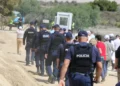
Proactive opposition to illegal migrants or refugees, by whatever name, in Libya is growing and coalescing into action. NGO groups are organising demonstrations, including one in the Ain Zara district of Tripoli yesterday, under the banner ‘‘No to Settlement. No to Naturalisation. Libya is for Libyans’’
A larger demonstration is being suggested for tomorrow at the UNHCR’s Tripoli headquarters, but it is unclear if the government has granted permission.
The “No to Settlement and No to Naturalisation – Libya for Libyans Movement’’ has been leading the drive with the UN High Commission for Refugees (UNHCR) bearing the brunt of public or populist anger.
However, the Libyan authorities have quickly jumped on the back of the populist sentiment with calls for migrants living amidst Libyan residential areas to be forced to leave their abodes.
The HoR
The Benghazi-based Libyan parliament, the House of Representatives (HoR) issued Statement no. 2/2026 of 1 June 2026 in which it rejected the settlement and resettlement of irregular migrants, affirming that Libya’s sovereignty and identity are red lines.
Anger directed at the UNHCR
There is also growing frustration directed the UNHCR sparked by or focused on the fact that it issues some kind of identity documents for registered migrants / refugees. Registration is seen as the thin end of the wedge of settlement in Libya. The flames of this anger have also been fanned by perceived new EU legislation on returning refugees to ‘‘third countries’’. ‘‘Third countries’’ is interpreted as code for Libya.
This public anger, manifested in standing demonstrations in front of the UNHCR’s Tripoli headquarters calling for its dismissal from Libya, has forced the UN agency to state to local Arabic-language Libyan media that:
– The UNHCR does not implement any resettlement programmes for migrants inside Libya and does not replace state institutions.
– It does not have sovereign powers over migrants, and it is working in coordination with the Libyan authorities to provide humanitarian and technical support.
– Refugee registration does not change the state’s powers to manage migration or make sovereign decisions about foreigners.
– Anyone can return to their country if they wish.
– UNHCR activities focus on humanitarian protection, basic assistance and solutions for those in need of international protection outside Libya.
– More than 83% of UNHCR registrants are from Sudan.
Zuwara issues night-to-dawn curfew on migrants
Meanwhile, Zuwara Municipality announced yesterday the imposition of a ‘‘temporary’’ curfew on foreigners residing within the municipality, from 11:00 pm to 5:00 am daily, until further notice. This, it claimed, is in order to preserve the safety of residents and enhance public security and safety.
Dahra Local Council
There are reports of Dahra local council directing landlords to vacate property occupied by illegal migrants.
Al-Serraj Social Council
Tripoli’s Al-Sarraj Social Council has gone as far called for the expulsion of the UNHCR from Libya. It has accused the UN refugee agency of undermining national security and working to settle migrants in the country.
Old City Local Council
Tripoli’s Old City Parish Council hasalso called on the owners of rented houses and shops to verify the legal status of the tenants, whether Arab or foreign, and to verify that they have valid official residences and documents in accordance with the laws and regulations in force.
The council also emphasize the importance of not renting out real estate to people who violate legal procedures, who have entered the country irregularly, or who do not have official identification documents. This, it added, is in order to preserve public security and the safety of the community, and to avoid any legal accountability that may result from this.