Monday, May 4, 2026
    The GeoStrategic Consensus
    No Result
    View All Result
    • Login
    • HOME
    • AMERICAS
      • Argentina
      • Brazil
      • Canada
      • Chile
      • Colombia
      • Costa Rica
      • Cuba
      • Dominican Republic
      • Ecuador
      • El Salvador
      • Greenland
      • Guatemala
      • Honduras
      • Mexico
      • Nicaragua
      • Panama
      • Paraguay
      • Peru
      • United States
      • Uruguay
      • Venezuela
    • ASIA-PACIFIC
      • Australia
      • Brunei Darussalam
      • Cambodia
      • China
      • Federated States of Micronesia
      • Fiji
      • Indonesia
      • Japan
      • Kiribati
      • Laos
      • Malaysia
      • Marshall Islands
      • Mongolia
      • Myanmar
      • Nauru
      • New Zealand
      • North Korea
      • Palau
      • Papua New Guinea
      • Philippines
      • Samoa
      • Singapore
      • Solomon Islands
      • South Korea
      • Taiwan
      • Thailand
      • Timor-Leste
      • Tonga
      • Tuvalu
      • Vanuatu
      • Vietnam
    • CARICOM
      • CARICOM – Non-English
        • Haiti
        • Suriname
      • CARICOM Associates
        • Anguilla
        • Bermuda
        • British-Virgin-Islands
        • Cayman-Islands
        • Curacao
        • Turks-and-Caicos
      • CARICOM English
        • Antigua and Barbuda
        • Barbados
        • Belize
        • Dominica
        • Grenada
        • Guyana
        • Jamaica
        • Montserrat
        • Saint Kitts and Nevis
        • Saint Lucia
        • Saint Vincent and the Grenadines
        • The Bahamas
        • Trinidad and Tobago
    • EURASIA
      • Armenia
      • Azerbaijan
      • Balarus
      • Georgia
      • Kazakhstan
      • Kyrgyzstan
      • Moldova
      • Russia
      • Tajikistan
      • Turkmenistan
      • Ukraine
      • Uzbekistan
    • EUROPE
      • Albania
      • Andorra
      • Austria
      • Bosnia and Herzegovina
      • Bulgaria
      • Croatia
      • Cyprus
      • Czech Republic
      • Denmark
      • Estonia
      • Finland
      • France
      • Germany
      • Greece
      • Holy See
      • Hungary
      • Iceland
      • Ireland
      • Italy
      • Kosovo
      • Latvia
      • Liechtenstein
      • Lithuania
      • Luxembourg
      • Malta
      • Monaco
      • Montenegro
      • Netherlands
      • North Macedonia
      • Norway
      • Poland
      • Portugal
      • Romania
      • San Marino
      • Serbia
      • Slovakia
      • Slovenia
      • Spain
      • Sweden
      • Switzerland
      • United Kingdom
    • MIDDLE EAST AND NORTH AFRICA
      • Algeria
      • Bahrain
      • Egypt
      • Iran
      • Iraq
      • Israel
      • Jordan
      • Kuwait
      • Lebanon
      • Lybia
      • Morocco
      • Oman
      • Palestinian Territories
      • Qatar
      • Saudi Arabia
      • Syria
      • Tunisia
      • Turkey
      • United Arab Emirates
      • Western Sahara
      • Yemen
    • SOUTH ASIA
      • Afghanistan
      • Bangladesh
      • Bhutan
      • India
      • Maldives
      • Nepal
      • Pakistan
      • Sri Lanka
    • SUB-SAHARAN AFRICA
      • Angola
      • Benin
      • Botswana
      • Burkina Faso
      • Burundi
      • Cabo Verde
      • Cameroon
      • Central African Republic
      • Chad
      • Comoros
      • Cote d’Ivoire
      • Democratic Republic of the Congo
      • Djibouti
      • Equatorial Guinea
      • Eritrea
      • Eswatini
      • Ethiopia
      • Gabon
      • Gambia
      • Ghana
      • Guinea
      • Guinea Bissau
      • Kenya
      • Lesotho
      • Liberia
      • Madagascar
      • Malawi
      • Mali
      • Mauritania
      • Mauritius
      • Mozambique
      • Namibia
      • Niger
      • Nigeria
      • Republic of the Congo
      • Rwanda
      • Sao Tome and Principe
      • Senegal
      • Seychelles
      • Sierra Leone
      • Somalia
      • South Africa
      • South Sudan
      • Sudan
      • Tanzania
      • Togo
      • Uganda
      • Zambia
      • Zimbabwe
    • HOME
    • AMERICAS
      • Argentina
      • Brazil
      • Canada
      • Chile
      • Colombia
      • Costa Rica
      • Cuba
      • Dominican Republic
      • Ecuador
      • El Salvador
      • Greenland
      • Guatemala
      • Honduras
      • Mexico
      • Nicaragua
      • Panama
      • Paraguay
      • Peru
      • United States
      • Uruguay
      • Venezuela
    • ASIA-PACIFIC
      • Australia
      • Brunei Darussalam
      • Cambodia
      • China
      • Federated States of Micronesia
      • Fiji
      • Indonesia
      • Japan
      • Kiribati
      • Laos
      • Malaysia
      • Marshall Islands
      • Mongolia
      • Myanmar
      • Nauru
      • New Zealand
      • North Korea
      • Palau
      • Papua New Guinea
      • Philippines
      • Samoa
      • Singapore
      • Solomon Islands
      • South Korea
      • Taiwan
      • Thailand
      • Timor-Leste
      • Tonga
      • Tuvalu
      • Vanuatu
      • Vietnam
    • CARICOM
      • CARICOM – Non-English
        • Haiti
        • Suriname
      • CARICOM Associates
        • Anguilla
        • Bermuda
        • British-Virgin-Islands
        • Cayman-Islands
        • Curacao
        • Turks-and-Caicos
      • CARICOM English
        • Antigua and Barbuda
        • Barbados
        • Belize
        • Dominica
        • Grenada
        • Guyana
        • Jamaica
        • Montserrat
        • Saint Kitts and Nevis
        • Saint Lucia
        • Saint Vincent and the Grenadines
        • The Bahamas
        • Trinidad and Tobago
    • EURASIA
      • Armenia
      • Azerbaijan
      • Balarus
      • Georgia
      • Kazakhstan
      • Kyrgyzstan
      • Moldova
      • Russia
      • Tajikistan
      • Turkmenistan
      • Ukraine
      • Uzbekistan
    • EUROPE
      • Albania
      • Andorra
      • Austria
      • Bosnia and Herzegovina
      • Bulgaria
      • Croatia
      • Cyprus
      • Czech Republic
      • Denmark
      • Estonia
      • Finland
      • France
      • Germany
      • Greece
      • Holy See
      • Hungary
      • Iceland
      • Ireland
      • Italy
      • Kosovo
      • Latvia
      • Liechtenstein
      • Lithuania
      • Luxembourg
      • Malta
      • Monaco
      • Montenegro
      • Netherlands
      • North Macedonia
      • Norway
      • Poland
      • Portugal
      • Romania
      • San Marino
      • Serbia
      • Slovakia
      • Slovenia
      • Spain
      • Sweden
      • Switzerland
      • United Kingdom
    • MIDDLE EAST AND NORTH AFRICA
      • Algeria
      • Bahrain
      • Egypt
      • Iran
      • Iraq
      • Israel
      • Jordan
      • Kuwait
      • Lebanon
      • Lybia
      • Morocco
      • Oman
      • Palestinian Territories
      • Qatar
      • Saudi Arabia
      • Syria
      • Tunisia
      • Turkey
      • United Arab Emirates
      • Western Sahara
      • Yemen
    • SOUTH ASIA
      • Afghanistan
      • Bangladesh
      • Bhutan
      • India
      • Maldives
      • Nepal
      • Pakistan
      • Sri Lanka
    • SUB-SAHARAN AFRICA
      • Angola
      • Benin
      • Botswana
      • Burkina Faso
      • Burundi
      • Cabo Verde
      • Cameroon
      • Central African Republic
      • Chad
      • Comoros
      • Cote d’Ivoire
      • Democratic Republic of the Congo
      • Djibouti
      • Equatorial Guinea
      • Eritrea
      • Eswatini
      • Ethiopia
      • Gabon
      • Gambia
      • Ghana
      • Guinea
      • Guinea Bissau
      • Kenya
      • Lesotho
      • Liberia
      • Madagascar
      • Malawi
      • Mali
      • Mauritania
      • Mauritius
      • Mozambique
      • Namibia
      • Niger
      • Nigeria
      • Republic of the Congo
      • Rwanda
      • Sao Tome and Principe
      • Senegal
      • Seychelles
      • Sierra Leone
      • Somalia
      • South Africa
      • South Sudan
      • Sudan
      • Tanzania
      • Togo
      • Uganda
      • Zambia
      • Zimbabwe
    No Result
    View All Result
    Agentially
    No Result
    View All Result
    Home ASIA-PACIFIC Tuvalu

    Can traditional architecture help build a ‘more resilient future’? | Climate Crisis News

    The Analyst by The Analyst
    April 17, 2026
    in Tuvalu
    Can traditional architecture help build a ‘more resilient future’? | Climate Crisis News


    Suva, Fiji – From the Arctic to the Pacific, Indigenous communities have used unique design and building techniques for millennia to help them survive in some of the most challenging environments on Earth.

    Now, as the UN World Meteorological Organization confirms that 2023 is ‘almost certain’ to be the hottest year on record, traditional architecture’s potential is gaining international attention – for its potential to allow humans to live in a hotter world but also because it has less impact on the planet.

    READ ALSO

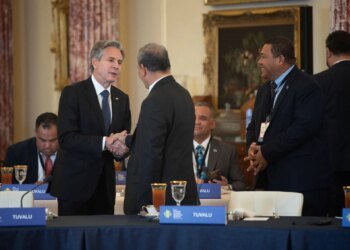
    In Pacific islands, US diplomatic push stirs memories of neglect | Economy News

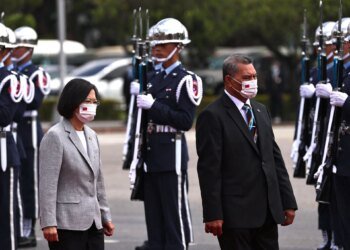
    Tuvalu promises to ‘stand firm’ with Taiwan amid Pacific rivalry | Politics News

    Recommended Stories

    list of 4 itemsend of list

    Australian architect Peter Rankin has managed the architecture firm, AAPi Design in Fiji’s capital Suva, since 2007.

    “Climate change is having a major impact on the built environment,” he told Al Jazeera. “From more frequent and severe natural disasters to rising temperatures and changing precipitation patterns. The construction and operation of buildings account for a significant portion of global energy consumption and greenhouse gas emissions, making sustainable building practices a critical component of efforts to mitigate and adapt to climate change.”

    That is not an exaggeration.

    C40, a global network of mayors of the world’s leading cities that seek to lead climate action, reports that the construction sector alone is responsible for more than 23 percent of global greenhouse gas emissions and consumes more than 30 percent of global resources. By 2050, an additional 2.5 billion people are expected to live in the world’s cities, making the need for environment-friendly urban infrastructure more urgent than ever.

    The rapid urbanisation has also led to the adoption of modern building practices and materials that often ignore or override traditional knowledge that was linked to the climate.

    A man sitting outside a wooden house. There is water lapping at the stilts supporting the building and tyres on the ground holding back the water.
    A resident sits outside a house affected by rising sea levels in Veivatuloa in Fiji [File: Mick Tsikas/EPA]

    The dominance of high-rise buildings, air conditioning and artificial lighting has created a significant demand for energy and resources and disrupted traditional social and cultural patterns in countries where people once relied on natural ventilation, shading and outdoor spaces. The result? A built environment that is contributing to average temperatures of 1.43 degrees Celsius above pre-industrial levels and sea ice in the Antarctic at a record low.

    A United Nations Environment Programme report released last month highlights that the 55 most climate-vulnerable economies alone have experienced losses and damages of more than $500bn in the last two decades. These costs are expected to rise steeply in the coming decades, particularly in the absence of forceful mitigation and adaptation.

    In a painful foreshadowing of what the future could hold for some Pacific nations, Australia and Tuvalu signed an unprecedented cooperation agreement in early November offering 280 Tuvaluans – 2.5 percent of the islands’ population – permanent residency in Australia each year. The agreement stems from a recognition that Tuvalu’s long-term future is critically endangered by climate change. The Falepili Union covers three key aspects: climate cooperation, mobility and security.

    Following closely, French Foreign Minister Catherine Colonna said in Canberra on Monday that she is open to any resettlement request from tiny South Pacific nations threatened by rising sea levels, similar to Australia’s recent agreement with Tuvalu. Colonna said France had watched with “great interest” last month when Australia offered Tuvalu a lifeline to help residents escape the rising seas and increased storms brought by climate change.

    This year’s Pacific cyclone season – which typically runs from November 1 to April 30 – started unprecedentedly early in the South Pacific, with Cyclone Lola forming over the Santa Cruz islands, north of Vanuatu in late October. Lola’s heavy rains, damaging winds and landslips intensified far more rapidly than local weather experts had expected it to, making Lola only the seventh pre-season South Pacific cyclone to form in October since 1970.

    Key to survival

    For a new generation of young Pacific Islander architects, mitigation and adaptation are not abstract concepts to be dealt with in a dystopian future; instead, they form the bedrock on which their very region’s survival depends. Here, traditional architecture – which has been shaped by the local warm, humid, and wet environmental conditions – and cultural practices, can offer valuable insight and solutions for designing buildings that are energy-efficient, resilient to climate extremes and environmentally friendly.

    Last November, Tualagi Nokise received the prestigious Architects Medallion from the New South Wales Architects Registration Board in Australia for his thesis project – Niu Growth: The in-between. The project focused on a hypothetical natural disaster research and training centre located off the coast of Savusavu Town in Fiji; its structure drawing on local materials and traditional Fijian building techniques, while also integrating modern cyclone principles.

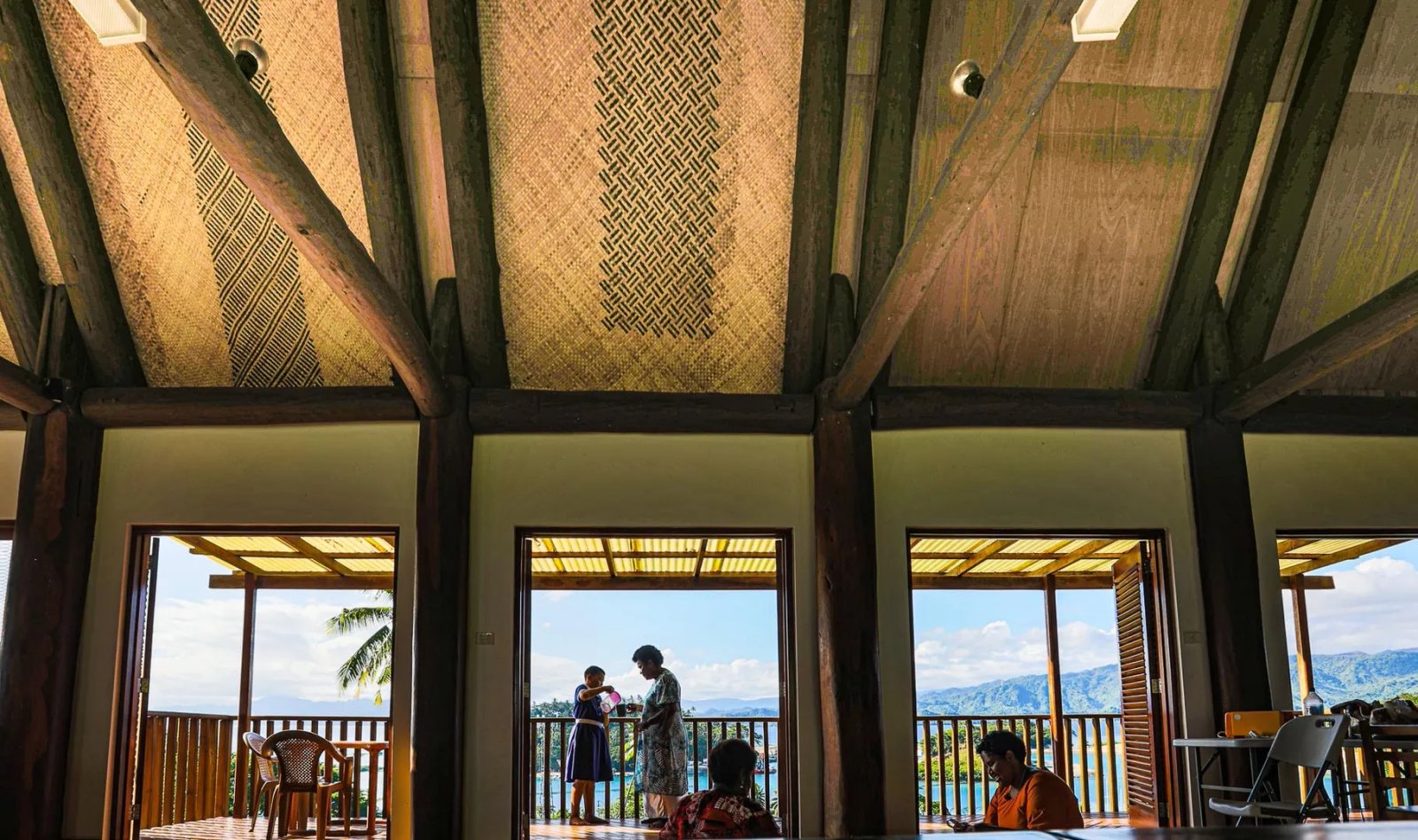
    The proposed framework of each building resembles a modern interpretation of a Fijian Bure – a traditional wooden straw-roofed hut. It is made mostly of local mahogany or vesi timber, with its inner walls and screens also made of locally sourced material, all enclosed by a thatched roof. The upper ridge of the roof is offset to a single point to reduce the impact of strong winds and the eaves are positioned closer to the ground to prevent the roof from flying off during a cyclone.

    A grid of cyclone roof bracing is used to provide stability, and roof trusses create openings on the lower part of the roof for light, access and cross-ventilation. A roof truss is a structural framework of triangulated timbers that provides support for a roof, using up to 40 percent less timber than a traditional roof and thus making them highly cost-effective. Around the structures, planters and pebble drains naturally filter and disperse rain run-off.

    “My research was profoundly influenced by my experience growing up in the Pacific, where I saw firsthand the damage left behind from these cyclones,” explained Tualagi. “Yet, as catastrophic as these were, I was fortunate enough to witness the sense of community and hope of friends and family around me; how they still smiled and shared moments together while recovering in a decimated country. Memories I take inspiration from, and my first experience with what architecture can be.”

    The Fijian ‘bure’ and Samoan ‘fale’, terms for traditional buildings, were once only known by the small groups of people inhabiting the South Pacific, but interest in Indigenous building practices is increasing.

    At Stanford University in the United States, for example, a course on Sustainable Design and Practice in Native American Architecture is specifically geared at ‘exploring the place and responsibility of Native design in combating climate change’. In Canada, The University of British Columbia’s School of Architecture recently launched a programme on Indigenous Community Planning and Design, demonstrating a global soaring interest in traditional building techniques.

    “The stereotypical comparison of traditional buildings against modern buildings is that our traditional buildings were primitive,” added Tualagi. “This is greatly underestimating the development of form, materiality, and design strategy over generations before the colonial period. Systems and strategies promoting cross ventilation, building orientation, solar loading and water retention have been around for decades, but now we finally have an opportunity to scale; as governments are motivated to lower their carbon footprint and counter the worsening impact of flood and cyclone damage.”

    A man riding a motorbike is seen reflected in a puddle of water in Funafuti, Tuvalu. The buildings behind are painted green and have balconies
    Tuvalu’s long-term future is critically endangered by climate change [File: Mick Tsikas/AAP Image via Reuters]

    That motivation, or lack thereof, has been on full display at this year’s United Nations Climate Change Conference, COP28, currently taking place in Dubai.

    A UN analysis of national plans in October found that countries’ climate action plans were still far behind what was needed to curb human-caused warming and limit the devastating effects of extreme heat, storms and droughts; but that some nations had taken marginal steps towards slashing emissions.

    The report looked into the climate plans of 195 countries and found that emissions from the burning of coal, oil and gas will rise by nine percent by 2030 compared with 2010 levels, but will be two percent lower than 2019 levels because of some climate action from countries switching to cleaner energy. Climate scientists warn, however, that the world needs to emit about 45 percent less carbon emissions by 2030.

    Peter Rankin is hopeful that the construction sector can learn to work more effectively with governments to update national building codes that mitigate climate catastrophe.

    He also believes the Pacific can generate real global momentum around hybrid-traditional design.

    “Fiji and the Pacific, in general, is ripe for innovation,” he said. “Our history, local skillset and ‘fight to survive’ places us in a unique position to be an incubation hub for accelerating the merging of more traditional knowledge and modern building design. The goal, of course, being a more resilient future for humanity.”

    Source link

    Related Posts

    In Pacific islands, US diplomatic push stirs memories of neglect | Economy News
    Tuvalu

    In Pacific islands, US diplomatic push stirs memories of neglect | Economy News

    April 21, 2026
    Tuvalu promises to ‘stand firm’ with Taiwan amid Pacific rivalry | Politics News
    Tuvalu

    Tuvalu promises to ‘stand firm’ with Taiwan amid Pacific rivalry | Politics News

    April 21, 2026
    Pacific nation leaders in Washington as US seeks to deepen ties | News
    Tuvalu

    Pacific nation leaders in Washington as US seeks to deepen ties | News

    April 21, 2026
    US has agreed Pacific Islands deal, offering ‘big dollar numbers’ | Politics News
    Tuvalu

    US has agreed Pacific Islands deal, offering ‘big dollar numbers’ | Politics News

    April 21, 2026
    Climate change gets ‘highest priority’ in US, Pacific agreement | News
    Tuvalu

    Climate change gets ‘highest priority’ in US, Pacific agreement | News

    April 20, 2026
    It’s time to give carbon removal a chance | Climate Crisis
    Tuvalu

    It’s time to give carbon removal a chance | Climate Crisis

    April 20, 2026
    Next Post
    Since the beginning of the day, 118 clashes have been recorded at the front – the General Staff

    Since the beginning of the day, 118 clashes have been recorded at the front - the General Staff

    POPULAR NEWS

    Justin Bieber fans flood Coachella festival for headlining show – Entertainment

    Justin Bieber fans flood Coachella festival for headlining show – Entertainment

    April 20, 2026

    Over 600 flee homes as Army, NPA clash in Negros Occidental

    April 21, 2026

    Ex-DPWH exec recalls P800-M ‘delivery’ to Zaldy Co 

    April 20, 2026

    Former PM Paluckas suspends party membership, to waive immunity over criminal probe

    April 24, 2026
    Pres. Ali challenges CARICOM to transform into health research powerhouse

    Pres. Ali challenges CARICOM to transform into health research powerhouse

    April 23, 2026

    EDITOR'S PICK

    Hungarian election tests Trump’s global reach as Orban fights for survival

    Hungarian election tests Trump’s global reach as Orban fights for survival

    April 12, 2026
    Roman Telescope: NASA reveals the instrument that will change what we know about the cosmos

    Roman Telescope: NASA reveals the instrument that will change what we know about the cosmos

    May 1, 2026
    CCSS negotiated in secret and manages to reduce the cost of the most expensive and most litigated cancer drug in its arsenal

    CCSS negotiated in secret and manages to reduce the cost of the most expensive and most litigated cancer drug in its arsenal

    April 21, 2026
    Marianela Guzmán Vercellesi tells us about her professional journey before her first participation in Experience Living

    Marianela Guzmán Vercellesi tells us about her professional journey before her first participation in Experience Living

    April 15, 2026

    Recent Posts

    • Invertech Copán capta socios con permiso solo para Internet
    • Marisa Caichiolo: “It is extremely important that the calls are absolutely transparent”
    • Unions march in Panama this May 1 between labor demands and complaints of persecution
    • Two accused of set up robbery | News

      © 2026 Agentially - Navigating shifting sovereignties and global risk .

      Welcome Back!

      Login to your account below

      Forgotten Password?

      Retrieve your password

      Please enter your username or email address to reset your password.

      Log In
      No Result
      View All Result

        © 2026 Agentially - Navigating shifting sovereignties and global risk .

        This website uses cookies. By continuing to use this website you are giving consent to cookies being used. Visit our Privacy and Cookie Policy.