COVER STORY
Oil palm industry executives want time to peruse the proposed legislation to satisfy themselves that the changes would benefit all stakeholders including investors in the long run.
THE billion-kina oil palm industry will be revolutionised to ensure its benefits are shared by all stakeholders.
A bold statement by Oil Palm Minister Francis Maneke delivered this month during the final validation of its proposed Oil Palm Industry Authority (Opia) Bill 2026 and the Oil Palm Industry Management Bill 2026.
“Opia repeals the Oil Palm Industry Corporation Act 1992, establishes the authority, defines its powers and functions, and deals with its corporate management.
“The Oil Palm Industry Management Bill 2026 is the base, foundation law that sets the regulatory framework for the oil palm industry. It provides for the establishment of regulations and standards, create links between other laws and State agencies, benefits for landowners and deals with socioeconomic issues, where possible,” Maneke said.
“The sector that has grown to become PNG’s largest agricultural commodity, contributing over 40 per cent of the country’s agricultural export revenue and providing employment for tens of thousands of Papua New Guineans.
“These two bills will be a game changer – a bold intervention that sets the foundation to restructure, regulate, and expand the industry, while ensuring that Papua New Guineans have a greater stake in its success.
Minister Maneke said for too long landowners and smallholders have been mere participants in an industry that flourishes on their land.
“For 50 years, the palm oil industry operated without dedicated government oversight, leaving smallholders, landowners and industry stakeholders without clear direction or protection.
“Smallholders and landowners must receive fair treatment, equitable pricing, and greater opportunities for participation whilst creating a conducive environment for large scale investments.
“The palm oil industry must expand responsibly – not only in scale but in inclusivity. There will be proper land mobilisation and the voluntary registration of customary land, allowing resource owners to participate directly in commercial ventures rather than simply leasing out their land.
These two bills will be a game changer – a bold intervention that sets the foundation to restructure, regulate and expand the industry, while ensuring that Papua New Guineans have a greater stake in its success.” – Minister
“The Government aims to develop and expand the industry annually, while ensuring that landowners and smallholders receive the support, resources, and financial backing they need to compete in the value chain. The focus on downstream processing will create new revenue streams, reduce our reliance on crude exports, and increase domestic job opportunities.
“For decades, the absence of clear regulations and licensing has created inconsistencies and missed opportunities in the industry. There needs to be a comprehensive licensing framework, ensuring that investors comply with environmental, social, and economic standards.
The minister added that the levy system needed streamlining to enhance transparency and accountability in how funds are collected and used.
“A new single unified levy structure will ensure that funds support smallholder extension services, research, pest management, and community infrastructure, benefiting the very people who sustain this industry.
We need to make sure that when it goes through, it goes through as a benefit to the industry as a whole; not just one group. Otherwise the whole industry will lose in the long run.” – CEO
“For too long, smallholders have been overlooked despite their critical contribution to the industry. Special emphasis on smallholder development by ensuring better access to extension services, fair pricing mechanisms, and financial support. At the same time, we welcome private sector investment by creating a stable, well-regulated investment environment that encourages sustainable industry growth while ensuring landowners and resource owners are not left behind.
“State equity participation is important, enabling the Government, on behalf of the people, to co-invest in major oil palm projects. This assures that resource owners and the nation as a whole-receives a fair share of the industry’s wealth, rather than remaining passive spectators.
“With the right regulatory framework, strong investment, and a commitment to fair participation, this industry has the potential to unlock greater economic opportunities empower landowners, and uplift smallholders.”
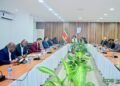
Representatives from all milling companies attended the final validation workshops thoughtout the country held this month.
Hargy Oil Palms Limited general manager Craig Gibson and New Britain Palm Oil Limited country manager and Palm Oil Producers Association chairman Robert Nilkare said more time was still needed for consultation of the two proposed bills.
“I think there’s a long way to go before we get it ready to be tabled in Parliament,” Gibson said.


“It’s hard for me to comment in a great deal about what the contents of the bill is but there are some red flags I believe that need to be discussed further.
“It’s not just about the farm gate price, any other levies, the downstream processing, landowner royalties or proper feasibility studies.
“Because what has been said from the start is we need to be making sure that the landowners and the smallholders and the Government are receiving benefits, but at the same time the investors, whether they be local or international investors, also need to see a business that is viable. Otherwise they’re not going to be attracted, and the ones that are here are going to be scaling down their operations,” Gibson said.
“We need to make sure that when it goes through, it goes through as a benefit to the industry as a whole; not just one group. Otherwise the whole industry will lose in the long run. I think that’s very important. It is key to be able to get the right legislation to suit the industry.
“I think there’s a long way to go before we’re ready to take this in Parliament, as long as we’re not trying to rush to meet deadlines,” Gibson said.