ABOVE EXPECTATIONS:
This first cycle came in about 10 percent above the projected amount, and could go toward emission-reduction project grants
-
By Esme Yeh
/ Staff reporter, with CNA
The Ministry of Environment (MOENV) yesterday said it collected NT$4.97 billion (US$158.1 million) in Taiwan’s first carbon fee collection cycle.
A total of 461 factories operated by 240 companies paid carbon fees, the ministry said, adding that among them, 123 semiconductor manufacturing facilities contributed about NT$2.2 billion, including 33 factories operated by Taiwan Semiconductor Manufacturing Co (, 台積電).
The electricity supply sector contributed NT$635 million through 19 facilities, while 29 steel plants paid NT$400 million and nine concrete plants contributed NT$130 million, it said.
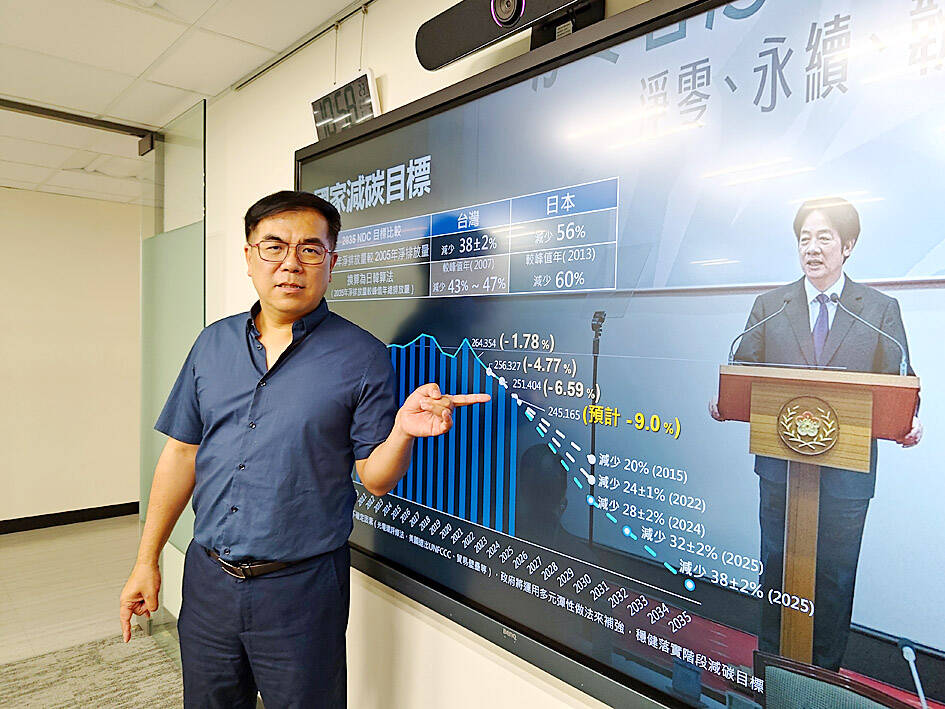
Photo: Wu Po-hsuan, Taipei Times
The ministry had estimated carbon fee revenue would be about NT$4.5 billion, but the final amount was higher because some factories that had applied for preferential rates through voluntary emissions reduction plans withdrew their applications or had been rejected, MOENV Climate Change Administration Director-General Tsai Lin-yi (蔡玲儀) said.
Tsai said that 430 factories had applied for preferential rates of NT$50 or NT$100 per tonne, but 28 either withdrew their applications or were rejected, subjecting them to the standard rate of NT$300 per tonne of carbon emissions.
Most rejections were due to proposed emissions reduction measures failing to meet regulatory standards, while some companies withdrew their plans because economic growth and expanded production capacity made their original reduction targets unattainable, she said.
The fund’s management committee has approved allocating NT$2 billion to subsidize emissions-reduction projects and climate-adaptation research by industries and local governments, and another NT$500 million to provide credit guarantees and interest subsidies for participating industries, she said.
Under the Regulations Governing the Collection of Carbon Fees (碳費收費辦法), companies that emit at least 25,000 tonnes of carbon dioxide annually are required to pay carbon fees based on their total annual emissions.
The regulations took effect on Jan. 1 last year. Emissions generated last year were subject to the first round of carbon fee calculations, with May 31 as the deadline for the first payment cycle.
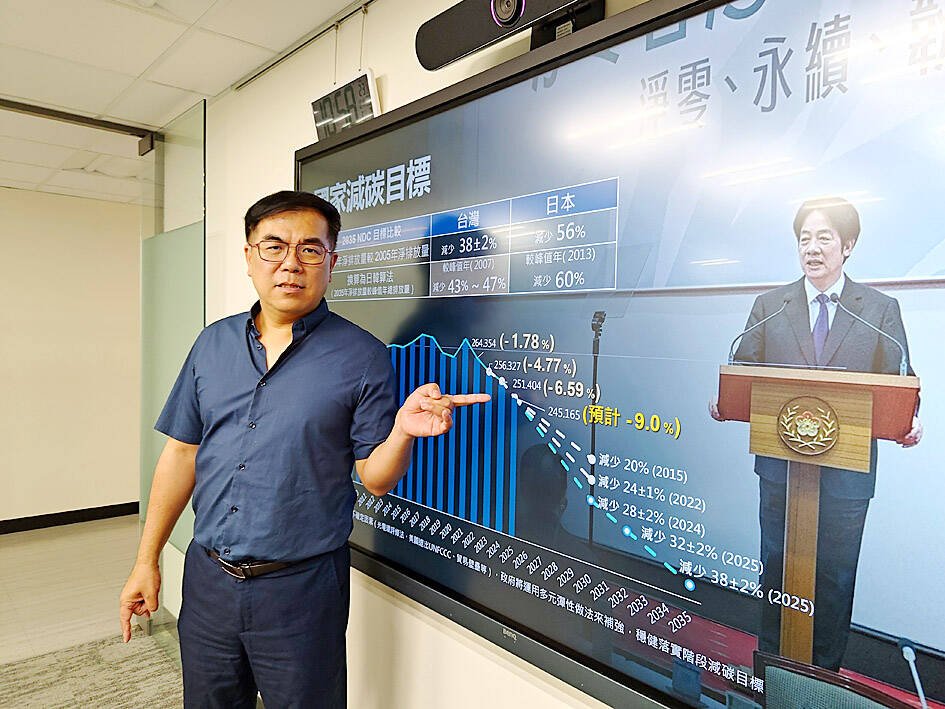
Meanwhile, net greenhouse gas emissions in 2024 were reduced by 1.92 percent, declining for the third consecutive year, the ministry said yesterday, as it unveiled the National Greenhouse Gas Inventory Report on emissions.
Taiwan’s net greenhouse gas emissions in 2024 amounted to more than 251 million tonnes of carbon dioxide equivalent, 6.59 percent lower than the 2005 baseline year, the report said.
Climate Change Administration Net Zero Emissions Promotion Division Director Wen Yu-yung (溫育勇) said Taiwan’s total greenhouse gas emission reduction was better than global performance.
Domestic total greenhouse gas emissions in 2024 decreased 1.76 percent from the year before while the figure increased 2.3 percent globally, he said.
The data showed that Taiwan’s economic growth has decoupled from carbon emissions, Wen said.
While Taiwan’s GDP grew by more than 93 percent from the 2005 baseline year to 2024, the carbon dioxide emissions intensity declined by up to 48.59 percent over the same period, he said.
Taiwan is listed as one of the 35 economies with economic growth decoupled from carbon emissions in the Global Carbon Budget report released by the Global Carbon Project last year, he said.
The ministry said more than 90 percent of domestic emissions were from the energy sector, which includes emissions from energy use in industry, commerce, transportation and households.
The energy sector’s emissions in 2024 dropped 1.07 percent from 2005, the first time emissions fell below the baseline-year level since the Greenhouse Gas Reduction and Management Act (溫室氣體減量及管理法) took effect, it said.
The manufacturing and construction industries posted the largest reduction, showing that industrial energy efficiency has improved, the ministry said.