By Marlon Bute
The recent announcement by the NDP government of measures aimed at cushioning the impact of rising fuel and food prices has gotten me thinking about the long-gone days of my childhood and early youth in Lowmans Hill.
As I listened to the discussion about the rising cost of living and the measures proposed to ease the burden on ordinary Vincentians, my mind drifted back to a different time. It was a time when life was by no means easy and money was often scarce, but it was also a time when people found ways to help themselves through hard work, enterprise, and production.
My thoughts returned to the lettuce beds, the provision grounds, the village fishermen who recruited beach goers to help haul their Sunday morning seines, the livestock farmers who raised pigs, goats and sheep, and the backyard gardens that produced pigeon peas, corn, okra, sweet peppers, chives, thyme, tomatoes, cabbage and lettuce. In many households, much of what was needed to prepare a proper meal could be found in the backyard, the provision ground, or the nearby farm.
Some families kept pigs. Others raised goats and sheep. Many kept what we called yard fowls, providing a ready supply of eggs and, when necessary, meat for the table. Families produced because they understood that every pound of sweet potato harvested, every head of cabbage grown, every egg collected and every layer or meat bird raised was money that did they not have to spend elsewhere.

Lowmans Hill, as I remember it, was self-sufficient. Everyone produced something. A teacher raised livestock. A tradesman planted crops. A police officer “burned coals” producing charcoal that was sold by the sack or by the pan. People looked for ways to supplement their income and improve their circumstances.
That mindset built resilience. It fostered independence, initiative, and self-reliance. It helped ordinary people improve their circumstances and provide for their families.
Agriculture was also about much more than food. Many children of my generation spent afternoons, weekends and holidays helping parents, grandparents, uncles and aunts in the fields and provision grounds. In the process they learned responsibility, discipline, teamwork, and the value of hard work. They contributed to their households while strengthening family and community bonds.
Unfortunately, much of that resilience disappeared over the last 25 years.
Agriculture declined as it ceased to receive the level of attention, investment, and policy support necessary for it to thrive. Increasing emphasis was placed on tourism and consumption while agriculture, fisheries and other productive sectors simply dwindled.
Today, we import products that earlier generations routinely produced themselves. Vegetables like carrots, cucumbers, tomatoes and even lettuce, meats, tens of millions of dollars annually in chicken, pork, goat, beef and turkey, processed foods and countless other items arrive on ships from overseas. The result is a level of dependence that should concern all of us.
When fuel prices rise, we feel it. When shipping costs increase, we feel it. When global conflicts disrupt supply chains, we feel it. When inflation affects food-producing countries, we feel it.
Historically, we have always faced challenges beyond our control. We have a dry season that places real pressure on water supplies and agricultural production. We live in a region vulnerable to hurricanes. And we also live with the reality of an active volcano.
Those vulnerabilities are part of our geography.
The over-dependence on imported food is different. It is a vulnerability of our own making.
And because it is a vulnerability of our own making, it is one that we need to fix.
That is why the recent measures announced by the government should be viewed not simply as relief measures but as part of a much larger conversation about the future direction of the country.
While in opposition, the New Democratic Party repeatedly spoke about rebuilding agriculture, strengthening fisheries, supporting entrepreneurship, expanding access to financing, and reducing dependence on imports. Since assuming office, the administration has continued to articulate that vision.
Minister of Agriculture Israel Bruce has spoken about food security and food sovereignty and the need to increase domestic food production. The renewed emphasis now placed on agriculture recognises an important truth: a country cannot import its way to resilience.
The same thinking is clear in fisheries. For the first time in our history, St. Vincent and the Grenadines has a dedicated Ministry of Fisheries, Marine Conservation and Climate Resilience under Minister Conroy Huggins. That decision alone signals an appreciation of the importance of fisheries as a source of food, employment, economic activity, and foreign exchange.
The proposed development bank also has a significant role to play within that broader vision. One of the recurring challenges facing farmers, fishers, small business owners, and entrepreneurs has been access to affordable financing. Too many people with innovative ideas, strong work ethics, and a willingness to take risks have found themselves unable to access the capital needed to expand a farm, purchase equipment, buy a vessel, start a business, or pursue an opportunity.
If properly structured and managed, the development bank could become an important instrument in rebuilding the country’s productive capacity. It has the potential to expand access to financing, encourage enterprise, support innovation, and help ordinary Vincentians create wealth for themselves and their families.
The challenge before us is not merely agricultural. It is economic. It is social. It is cultural. And increasingly, it is a matter of national security.
We really need to go back to the land.
The bountiful harvests that came from the efforts of thousands of villagers in hundreds of communities throughout St. Vincent and the Grenadines, from time immemorial right up to the late 1990s, helped to build resilience while providing nutritious meals, extra income, pride and a strong sense of community.
The near-complete abandonment of backyard gardening, formerly a feature of thousands of households throughout this country, has made us poorer in many ways.
Prosperity lies in increased production. It lies in farming, fishing, livestock rearing, agro processing, and enterprise. It lies in making greater use of the resources which we own.
That is the only sustainable way to reduce imports, lessen our dependence and build resilience, prosperity, and security.
It will not be easy to reverse the decline of the past twenty-five years. Rebuilding agriculture, revitalising fisheries, and restoring a culture of production will require investment, commitment, innovation, and hard work.
But it is necessary work.
That was the lesson of the lettuce beds.
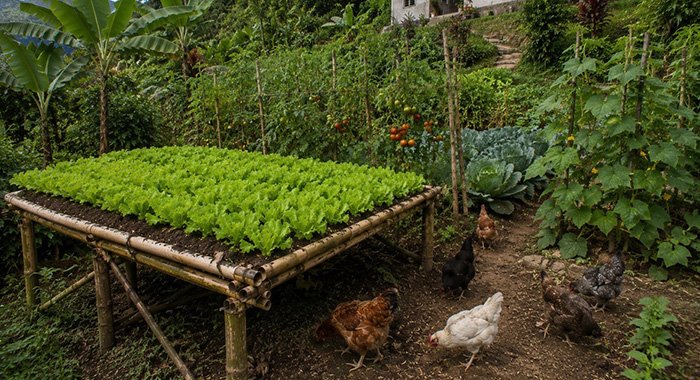
How we used the resilience of our bamboo to build three- and four-feet high beds, blanketed them with our rich volcanic soil and, within three short weeks, were rewarded with fresh organic lettuce.
It is still the lesson today.
Using what we have, in the best way we can, to take care of ourselves.
The opinions presented in this content belong to the author and may not necessarily reflect the perspectives or editorial stance of iWitness News. Opinion pieces can be submitted to [email protected].