The Sandinista dictatorship of Daniel Ortega and Rosario Murillo took the life of Brooklyn Riverahistorical leader of the Miskito people, co-founder of YATAMA (Yapti Tasba Masraka Nanih Aslatakankaor “Children of Mother Earth”) and one of the most important voices of indigenous autonomy in Nicaragua.
Brooklyn was kidnapped, held incommunicado and subjected to torture by a dictatorship that for almost three years denied all information about his whereabouts. The regime hid him while his family, his people and the international community demanded proof of life. Only when his body was already showing extreme deterioration, the dictatorship decided to show carefully managed photographs, in circumstances that point to a state crime.
It is likely that Brooklyn has been murdered a long time ago, and that the dictatorship has decided to belatedly exhibit supposed evidence of life to fabricate the appearance of a recent death.
This hypothesis must be investigated, because it is not born from speculation, but from an already known criminal pattern of the Sandinista Front and its use of the state apparatus to cover up its crimes. The responsibility falls directly on Daniel Ortega, Rosario Murillo and the repressive structure of Sandinismo. Brooklyn’s death must be added to the file of crimes against humanity committed against the Nicaraguan people. We demand an international and independent investigation, access to the truth, identification of all those responsible and justice.
Brooklyn’s trajectory embodies the struggle of indigenous peoples for their autonomy, their territory and their right not to be treated as second-class citizens by centralist powers. He represented, with all the complexities of his political life, the defense of indigenous communities against abandonment, violence and dispossession.
I met Brooklyn almost three decades ago, in the context of my work in disarmament, reintegration of ex-combatants and peacebuilding. We resumed communication when we tried, without success, to form the National Coalition in 2020 and 2021.
I did not always agree with his political positions, but I can testify to something: Brooklyn He never stopped putting the interests of the indigenous peoples of the Caribbean at the center of his decisions. When I asked him about his legislative alliance with the FSLN, he responded that his priority was to avoid further reprisals against his communities. He knew that the dictatorship not only punishes the leader who rebels, but also the people that that leader represents.
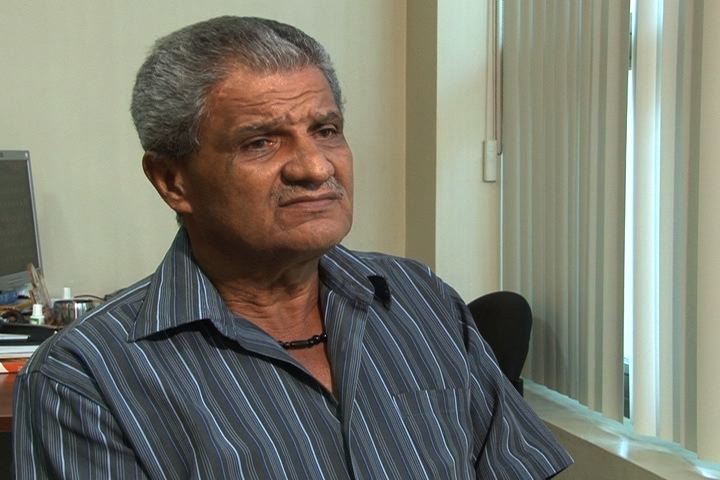
Our last conversation was in May 2021, at the Canal 10 facilities in Managua, where we had both been summoned separately for an interview. We spoke candidly about his departure from the Coalition and the brutal pressures he faced.
He told me: “This is a dictatorship that has no scruples, and any decision I make is going to have an impact on my communities. I must be careful. But have no doubt which side I am on. Our indigenous peoples have suffered from the repression of the Sandinistas since the 1980s and that is why we know them well. But now we have no weapons and that is why we must look for other forms of resistance.”
That morning he confided something to me that portrays the lack of scruples of the dictatorship: “They told me that if YATAMA remained in the Coalition, they would remove drinking water and health projects for my communities from the General Budget of the Republic. I must think about my people and the consequences they would have, but you know which side I am on,” he insisted.
I believed him then, and that is why I consider it important to leave this testimony. After that conversation I had no doubt that he was under enormous pressure and blackmail from the FSLN. If he openly joined the opposition, the consequences would be much more serious not only for him, but for the communities for which he fought so hard.
He also gave me a hint that the dictatorship could threaten his life. “Take care of yourself,” he told me. “These can disappear from us and their hand doesn’t shake.”
We said goodbye with a handshake. I was arbitrarily arrested shortly after.
Brooklyn had the heart of an opponent, although he carried on his shoulders a responsibility that many could not understand. The persecution against him accelerated after, in April 2023, he brought the complaint to the UN Permanent Forum on Indigenous Issues about the invasion of settlers and systematic violations against the indigenous and Afro-descendant peoples of the Caribbean Coast. His voice before the UN was received by the dictatorship as an unforgivable affront. On April 24, in Houston, he was informed that he could not board for Nicaragua.
He returned clandestinely through the Honduran Mosquitia to take refuge among his people in Bilwi. Months later, on September 29, police officers broke into his home. Since then, he was subjected to forced disappearance.
In an interview given in July 2018 to Courtney Parker, from the media Intercontinental Cryin the midst of a civic rebellion against the dictatorship, was categorical and said: “We fully support the people and oppose repression. We participate within the framework of our interests as indigenous peoples.”
And when asked what the world’s indigenous peoples should know about Nicaragua, he said: “That our indigenous peoples have continued to suffer under the Sandinista regime since the 1980s; but, at the same time, we continue to resist.”
Those words from Brooklyn, spoken in the midst of the 2018 protests, are his testimony today.
Today we also remember all those murdered by the dictatorship, the political prisoners, the exiled, the denationalized and all the victims of a tyranny that has made cruelty a method of power.
My deepest condolences and my solidarity with his family, with the Miskito people, with YATAMA and with all the indigenous resistance of the Caribbean Coast.
The dictatorship wanted to reduce him to silence; his death, however, must become a permanent accusation.