The US and Iran have traded strikes in one of the biggest nights of attacks since the ceasefire began in April, with negotiations on perilous ground after days of back-and-forth and rising frustrations on all sides.
Here’s what to know:
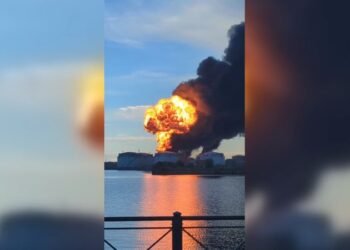
Tuesday night’s hostilities appear to have begun when the US military used a Hellfire missile to hit a Botswana-flagged oil tanker heading toward an Iranian port on Kharg Island. The ship did not comply with the US blockade of Iranian ports, according to US Central Command (CENTCOM).
In response, Iran said it fired missiles at a Liberian-flagged vessel.
But the more serious escalation came after the US struck an Iranian military ground control station on Qeshm Island, near the Strait of Hormuz, prompting Iran to fire missiles and drones at the Gulf nations of Kuwait and Bahrain.
Iran said it targeted “an American air and helicopter base” in the region, as well as the US Fifth Fleet headquarters in Bahrain. But the US said “all Iranian attacks on American forces failed,” adding that its missiles and drones were either intercepted or “fell short” of their targets.
Strained talks: Iranian media outlets have signaled talks between Tehran and Washington are ongoing, and US President Donald Trump told ABC News he believes a deal to reopen the Strait of Hormuz and extend the ceasefire with Iran is reachable “over the next week.”
But the ceasefire is on precarious footing, with Iran suspending talks earlier this week, and threatening escalation if Israel’s attacks on Lebanon continue. Trump has pressed Israel to scale back its Lebanon offensive, with further talks expected on Wednesday.
Shaky ceasefire: The US and Iran have repeatedly exchanged strikes during the ceasefire, with Iran previously targeting Gulf nations that host American military bases, including Kuwait, Bahrain, and the United Arab Emirates. Meanwhile, the US has struck Iranian military targets around the Strait of Hormuz, as well as Iran-linked vessels as part of its blockade.