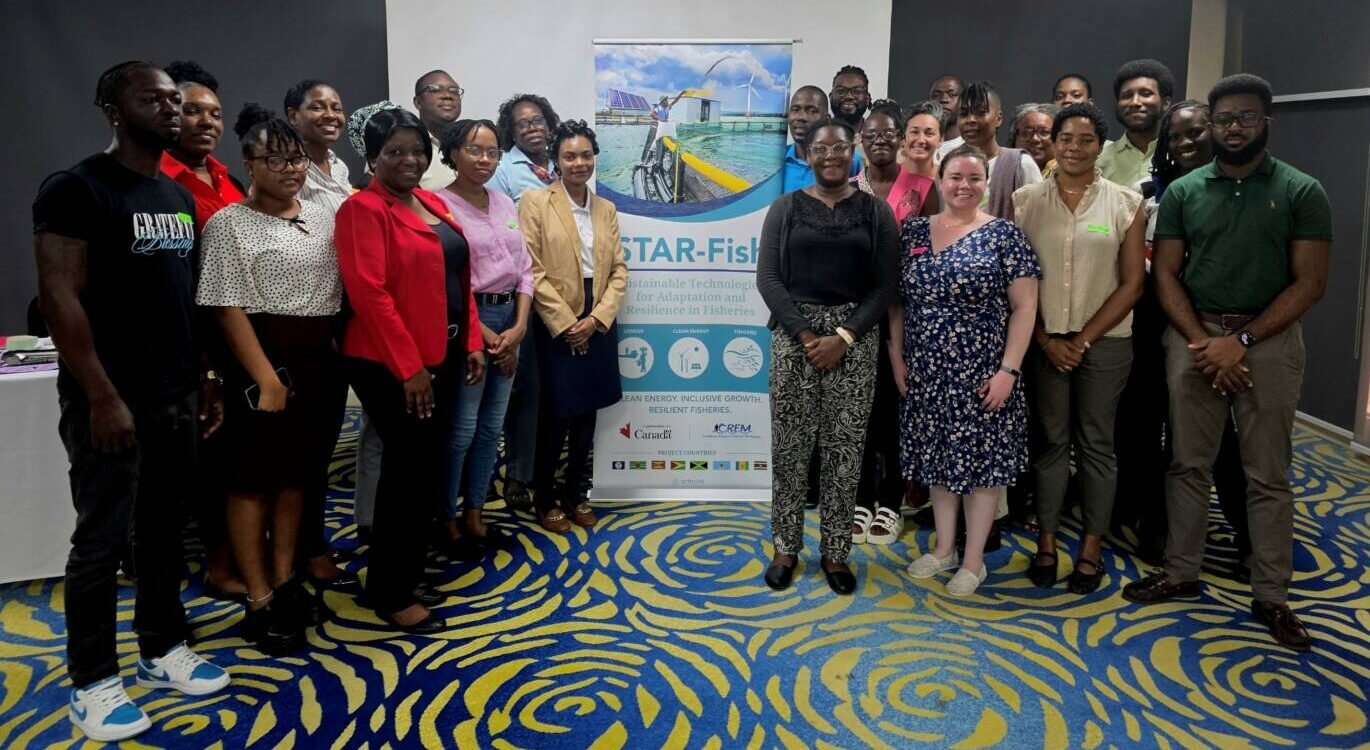
Amid rising energy costs and growing climate pressures affecting Caribbean Fisheries and Aquaculture, the Caribbean Regional Fisheries Mechanism (CRFM) is ramping up clean energy interventions under the CAD4.324 million STAR-Fish Project: “Sustainable Technologies for Adaptation and Resilience in Fisheries.”
Implementation activities across participating countries — Belize, Dominica, Grenada, Guyana, Jamaica, St Lucia, St Vincent and the Grenadines, and Suriname — will focus on strengthening the resilience and competitiveness of fisheries and aquaculture through clean energy solutions and low-carbon development. Planned interventions include the identification and deployment of renewable energy technologies, including cold storage solutions to improve cold chain efficiency, as well as support for selected fisheries to pursue low-carbon certification.
At the 2nd Regional Project Steering Committee Meeting held on 14 May 2026, Sherron Barker, Regional Project Coordinator for the STAR-Fish Project, presented the approved 2026–2027 Work Plan and Budget, which will guide the next phase of implementation. Key near-term priorities include developing viable business models to support investment in clean energy technologies, advancing the conversion of selected fish processing operations, and strengthening market opportunities for low-carbon certified fisheries.
Ena Ćimić, STAR-Fish Project Lead at the High Commission of Canada to Jamaica, representing Global Affairs Canada (GAC), acknowledged that the Caribbean’s fisheries and aquaculture sectors are important drivers of economic activity, livelihoods, and food security across the region. Addressing the meeting, she noted that, “the sectors also remain highly vulnerable to climate change, rising energy costs, and evolving market demands.”
Ćimić added: “The activities implemented through this project position STAR-Fish to further strengthen institutional capacity, advance gender-responsive approaches, and support the adoption of sustainable energy technologies within the fisheries and aquaculture sector, while also improving access to finance, enhancing competitiveness, and building resilience to climate and disaster risks across participating countries.”
Reflecting on progress during the previous year, Dr Marc Williams, Executive Director of the CRFM Secretariat, noted that STAR-Fish advanced key technical workstreams, including renewable energy business model development, carbon footprinting, and low-carbon certification processes. He added that Project Year 2 marked an important transition as the project moved from foundational planning toward more structured and coordinated implementation across participating countries.
Dr Williams added: “One of the project’s key achievements during the reporting period was the completion of major activities on gender equality and social inclusion. This work strengthened understanding of gender and social issues associated with the clean energy transition, supported the development of national and regional guidance tools through Gender Action Plans (GAPs) for Belize, Grenada, Jamaica, and St Vincent and the Grenadines, and advanced gender-responsive capacity building and stakeholder engagement across participating countries.”
Ćimić said that GAC welcomed STAR-Fish’s gender-responsive approach, vital to strengthening national capacities, promoting inclusion, and ensuring that the benefits of the clean energy transition are shared equitably. “This aligns with Canada’s priorities of advancing gender equality, climate action, and sustainable, inclusive growth, while also supporting expanded trade opportunities in the region,” she said, pledging GAC’s continued support for the CRFM initiative.
Dr Williams said that the project now enters Project Year 3 with “activities underway, strengthened governance arrangements, and a clearer pathway toward the practical application of renewable energy solutions across fisheries value chains in the Caribbean.”
“We look forward to continuing to work with all of you to support effective implementation and to contribute to a more resilient, sustainable, and inclusive Caribbean fisheries sector,” Ćimić affirmed.
CRFM