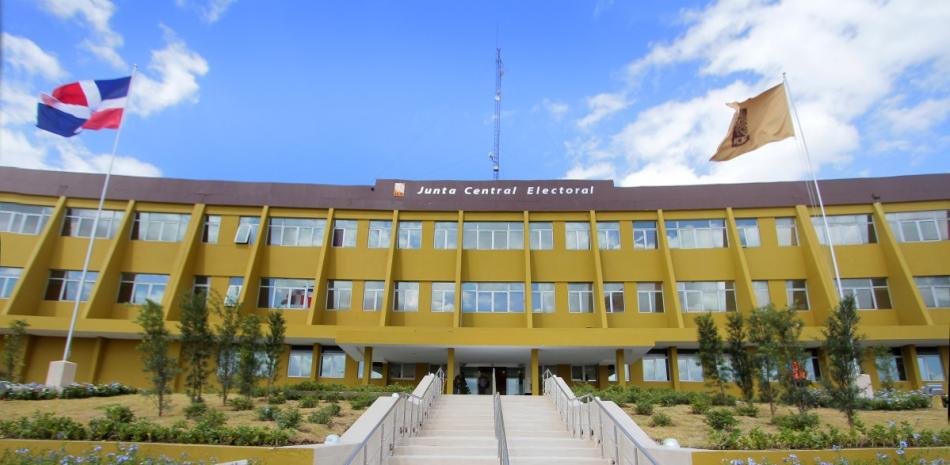
The recent restriction of Central Electoral Board (JCE) regarding the publications of political polls It can be identified as an act of “good faith” towards citizens, but that does not mean that it is a legal decision, or at least that is what the coordinator of Citizen Participation, Leydi Blanco.
“I can understand that good faith of the Central Electoral Board not to use surveys as clientelist and proselytizing instruments rather than an electoral process; However, that does not mean that the decision is legal or legitimate,” he warned.
He explained that even though citizens may be tired of the “untimely” campaigns of the political aspirantsarticle 128 of the law establishes that these surveys cannot continue to be carried out before eight days of the electoral process.
In his opinion, he considered that the right thing to do is to continue strengthening the electoral system so that the surveys are regulated by appealing to a modification of the electoral law.
“What I believe as a society is that we must talk about a modification to the electoral law, weakening our electoral processes such as clientelism with proselytism, which divert us from the real function, which is to generate general well-being for the Dominican community,” he commented resolutely.
On his side, the senator of the National District, Omar Fernándezexplained that, although he can understand and respect the decision of the electoral body, this tool will continue to be used, whether for electoral campaign work, internal consumption, to know and take the temperature of how the country is doing or what the population feels with certain political figures.
Under the argument that these are “work tools that reflect what the country feels in electoral terms,” he maintained that they are there to be used and there is no need to fear their use.
“I think that the polls reflect what we feel today; we have to work based on them, period. I greatly respect what the Central Electoral Board has ruled,” he said.
What the law says
The lawyer Manuel Fermín explained that the Constitutional Court has given several decisions that refer that the freedom of enterprisework or expression do not refer to absolute freedoms and can be regulated as long as the essential core of the right is protected.
In the case of the JCE, he clarified that the entity did not prohibit the publication of surveys at any time, but rather that they will be used at a certain time, specifically starting in 2027.
“It is a topic of discussion, I am not saying that it is an easy topic. Now, what must be understood is the scope of the regulatory power. The JCE has understood that at this moment these surveys are doing harm in what may perhaps be the manipulation, for example, of the citizens with surveys that may be positioning and not surveys that really reflect what the current electoral scenario is,” he asserted.
In his opinion, everything responds to an exercise of regulatory protest that conforms to what is constitutionally and legally established in this case by the constitution and the law 20-23.