
Thursday, June 4, 2026
    The GeoStrategic Consensus
    No Result
    View All Result
    • Login
    • HOME
    • AMERICAS
      • Argentina
      • Brazil
      • Canada
      • Chile
      • Colombia
      • Costa Rica
      • Cuba
      • Dominican Republic
      • Ecuador
      • El Salvador
      • Greenland
      • Guatemala
      • Honduras
      • Mexico
      • Nicaragua
      • Panama
      • Paraguay
      • Peru
      • United States
      • Uruguay
      • Venezuela
    • ASIA-PACIFIC
      • Australia
      • Brunei Darussalam
      • Cambodia
      • China
      • Federated States of Micronesia
      • Fiji
      • Indonesia
      • Japan
      • Kiribati
      • Laos
      • Malaysia
      • Marshall Islands
      • Mongolia
      • Myanmar
      • Nauru
      • New Zealand
      • North Korea
      • Palau
      • Papua New Guinea
      • Philippines
      • Samoa
      • Singapore
      • Solomon Islands
      • South Korea
      • Taiwan
      • Thailand
      • Timor-Leste
      • Tonga
      • Tuvalu
      • Vanuatu
      • Vietnam
    • CARICOM
      • CARICOM – Non-English
        • Haiti
        • Suriname
      • CARICOM Associates
        • Anguilla
        • Bermuda
        • British-Virgin-Islands
        • Cayman-Islands
        • Curacao
        • Turks-and-Caicos
      • CARICOM English
        • Antigua and Barbuda
        • Barbados
        • Belize
        • Dominica
        • Grenada
        • Guyana
        • Jamaica
        • Montserrat
        • Saint Kitts and Nevis
        • Saint Lucia
        • Saint Vincent and the Grenadines
        • The Bahamas
        • Trinidad and Tobago
    • EURASIA
      • Armenia
      • Azerbaijan
      • Balarus
      • Georgia
      • Kazakhstan
      • Kyrgyzstan
      • Moldova
      • Russia
      • Tajikistan
      • Turkmenistan
      • Ukraine
      • Uzbekistan
    • EUROPE
      • Albania
      • Andorra
      • Austria
      • Bosnia and Herzegovina
      • Bulgaria
      • Croatia
      • Cyprus
      • Czech Republic
      • Denmark
      • Estonia
      • Finland
      • France
      • Germany
      • Greece
      • Holy See
      • Hungary
      • Iceland
      • Ireland
      • Italy
      • Kosovo
      • Latvia
      • Liechtenstein
      • Lithuania
      • Luxembourg
      • Malta
      • Monaco
      • Montenegro
      • Netherlands
      • North Macedonia
      • Norway
      • Poland
      • Portugal
      • Romania
      • San Marino
      • Serbia
      • Slovakia
      • Slovenia
      • Spain
      • Sweden
      • Switzerland
      • United Kingdom
    • MIDDLE EAST AND NORTH AFRICA
      • Algeria
      • Bahrain
      • Egypt
      • Iran
      • Iraq
      • Israel
      • Jordan
      • Kuwait
      • Lebanon
      • Lybia
      • Morocco
      • Oman
      • Palestinian Territories
      • Qatar
      • Saudi Arabia
      • Syria
      • Tunisia
      • Turkey
      • United Arab Emirates
      • Western Sahara
      • Yemen
    • SOUTH ASIA
      • Afghanistan
      • Bangladesh
      • Bhutan
      • India
      • Maldives
      • Nepal
      • Pakistan
      • Sri Lanka
    • SUB-SAHARAN AFRICA
      • Angola
      • Benin
      • Botswana
      • Burkina Faso
      • Burundi
      • Cabo Verde
      • Cameroon
      • Central African Republic
      • Chad
      • Comoros
      • Cote d’Ivoire
      • Democratic Republic of the Congo
      • Djibouti
      • Equatorial Guinea
      • Eritrea
      • Eswatini
      • Ethiopia
      • Gabon
      • Gambia
      • Ghana
      • Guinea
      • Guinea Bissau
      • Kenya
      • Lesotho
      • Liberia
      • Madagascar
      • Malawi
      • Mali
      • Mauritania
      • Mauritius
      • Mozambique
      • Namibia
      • Niger
      • Nigeria
      • Republic of the Congo
      • Rwanda
      • Sao Tome and Principe
      • Senegal
      • Seychelles
      • Sierra Leone
      • Somalia
      • South Africa
      • South Sudan
      • Sudan
      • Tanzania
      • Togo
      • Uganda
      • Zambia
      • Zimbabwe
    • HOME
    • AMERICAS
      • Argentina
      • Brazil
      • Canada
      • Chile
      • Colombia
      • Costa Rica
      • Cuba
      • Dominican Republic
      • Ecuador
      • El Salvador
      • Greenland
      • Guatemala
      • Honduras
      • Mexico
      • Nicaragua
      • Panama
      • Paraguay
      • Peru
      • United States
      • Uruguay
      • Venezuela
    • ASIA-PACIFIC
      • Australia
      • Brunei Darussalam
      • Cambodia
      • China
      • Federated States of Micronesia
      • Fiji
      • Indonesia
      • Japan
      • Kiribati
      • Laos
      • Malaysia
      • Marshall Islands
      • Mongolia
      • Myanmar
      • Nauru
      • New Zealand
      • North Korea
      • Palau
      • Papua New Guinea
      • Philippines
      • Samoa
      • Singapore
      • Solomon Islands
      • South Korea
      • Taiwan
      • Thailand
      • Timor-Leste
      • Tonga
      • Tuvalu
      • Vanuatu
      • Vietnam
    • CARICOM
      • CARICOM – Non-English
        • Haiti
        • Suriname
      • CARICOM Associates
        • Anguilla
        • Bermuda
        • British-Virgin-Islands
        • Cayman-Islands
        • Curacao
        • Turks-and-Caicos
      • CARICOM English
        • Antigua and Barbuda
        • Barbados
        • Belize
        • Dominica
        • Grenada
        • Guyana
        • Jamaica
        • Montserrat
        • Saint Kitts and Nevis
        • Saint Lucia
        • Saint Vincent and the Grenadines
        • The Bahamas
        • Trinidad and Tobago
    • EURASIA
      • Armenia
      • Azerbaijan
      • Balarus
      • Georgia
      • Kazakhstan
      • Kyrgyzstan
      • Moldova
      • Russia
      • Tajikistan
      • Turkmenistan
      • Ukraine
      • Uzbekistan
    • EUROPE
      • Albania
      • Andorra
      • Austria
      • Bosnia and Herzegovina
      • Bulgaria
      • Croatia
      • Cyprus
      • Czech Republic
      • Denmark
      • Estonia
      • Finland
      • France
      • Germany
      • Greece
      • Holy See
      • Hungary
      • Iceland
      • Ireland
      • Italy
      • Kosovo
      • Latvia
      • Liechtenstein
      • Lithuania
      • Luxembourg
      • Malta
      • Monaco
      • Montenegro
      • Netherlands
      • North Macedonia
      • Norway
      • Poland
      • Portugal
      • Romania
      • San Marino
      • Serbia
      • Slovakia
      • Slovenia
      • Spain
      • Sweden
      • Switzerland
      • United Kingdom
    • MIDDLE EAST AND NORTH AFRICA
      • Algeria
      • Bahrain
      • Egypt
      • Iran
      • Iraq
      • Israel
      • Jordan
      • Kuwait
      • Lebanon
      • Lybia
      • Morocco
      • Oman
      • Palestinian Territories
      • Qatar
      • Saudi Arabia
      • Syria
      • Tunisia
      • Turkey
      • United Arab Emirates
      • Western Sahara
      • Yemen
    • SOUTH ASIA
      • Afghanistan
      • Bangladesh
      • Bhutan
      • India
      • Maldives
      • Nepal
      • Pakistan
      • Sri Lanka
    • SUB-SAHARAN AFRICA
      • Angola
      • Benin
      • Botswana
      • Burkina Faso
      • Burundi
      • Cabo Verde
      • Cameroon
      • Central African Republic
      • Chad
      • Comoros
      • Cote d’Ivoire
      • Democratic Republic of the Congo
      • Djibouti
      • Equatorial Guinea
      • Eritrea
      • Eswatini
      • Ethiopia
      • Gabon
      • Gambia
      • Ghana
      • Guinea
      • Guinea Bissau
      • Kenya
      • Lesotho
      • Liberia
      • Madagascar
      • Malawi
      • Mali
      • Mauritania
      • Mauritius
      • Mozambique
      • Namibia
      • Niger
      • Nigeria
      • Republic of the Congo
      • Rwanda
      • Sao Tome and Principe
      • Senegal
      • Seychelles
      • Sierra Leone
      • Somalia
      • South Africa
      • South Sudan
      • Sudan
      • Tanzania
      • Togo
      • Uganda
      • Zambia
      • Zimbabwe
    No Result
    View All Result
    Agentially
    No Result
    View All Result
    Home EURASIA Tajikistan

    In 2050, the population of Central Asia will exceed 100 million people. What awaits us?

    The Analyst by The Analyst
    June 3, 2026
    in Tajikistan
    In 2050, the population of Central Asia will exceed 100 million people. What awaits us?


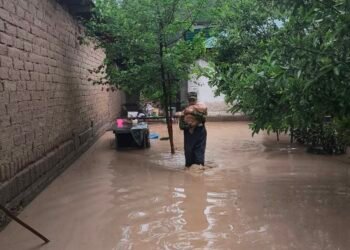
    The population of Tajikistan is growing rapidly. And this process is not consistent with the growth in productivity in such areas as industry, construction and agriculture. Meanwhile, arable land per capita fell to 0.5 hectares.

    READ ALSO

    A 73-year-old resident of Ayni died after falling from a mountain

    The EAEU countries called on Armenia to hold a referendum on joining the European Union

    Let’s look at how Tajikistan wants to turn the problem of overpopulation into an opportunity for prosperity.

    Is population growth an opportunity for prosperity?

    According to UN estimates, by 2050 the population of Central Asia will exceed 100 million people, including the population of Tajikistan will reach 14.5 million.

    Tajikistan took first place among the CIS countries in terms of population growth. Today the republic has a population of 10.3 million, which is twice as much as in 1991.

    The government of Tajikistan is optimistic about population growth, and this phenomenon is called the “demographic window of opportunity.”

    The National Development Strategy for the period up to 2030 states that the expected growth in the working-age population in the republic presents opportunities for accelerating economic growth. The bulk of the population (about 60%) will be people of working age (from 15 to 64 years), which will become the engine of economic growth.
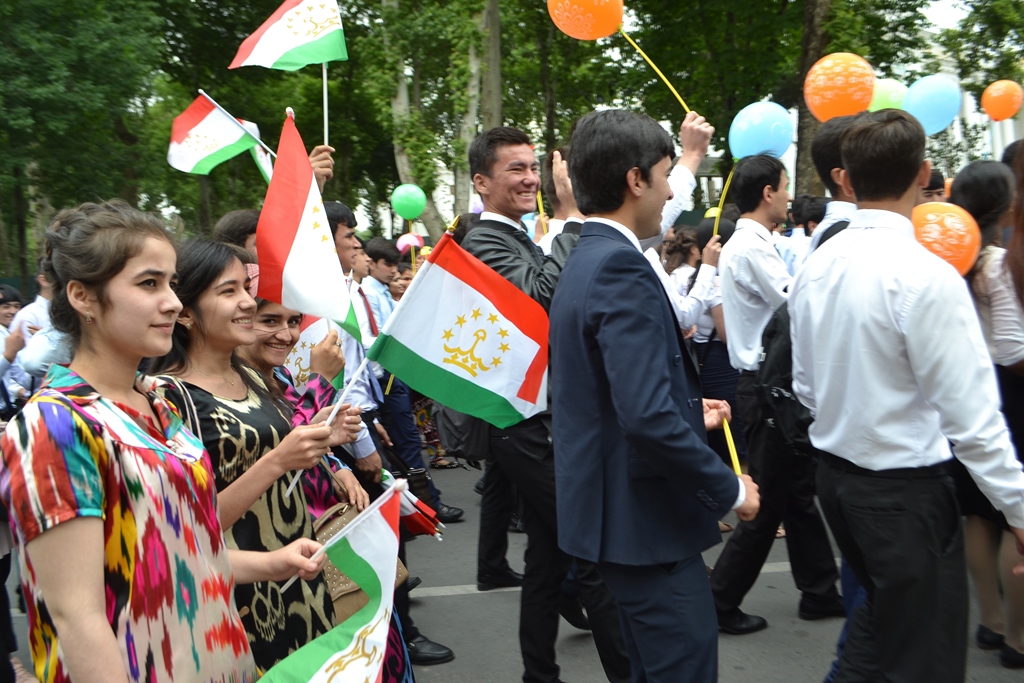
    Illustrative photo from pressa.tj

    The “demographic window” will have a beneficial impact both on the socio-economic development of the country as a whole and on the level of people’s well-being. Since the country’s population is growing at a high rate, production growth must also be high in order to prevent a decline in the quality of life.

    This problem cannot be solved on the basis of traditional, inefficient management methods. It becomes necessary to accelerate urbanization, large-scale housing construction, and accelerated growth of investments in communal, social and road infrastructure.

    The main thing is that the rate of growth of food production, or GDP, constantly exceeds the rate of population growth.

    How many people can the land of Tajikistan feed?

    Land, water and natural resources in Tajikistan are limited, and their quantity is decreasing every year. Will the economy be able to support the population under such conditions?

    Excessive population growth, according to some foreign experts, leads to mass unemployment and limitation of food, land, water and other resources.

    But domestic experts do not agree with them. According to them, the rate of population growth in itself is not a reason for such conclusions.

    Chairman of the State Committee for Land Management and Geodesy Orif Khojazoda previously stated that the land of Tajikistan is capable of feeding a population of 50 million people. According to him, today there are enough land resources to fully ensure the country’s food security, despite the fact that the country has approximately 0.6 hectares of irrigated land per capita.

    Of course, this is only possible with the rational use of land and water resources.

    In 1997, each citizen of the republic had 0.12 hectares of arable land. According to forecasts, by 2027, due to an increase in population, arable land per capita will decrease to 0.05 hectares.

    Dependency ratio

    The sum of the loads of children and the elderly forms the total demographic load. The dependency ratio directly reflects financial expenditures on social policy in the state. For example, if this coefficient increases, expenses for the construction of educational institutions, social protection, healthcare, pension payments, etc. should be increased.
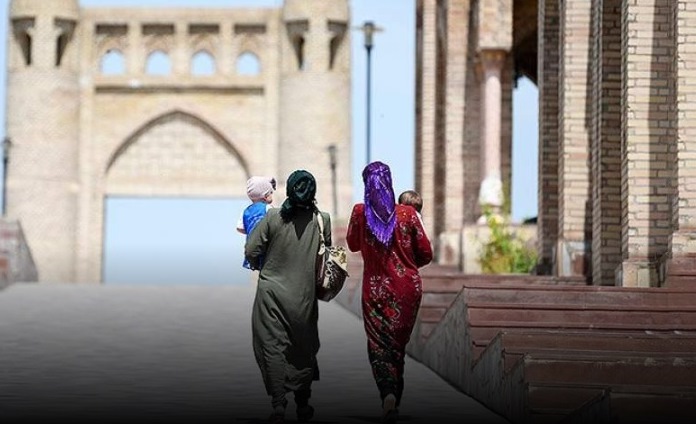
    For Tajikistan, the total dependency ratio is 59.5%. This means that the republic is experiencing a relatively high social burden for society. Every working person in the republic should earn almost 2 times more than he needs for himself.

    Illustrative photo: Global Look Press

    Transition to a new demographic stage

    According to a study by the demography department of the Institute of Economics and Demography of the National Academy of Sciences, in 2017 respondents mostly had 2-4 children (64.8%), while in 2012 the majority of respondents had 4-7 children (87.4%).

    Thus, in recent years in Tajikistan there has been a process of focusing on small families, while the proportion of families with three children in the study group was the largest.

    According to the forecast of the Institute’s specialists, the population has not completely adjusted psychologically to a rapid decline in the birth rate. While the influence of traditional fertility factors is still strong not only in the minds of the population, but also in their lifestyle. Therefore, the high birth rate will continue until 2035-2050.

    The active growth of the population of Tajikistan in the years after independence was also due to the fact that the majority of the population lives in rural areas and leads a rural lifestyle. Rural families need workers to work in the fields, so having 4-5 children in families is a necessity.

    However, in subsequent years, with the development of new technologies and Tajikistan’s transition to an industrial path of development, the situation will change radically.

    Candidate of Economic Sciences Akbar Subkhonov considers the demographic situation optimal.

    “

    “To solve problems, we need to take control of three things: improve the quality of education, fairly distribute land among all its users, and, of course, develop production using new technologies,” he says.

    In this case, according to scientists, the current population growth in Tajikistan will not be uncontrolled. And as the economy develops and the population’s well-being increases, the current demographic problems will disappear. In return, a new modern type of demography will come, which is characteristic of developed countries.

    Meanwhile…

    Demographic growth in all Central Asian countries today is welcomed, and no one controls the birth rate.

    According to experts of the Eurasian Development Bankdemographic growth will contribute to the development of the economies of the Central Asian states.

    The growing population of the region creates a capacious sales market and a growing pool of labor resources.

    Demographer from Uzbekistan, Doctor of Sociological Sciences Azamat Seitov believesthat with skillful regulation and greater attention to human capital, human resources are one of the opportunities for further growth of countries’ economies.

    “

    “Birth control is pointless. And the state does not need to do this,” he believes.

    By opinion Chairman of the Senate of the Parliament of Kazakhstan Maulen Ashimbaev, his country, without population growth to 30-40 million in the coming decade, will be very difficult to develop a large territory. Therefore, increasing the country’s population to 40 million is a strategic issue.

    Source link

    Related Posts

    A 73-year-old resident of Ayni died after falling from a mountain
    Tajikistan

    A 73-year-old resident of Ayni died after falling from a mountain

    June 4, 2026
    The EAEU countries called on Armenia to hold a referendum on joining the European Union
    Tajikistan

    The EAEU countries called on Armenia to hold a referendum on joining the European Union

    June 3, 2026
    In Tajikistan, mudflows and landslides occurred again, roads, canals and power lines were damaged
    Tajikistan

    In Tajikistan, mudflows and landslides occurred again, roads, canals and power lines were damaged

    June 3, 2026
    #AP30/People. Khaidar Shodiev: “People came to us with the hope that their voice would be heard”
    Tajikistan

    #AP30/People. Khaidar Shodiev: “People came to us with the hope that their voice would be heard”

    June 3, 2026
    Next Post
    Mette Frederiksen is Prime Minister of Denmark again after 69 days without a government

    Mette Frederiksen is Prime Minister of Denmark again after 69 days without a government

    POPULAR NEWS

    The EAEU countries called on Armenia to hold a referendum on joining the European Union

    The EAEU countries called on Armenia to hold a referendum on joining the European Union

    June 3, 2026
    Guatemala against the Czech Republic: The latest results of the Bicolor against European rivals

    Guatemala against the Czech Republic: The latest results of the Bicolor against European rivals

    June 4, 2026
    Israel will send health and agriculture brigades to Honduras in July

    Israel will send health and agriculture brigades to Honduras in July

    June 4, 2026
    Luka Modrić leads Croatia’s call to face Panama in the 2026 World Cup

    Luka Modrić leads Croatia’s call to face Panama in the 2026 World Cup

    June 4, 2026
    Joan Shannell Evans to host book signing and author talk | Lifestyles

    Joan Shannell Evans to host book signing and author talk | Lifestyles

    June 4, 2026

    EDITOR'S PICK

    How will the dollar behave in Colombia after the fall registered after the first presidential round?

    How will the dollar behave in Colombia after the fall registered after the first presidential round?

    June 3, 2026
    Indonesia plans for where people sleep, not where they live their day – Academia

    Indonesia plans for where people sleep, not where they live their day – Academia

    June 3, 2026
    Home loans grew 10.7% in April, the highest pace in 23 years | Credit

    Home loans grew 10.7% in April, the highest pace in 23 years | Credit

    June 3, 2026
    LIFE

    LIFE

    June 3, 2026

    Recent Posts

    • Guatemala against the Czech Republic: The latest results of the Bicolor against European rivals
    • Israel will send health and agriculture brigades to Honduras in July
    • Luka Modrić leads Croatia’s call to face Panama in the 2026 World Cup
    • Joan Shannell Evans to host book signing and author talk | Lifestyles

      © 2026 Agentially - Navigating shifting sovereignties and global risk .

      Welcome Back!

      Login to your account below

      Forgotten Password?

      Retrieve your password

      Please enter your username or email address to reset your password.

      Log In
      No Result
      View All Result

        © 2026 Agentially - Navigating shifting sovereignties and global risk .

        This website uses cookies. By continuing to use this website you are giving consent to cookies being used. Visit our Privacy and Cookie Policy.