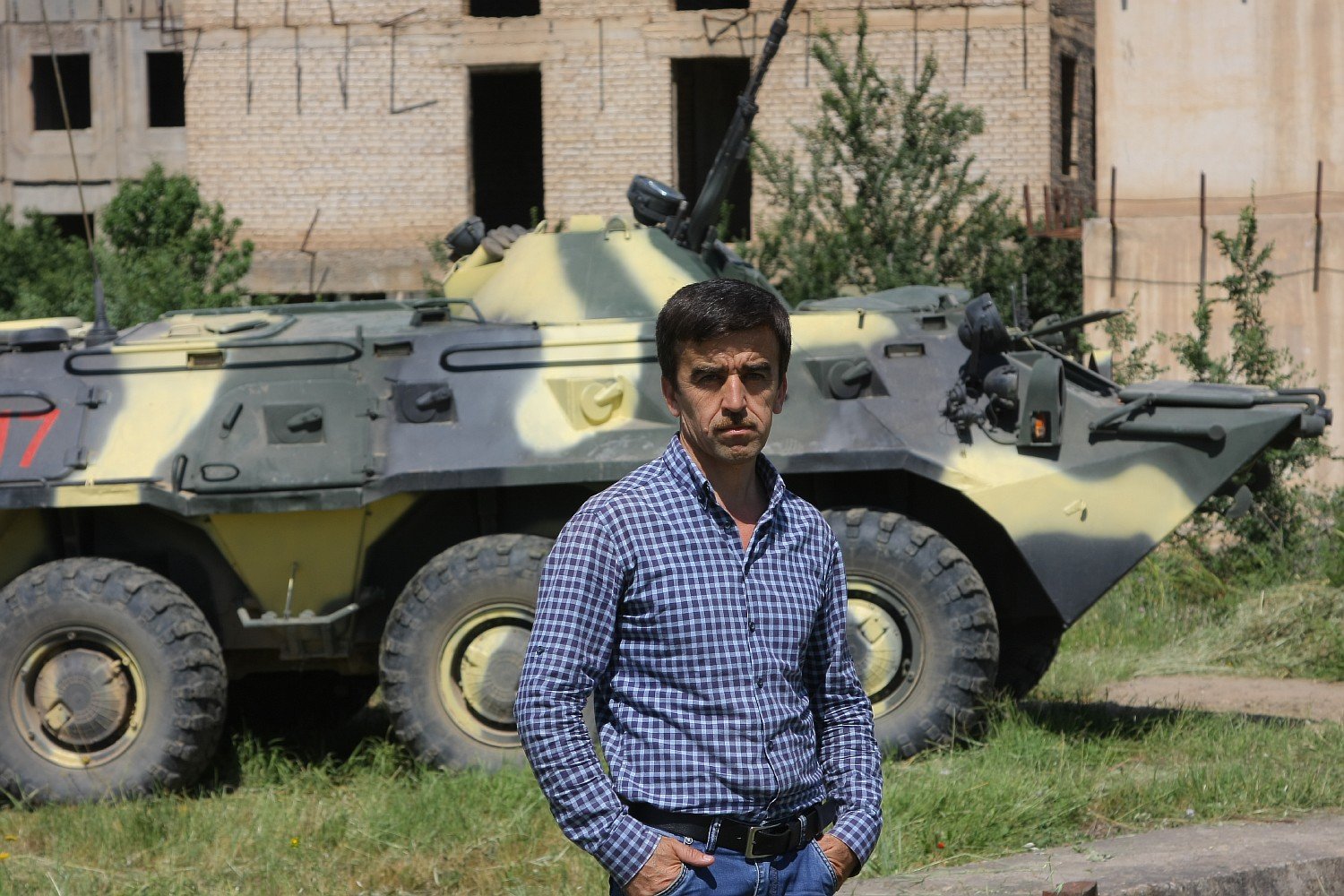
The new hero of our #AP30/People column is our now beloved ex-colleague and journalist Khaidar Shodiev. It is he who owns some of our most interesting reports and human stories, and Haidar was one of the few sports journalists at Asia-Plus.
Khaidar Shodiev comes from Dushanbe, where he lived a truly happy childhood. There were no mobile phones or computers back then. And he spent almost all his free time with his friends in the fresh air – basking in the sun, swimming, playing various games, lying on the grass, and in winter they played snowballs and hockey.
Even as a boy, Haidar was interested in literature, history, and sports, which became part of his career in adulthood.
After graduating from school, he entered the Tajik State University. I chose the profession of historian. But it was not possible to work in my profession.
“I received my university diploma at a time when the Soviet Union collapsed, and there was complete chaos in the capital. Rallies were held in the city center, most enterprises and institutions were practically inactive. And soon a civil war began in the country. During that period, I worked in private firms, and later in the Military Court,” recalls Haidar.
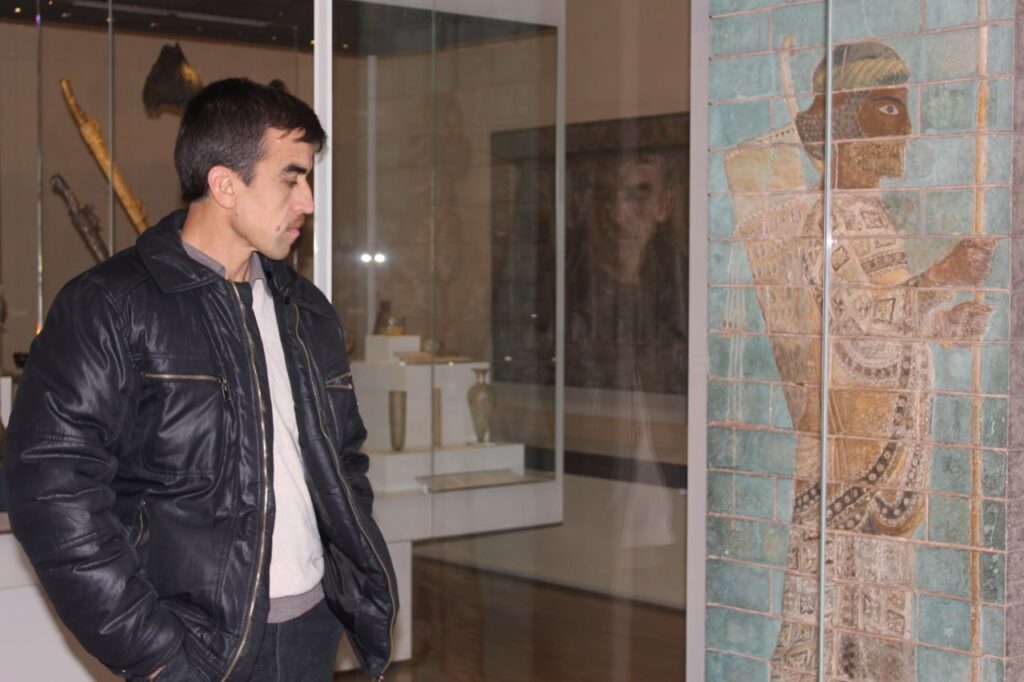
“There was a sense of cold severity here”
But even then, in the 90s, Khaidar Chodiev was interested in journalism, and the collapse of the USSR and the lifting of censorship in the media allowed journalists and experts to write openly about politics and much more, which was impossible to talk about before.
“I read all this with great interest. I wanted to write myself about what was happening here in Tajikistan and in other post-Soviet republics, to give assessments, to make forecasts. There was also a desire to tell readers about how our fellow citizens live during this difficult period – about their problems, about how we can help them.
Some of my articles were published in the newspaper “Evening Dushanbe”. Later I was accepted into the sports publication “Varzish – Sport”. They just needed a journalist writing about football and martial arts – areas close to me. I got to work with pleasure. I worked for a couple of years, but I realized that I couldn’t cover only sports when important historical events were happening around me,” Haidar admits.
Around then, he met the editor of the Asia-Plus newspaper, Marat Mamadshoev – he sometimes wrote articles for the Auto-Plus application and discussed some topics with him. In this regard, Haidar had to look into the Asia-Plus editorial office from time to time, and at first the impression from such visits was not the most positive.
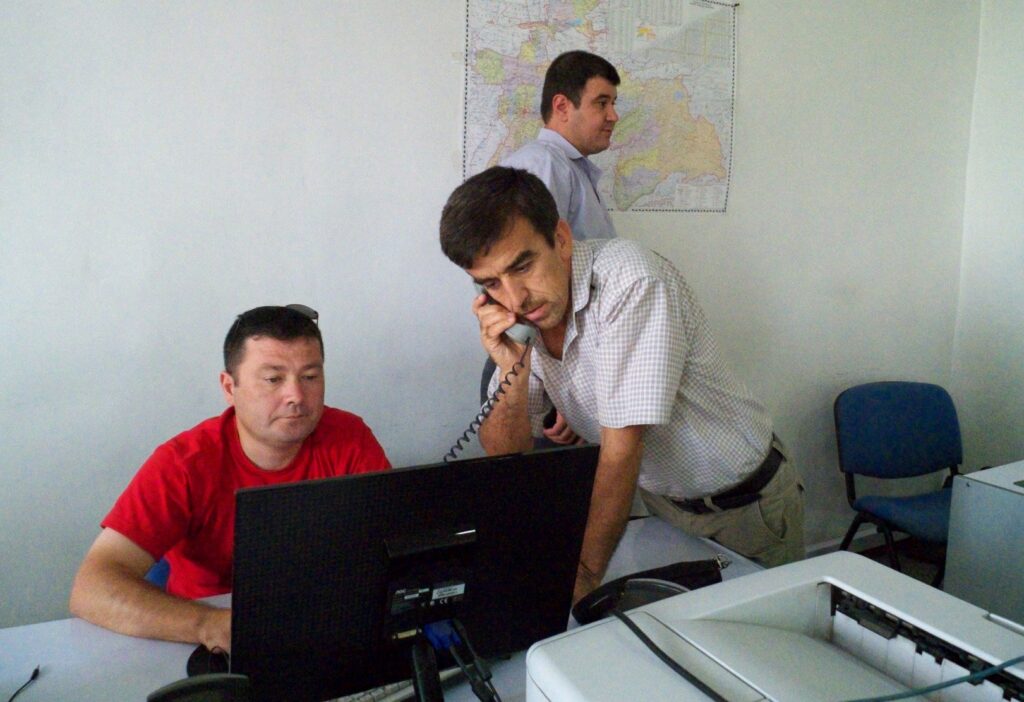
“Unlike Varzish, where there was a free atmosphere, here there was a sense of cold severity. Nobody talks to anyone, the office is as quiet as a library.
And when Marat invited me to move to Asia-Plus, I agreed only for the sake of my goal – to write about something more important. But after working for some time, I realized that the rigor during work was due to the fact that here, unlike a sports publication, they wrote on important topics, often affecting the activities of high-ranking officials and government structures. And every mistake in this case could have serious consequences, both for the editorial office and for the journalist himself,” shares Haidar.
First political articles
So he joined the team. At first, Haidar covered sporting events – made reports, interviews and articles. It must be said that it is often easier and more pleasant for a journalist to write on topics that are close to him, and not just relevant today or interesting to readers. In the case of Haidar, he was not just interested in sports, but in his youth he himself went to football, wrestling and practiced martial arts.
But one day at a planning meeting, the editor of Asia-Plus drew attention to the fact that the newspaper lacked “live” materials about the life of ordinary Tajik citizens.
“I prepared an article about a resident of Dushanbe, who alone, with great difficulty, raised four young children. The material received a good response among readers and my colleagues. After that, I was encouraged to write more often on social issues. Some time later, my first political articles appeared. And two years later I was appointed deputy editor,” says Haidar.
He worked in our media group for 15 long years. And after that “the Internet began to increasingly capture the media space.”
“There are fewer and fewer people reading newspapers. To stay in the new direction, the editorial management had to adapt itself to the interests of Internet users. The emphasis was on frequent posting of news, short materials, videos, etc. In this regard, some journalists who worked according to the newspaper’s standards and did not want to adjust their activities to the new requirements left Asia-Plus. I also had to leave for this reason,” says Khaidar Shodiev.
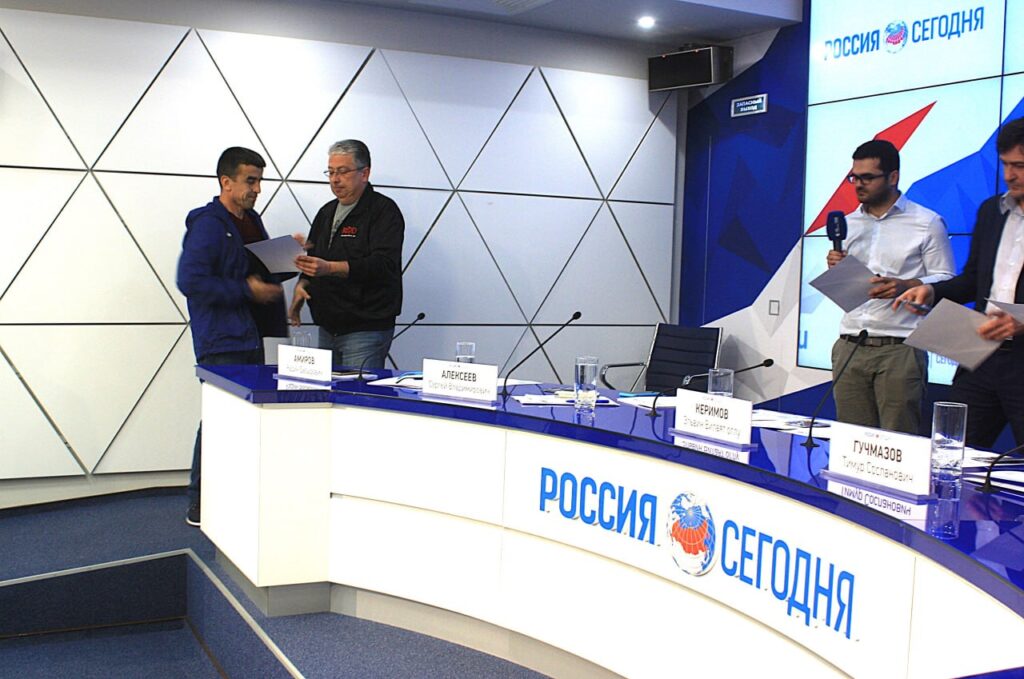
Today he is partially employed in the financial sector, but has not left journalism: “Not so long ago I published a biographical book about a famous scientist. And earlier, Parviz Tursunov and Akmal Mannonov, I made a documentary about the consequences of climate change in the region,” adds Haydar.
However, he remembers the years spent at Asia-Plus with great gratitude and calls it an honor to be part of a friendly family of “Asians.”
“Our publication was one of the few that generally objectively covered the situation in the country and abroad. Real professionals in their field worked here – Marat Mamadshoev, Olga Tutubalina, Parvina Khamidova, Manizha Kurbanova, Zebo Tadzhibaeva and others, from whom I learned a lot. The head of the publication, Umed Babakhanov, himself a former journalist, understood this area well. And what is important is that he did not force us into a certain framework, he gave us freedom – everyone wrote according to their own style, according to their own vision of the situation. And, I think, for these reasons, “Asia-Plus” is very popular not only in our country, but also abroad.
Citizens often came to our editorial office who had already lost faith in a fair solution to their problems, tired of endless visits to authorities, empty promises from officials, and lack of basic attention to them. They came to us with the hope that their voice would still be heard when we wrote about it. We understood that their expectations would not always be met, but we had no right to deprive people of this faith,” concludes Khaidar Shodiev.