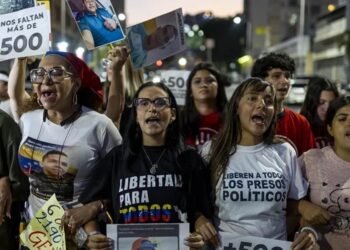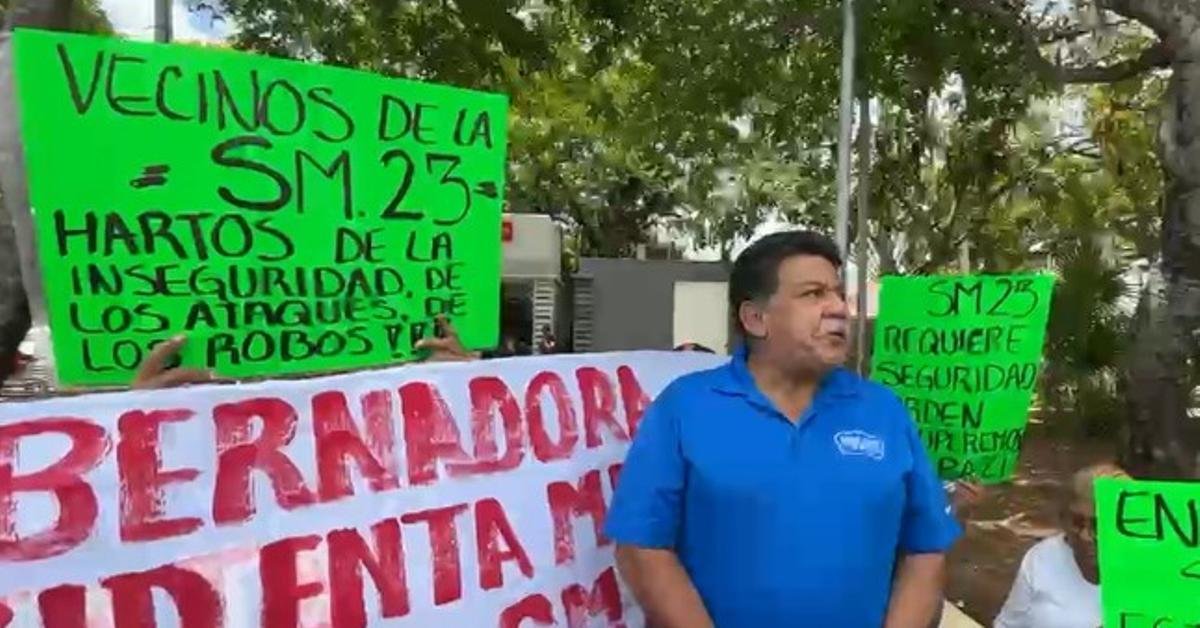
Mexico City/A group of residents of Superblock 23, in the center of Cancun, want to expel nearly 300 Cubans whom they blame for the series of violent robberies in recent weeks. “They are a threat,” he says. 14ymedio José Bello García, one of the inhabitants of the Benito Juárez municipality. The accusation has been refuted by lawyer José Luis Pérez: “How can they blame the deportees without evidence. They don’t give the figures?”
The lawyer stressed that last March in the region a sustained decrease in high-impact crimes was presumed. “The total number of robberies stood at 55 cases, which represents a decrease of 30.38% compared to 2025 (79 cases) and an even more pronounced drop compared to 2023, when 121 were recorded.”
According figures from the state prosecutor’s officeAt the end of last year, the municipality registered a high incidence of crime, with 314 people prosecuted for “crimes against health (134), family violence (28) and theft (18).” 74.1% of the inhabitants felt unsafe. A year earlier (2024), the authorities carried out 11 operations in which 13 members of the Sinaloa Cartel were arrested, whose leaders, Joaquín Guzmán, alias El Chapoand Ismael Zambada, alias The May, They face charges for drug trafficking in the United States. The crimes with the greatest impact were the sale of drugs with the capture of 3,258 people and another 214 extortionists.
Pérez attributes Wednesday’s protest to the xenophobia of the protesters. “In Cancun there are nearly 5,000 Cubans, among those who have regularized their immigration status, some with pending proceedings before the Mexican Commission for Aid to Refugees (Comar) and nearly 100 deported by the United States. You cannot attribute the violence to the latter, much less without evidence. There are no complaints.”

/ FGE
Bello acknowledged that several Cubans arrived years ago, “quiet people who established businesses,” but the deportees “are aggressive” and “the last wave that arrived, those are the undesirables that they took out of the United States and that come with all the bad customs from there, as from the Island,” he insisted.
Last Wednesday a group of protesters gathered with banners in front of the Municipal Palace. “Insecurity has already surpassed” the authorities, Bello assured and denounced: “we called 911, but they do not arrive, even if we wait an hour.”
The dissidents have spread altercations with Cubans on social networks. In addition, they resumed the arrest, last Monday, of Wvaly, a migrant from the Island who was traveling on a motorcycle without license plates. Last week the authorities arrested Yoexya fugitive with a record in Florida for the crime of conspiracy to distribute controlled substances.
Oliver, one of the thousands of migrants with form I-220A expelled by the United States and abandoned “without documents or money” in Tapachula, settled in Cancun for a few months, but had to leave the region “because there were many assaults.” Although he learned that some Cubans have been arrested for selling drugs and robbing houses, they are not the only ones, there are many people from outside who “are involved” in Superblock 23.
In Cancun there are close to 5,000 Cubans, some with pending cases before Comar and close to 100 deported by the United States.
According to the director of the job exchange and special projects and of the Student Federation in Benito Juárez, Ricardo Paredes, last year 5% of the 16,000 people who attended one of the 14 job fairs that were held in 2025, “were Cubans and Venezuelans.”
Lawyer Pérez stressed that the number of Cubans seeking income through formal work has been limited by the slowness of the National Migration Institute and Comar in the regulation processes. “Hotels, which are where there are the greatest sources of employment, ask migrants for a Temporary Residence Visa, which they do not have.”
Faced with insecurity, lack of work and delays in immigration procedures to regularize his situation, Oliver moved to the city of Acuña, on the border with the United States. The Cuban rented a room near the Río Bravo, which allowed him to know the time of Police patrols and the tours of Immigration agents. Although he was transferred by flight from the United States to Mexico, he tried to cross again, with five other people, since – he claims – he did not sign anything. But “the police chased us away and grabbed five of us, I managed to escape.”
Oliver again decided to move and headed to Apodaca, where he works as a mechanic. The man remains uncertain in Mexico, so he is looking for a lawyer to handle his case, “because I have everything done there” in the United States.
In short, the defender stated, “it is not the Cubans” who are to blame for the robberies, “nor for an invasion.” Pérez recalled that hundreds of these deportees “survive without money and without documents and the Government of Mexico leaves them in limbo.”