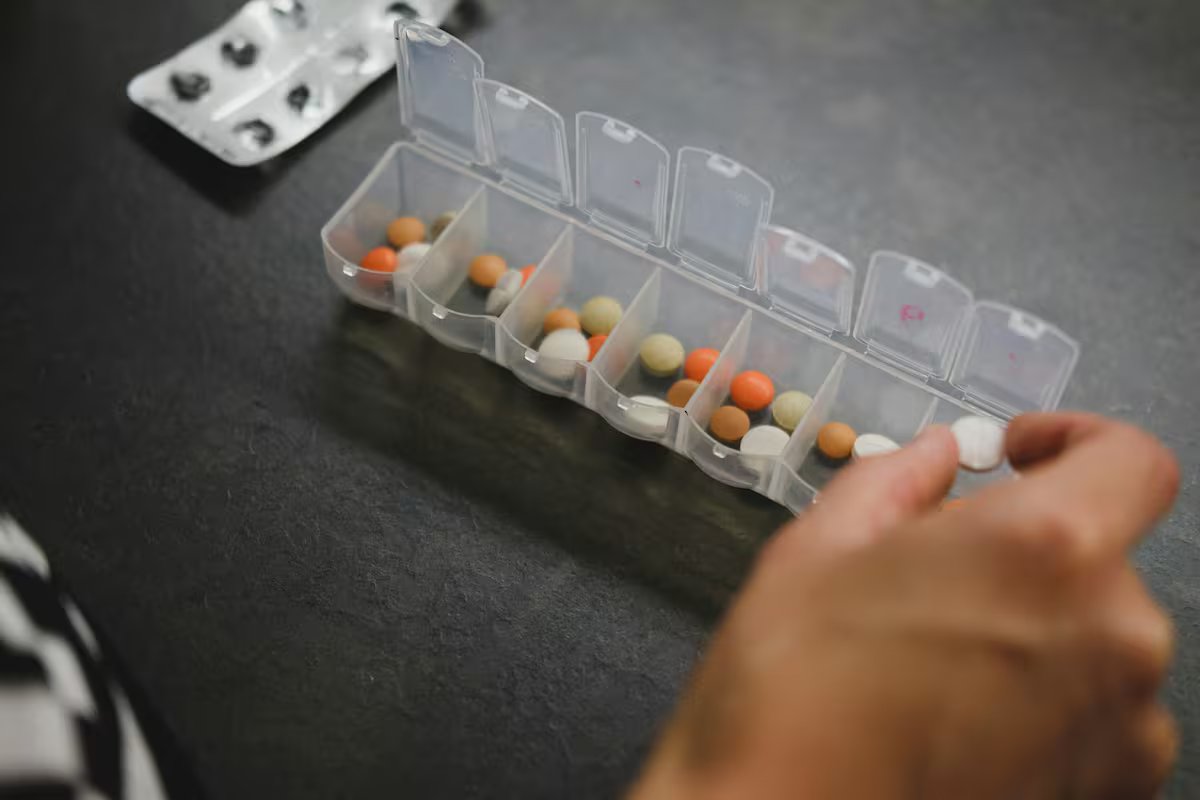
The latest Survey of the Psychological State of the Argentine Population (2025), prepared by the Observatory of Applied Social Psychology (OPSA) of the Faculty of Psychology of the UBA, showed several alarming figures. One of these is that the 18.67% of the participants admitted take medication to deal with your psychological distress or emotional problems.
In this survey, based on the responses of 2,213 adults between 18 and 65 years old from all over the country, the use of medication appears as one of the most frequent alternatives to combat psychological discomfort: it is positioned in fourth place, behind “talk to friends” (40.87%), “Go to a psychologist” (28.8%) and “carry out physical activity” (21.28%). Below was positioned the prayer (16.79%) and the alcohol consumption (6.02%).
The consumption of psychotropic drugs has remained high since the pandemic, when this annual report began, involving between 14% and 21% of those surveyed year after year.
“In many cases, emotional distress is expressed through broad anxiety symptoms, such as stress, irritability or insomnia, which lead to seek quick relief, such as medication“explained Dr. Martín Etchevers, Research Secretary of the Faculty of Psychology, professor of Clinical Psychology and one of the authors of the study.
The reasons behind using medications to deal with emotional distress reported in the latest OPSA report are led by the need for sleep (21.28%) and reduce anxiety (18.29%).
The document highlights, in parallel, that the 58.69% of the population report frequent difficulties sleeping, while the 55.74% of those going through a crisis attribute their discomfort to economic factors, such as low income or debt.
He psychiatrist Ricardo Marcelo Corral, president of the Argentine Association of Psychiatristsobserved that the consumption of psychotropic drugs deepened after the pandemic, as a consequence of a general increase in emotional distress.
“The pandemic generated greater alcohol consumption, increased sleep disorders and people took more sedative medication, anxiolytics and hypnotics. The problem is that this it was prolonged over time and the self-medication or uncontrolled consumption. There are even people who use alcohol to sleep, which is harmful to their health. In which case is it indicated for psychological discomfort? The answer is very forceful: never,” said Corral.
In turn, the 5.75% of the population takes medication without a prescription, according to the results of the OPSA report. This practice, added to the lack of controls, can lead to problems of dependence or chronicity of symptoms that were initially transitory, specialists highlight.
“Those who self-medicate are more likely to develop problems. If a person goes through a life crisis and resorts to medication without control, It may get you relief in the short term, but complicate your situation in the long term. For example, someone with insomnia who consumes hypnotics without medical supervision is at clear risk,” he said. Cristian Garay, member of OPSA, professor of Psychology at the UBA.
He highlighted that in Argentina there is a widespread culture of self-medication. “There are high rates, little control and ease of access to drugs. Many times this route is used because it is more accessible than psychological treatment, although it is not always the appropriate option. All medication requires medical supervision, ideally from a psychiatrist.”, he stated.
Faced with this scenario, specialists agree that it is necessary to strengthen healthier strategies to address emotional discomfort. “Circumstances are resolved by facing them, with tools of a different nature. Medication is reserved for when there is mental illness, that is, when mental health is lost.“Corral explained.
The specialist stressed that not all discomfort implies illness: “Discomfort can arise for different reasons: because someone did something wrong, because of a loss or because of everyday situations. It does not necessarily have to do with an illness. We all go through discomfort at some point during the day. Life, circumstances and crises are not medicalizable”.
Garay, for his part, emphasized the importance of habits: “There are three fundamental pillars: physical activity, sleep care and nutrition. Sleeping well enables key processes for emotional regulation, such as memory and other psychological functions. “If people take care of these factors, they are less likely to develop mental health problems.”
Added to this is the need to sustain comprehensive approaches. Medication is valid when it is indicated by a psychiatrist, with control and monitoring. “It has to have a broader approach, such as combining pharmacotherapy and psychotherapy. In addition, it is key to strengthen strategies that help recover emotional regulation, such as psychological treatment, healthy habits and avoiding isolation. People need to connect, seek support and learn from others.”explained Etchevers.
The study also shows other alarming data, for example, a gap between need and access to psychological treatments. 50.05% of those who do not undergo therapy consider that they need it. 43.44% report not being able to pay it.
“The demand for mental health care has increased, especially since the pandemic, and has not been resolved in terms of availability and coverage. Mental health requires sustained attention and investment over time, beyond the moments of greatest visibility due to specific critical events,” explained Etchevers.
He risk of suffering from a mental disorderaccording to an indicator created by the OPSA, is located in a 6.5%, and it is significantly higher in young people and in lower income sectors. “Young people and lower-income sectors have higher levels of anxiety and depression. Our data consistently show this: it is an interaction between evolutionary and contextual factors that increases vulnerability, especially when there are fewer resources available,” said Etchevers.
Garay provided a broad look at the causes of this greater exposure to discomfort: “In young people there are multiple factors at play: the impact of new technologies on body image, interpersonal relationships, relationships and sexuality, as well as facilitated access to online gaming. Added to this are structural conditions, such as higher levels of poverty, informal work and a feeling of persistent uncertainty.”
And he added: “The lack of control over aspects such as financial income increases stress. There is a relationship between individual vulnerability and stress level: in very stressful contexts, the probability of developing mental health problems increases. Without being in a war, Argentina is going through a situation of sustained economic uncertainty that does not favor mental health.”
Regarding suicide risk, the report identifies clear differences by age. Young people between 18 and 29 years old have the highest levelswhile these indicators progressively decrease with age, with those over 60 years of age being the group with the lowest risk.
“There are two vital stages in which the prevalence of suicide risk increases: adolescence and older adulthood. Although this last point has been changing, since today many people over 60 or 70 years old continue to be active and with a vital purpose,” said Corral.
The report also raises questions about new ways of coping with psychological distress. The use of artificial intelligence as emotional support, an increasingly widespread phenomenon, appears associated with higher levels of discomfort. According to the data, 97.19% of the participants use social networks and 58.98% use artificial intelligence as psychological supportlinking its use with greater anxiety symptoms and emotional distress, although without differences in depressive symptoms.
“In our data, AI appears as a tool that is increasingly present in situations of discomfort, for example to interpret messages, make decisions or seek support. AIs can be useful, but when they begin to occupy a central role in emotional regulation or in the interpretation of interpersonal situations, a field of questions opens up that requires more studies,” Etchevers concluded.