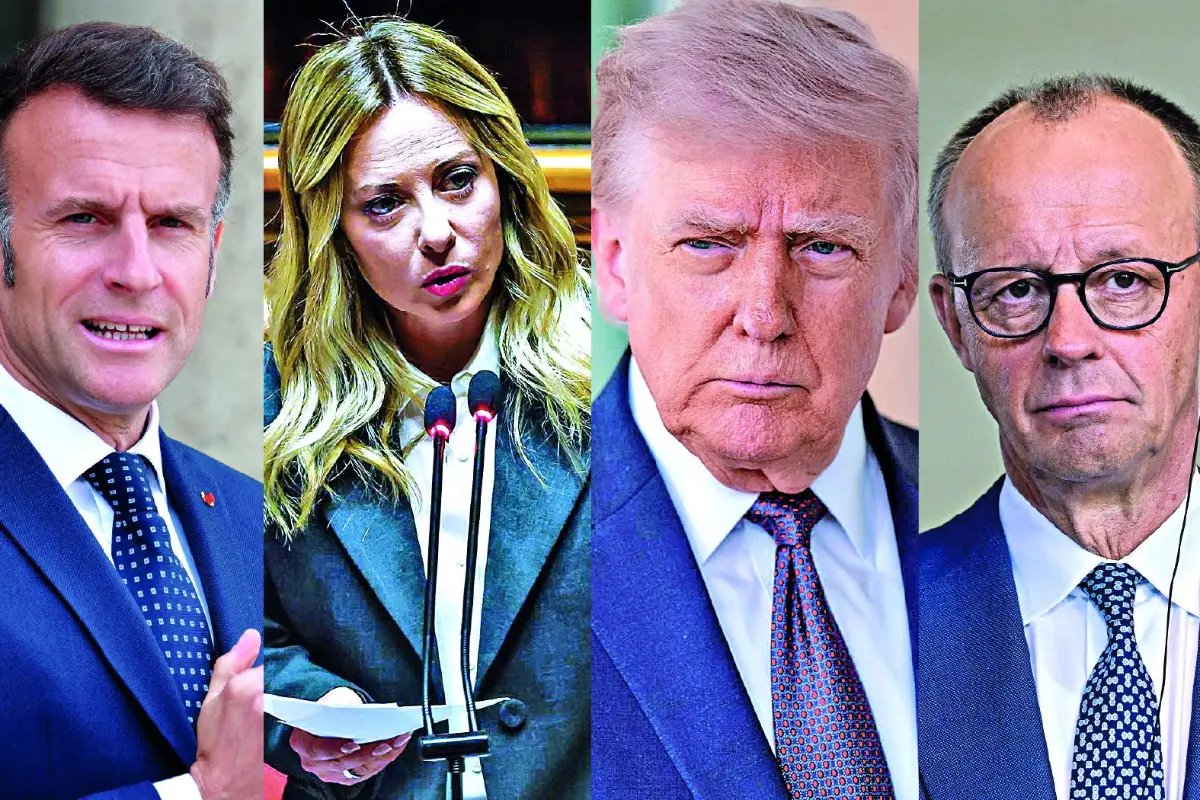
In the midst of growing tension in the Middle East, several European powers have begun to distance themselves from US President Donald Trump’s strategy, opting for a more diplomatic approach towards Iran. Germany and Italy lead this shift that shows a geopolitical rearrangement within the West.
The case of Germany is key. Berlin has prioritized diplomatic channels and has promoted direct contacts with Tehran as a mechanism to avoid a major military escalation. Although it maintains its commitment to Western security, its position reflects a tactical distancing from Washington: Germany is committed to containing the conflict through dialogue and multilateralism.
In parallel, Italy faces a political cooling with the White House. Prime Minister Giorgia Meloni, considered one of Trump’s closest allies in Europe, has distanced herself amid disagreements over the management of the conflict.
Adding to this tension were Trump’s recent statements about Pope Leo XIV, which generated discomfort in Rome and within the Italian political environment. The statement was perceived as an unnecessary interference in a delicate moment, deepening the discomfort and evidencing a deterioration in a relationship that until recently was strategic.
This double front—geopolitical differences and diplomatic friction—has led Italy to adopt a more cautious stance, prioritizing regional stability and avoiding automatic alignment with Washington.
Other key players such as France and the United Kingdom have opted for intermediate positions. Both maintain their historic alliance with the United States, but have shown caution in the face of a broader military escalation.
Paris has reinforced its commitment to diplomacy, aligning itself with Germany in the search for negotiated solutions. London, for its part, has limited its involvement in certain phases of the conflict, reflecting a more prudent assessment of the risks and internal tensions over the country’s role in the crisis.
In the south of the continent, Spain has established itself as the most critical voice. The Spanish government has refused to support military operations and has insisted on a political solution, generating direct friction with the Trump administration.
Taken together, these positions reflect a Europe that, although it does not break with Washington, does seek greater room for maneuver to avoid an escalation with economic, energy and global security consequences.
In this context of transatlantic tensions, Donald Trump himself has suggested that talks with Iran could resume within 48 hours, opening a possible window for de-escalation.
The announcement introduces an element of uncertainty, but also opportunity. For Europe, which has insisted on negotiation as the main path, an eventual reactivation of dialogue could validate its approach and reduce tensions with Washington.
However, strategic differences persist. Rather than a total break, what is emerging is a readjustment in the transatlantic relationship: Europe seeks greater autonomy in foreign policy while trying to avoid a definitive break with its main ally.