Security officials say they were given instructions to release a total of 563 State of Emergency (SoE) detainees from prison facilities in east Trinidad over a phased six-day period, with the current SoE due to expire on September 17.
However, as prison and police officers prepare for the release process, relatives waiting outside the correctional facilities say the lengthy delays are testing their patience.
Yesterday, a police source confirmed that the phased release system was implemented to prevent security resources from being overwhelmed while ensuring detainees are released safely and efficiently.
According to the source, phase one of the exercise runs from September 10-12 and primarily involves detainees classified as low risk. Additional releases are expected next week, including individuals considered higher risk.
An estimated 300 detainees are expected to be released during the first phase, the source said.
While authorities were unable to confirm the total number released up to yesterday afternoon, sources reported that 31 detainees were freed on Thursday. Of that number, 29 were released from the Golden Grove Prison, while one detainee each was released from the Youth Training Centre (YTC) and the Women’s Prison in Arouca.
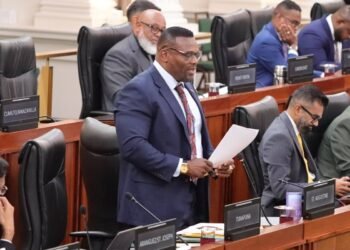
During a contribution in Parliament last evening, Homeland Security Minister Roger Alexander said 702 PDOs were approved and 573 were executed, while law enforcement subsequently charged 240 people who were detained under PDOs.
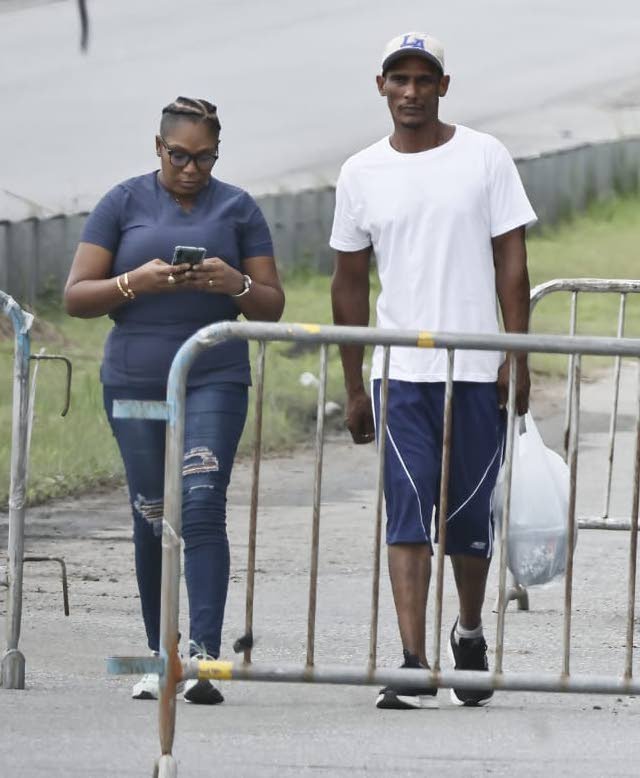
When Guardian Media arrived at the Eastern Correctional and Rehabilitation Centre (ECRC) in Santa Rosa shortly before 8 am yesterday, prison officers were stationed behind barriers at the entrance. Meanwhile, a line of vehicles had already formed along Pinto Road No 3, which runs parallel to the Churchill-Roosevelt Highway.
One woman, who requested anonymity, said prison officials contacted her shortly after 1 pm on Thursday and instructed her to arrive at the facility by 8 am yesterday, although the first releases were scheduled to begin at 10 am. Hours later, she was still waiting.
“One of the female prison officers said it could be after lunch, it could be this evening, or it could be later on. We don’t know. We’re just here waiting.
“And we’re hungry. We don’t have any water, and you can’t move to get anything because you don’t know when they might call your turn to collect someone.”
Without revealing the identity of her relative, her relationship to him, or the reason he was placed under a Preventive Detention Order (PDO), the woman described the emotional and financial strain the detention had placed on her family.
“He is the breadwinner and for me this whole SoE… they say they’re working on private intelligence and I don’t know how true that is because half of the things they’re saying are not even true.
“They’re going on hearsay. My relative was held for a month and three weeks. He has children, so right now all the strain is on me.”
Another woman also expressed frustration over the lack of information from authorities and the prolonged wait, particularly as she works full-time.
“I want to believe they could have handled things a lot better because if you tell people to come here for 8 am and it’s now 12 o’clock and nothing has happened yet, that’s unacceptable,” she said.
“I’m just hoping I’m not here until 8 o’clock tonight like some people are saying because we have other things to do. It’s an inconvenience, but at the same time we’re glad to have our family member coming home, so we’re just waiting and watching.”
She said she believes her relative was detained without justification and that he recently described conditions at the ECRC as “bad.”
“He just wanted to come home. It wasn’t good.”
Guardian Media sought a response from the Trinidad and Tobago Police Service on measures being implemented to maintain security in communities following the detainees’ release. However, no response was received up to press time.
During yesterday’s operation, heavily armed prison and police officers monitored access routes to the facility, conducting vehicle searches and recording the names and personal details of visitors for security purposes.
As the day progressed, more relatives joined the queue outside the prison. Some passed the time chatting with others, while some eventually left the area as the wait continued.