(ATTN: ADDS details in paras 7-13)
SEOUL, June 17 (Yonhap) — The Bank of Korea (BOK) will make proactive efforts to tame inflation until it is convinced that inflation is clearly heading toward its target level, its governor said Wednesday.
“Consumer prices are expected to remain elevated for a significant period of time,” BOK Gov. Shin Hyun-song made the remark during a press event. “It is expected to take some time for the energy supply chain to return to its pre-Middle East war levels and for global oil prices to stabilize.”
Shin noted the fallout from high oil prices will affect not only the energy sector but other products as well, adding that the recovery trend in the South Korean economy will also put upward pressure on prices.
“Following the Middle East war, global oil prices have risen sharply, leading to a more than 20 percent increase in petroleum product prices. This has pushed core inflation into the mid-2 percent range,” Shin said.

Bank of Korea (BOK) Gov. Shin Hyun-song enters the venue of a press conference in Seoul on June 17, 2026. (Yonhap)
“The BOK is keenly aware that inflation will place a heavier economic burden on the public,” the governor added. “We will make proactive efforts while closely monitoring consumer price trends until we gain confidence that inflation is stabilizing toward the target level.”
South Korea’s consumer prices rose 3.1 percent in May from a year earlier amid global energy price volatility, marking the fastest growth in 26 months after rising at the same pace in March 2024.
Shin added South Korea needs to remain vigilant despite the recent stabilization of global oil prices amid negotiations between the United States and Iran.
“While it is encouraging that oil prices and the foreign exchange market have stabilized in a short period, we should not let down our guard,” Shin said.
“Under risk-on sentiment, everything may feel positive and we may think the situation has been resolved. But market prices can change significantly in a short period, and we will closely examine the mid and long-term economic impact,” he said.
Shin, meanwhile, ruled out the possibility of the central bank taking a so-called big step, which refers to raising the key rate by 0.5 percentage point in a single move.
“When there were talks about a big step, the market was facing challenges,” Shin said. “The current situation is in sharp contrast to that.”
“Monetary policy takes underlying trends into account, rather than reacting to every market fluctuation,” he added.
Touching on the country’s strong tax gains following the robust performance of chipmakers, Shin said the South Korean economy is facing a great opportunity to take a leap forward.

The Bank of Korea (BOK) Gov. Shin Hyun-song speaks during a press conference in Seoul on June 17, 2026. (Yonhap)
Earlier in the day, the central bank issued a report, noting South Korea is expected to continue facing elevated consumer prices despite the end of the Middle East conflict amid rising incomes following the boom in the technology industry.
The report said consumer prices are expected to “remain elevated for a significant period,” noting upward pressures remain despite progress in peace talks between the United States and Iran.
The BOK report noted that while the government has made progress in containing the impact of higher global oil prices on inflation, upward pressure on public service charges is expected to gradually increase.
The recent rise in wages in the technology sector is also expected to affect other industries, eventually leading to additional upward pressure on consumer prices.
The analysis apparently came as South Korean tech firms, including Samsung Electronics Co. and SK hynix Inc., recently rolled out massive bonuses for their employees following record-breaking performances in the memory chip business amid the global artificial intelligence (AI) boom.
In the second half of 2026, the BOK said consumer price inflation is expected to remain around 3 percent, with core inflation, which excludes volatile food and energy prices, standing in the mid-2 percent range.
The BOK noted that rising costs caused by higher crude oil prices and the weak Korean won are expected to affect the prices of products beyond petroleum goods.
The central bank noted that during the energy price volatility caused by the war between Russia and Ukraine, higher crude oil prices had a spillover effect on non-energy products about six months later, with the impact lasting for around a year.

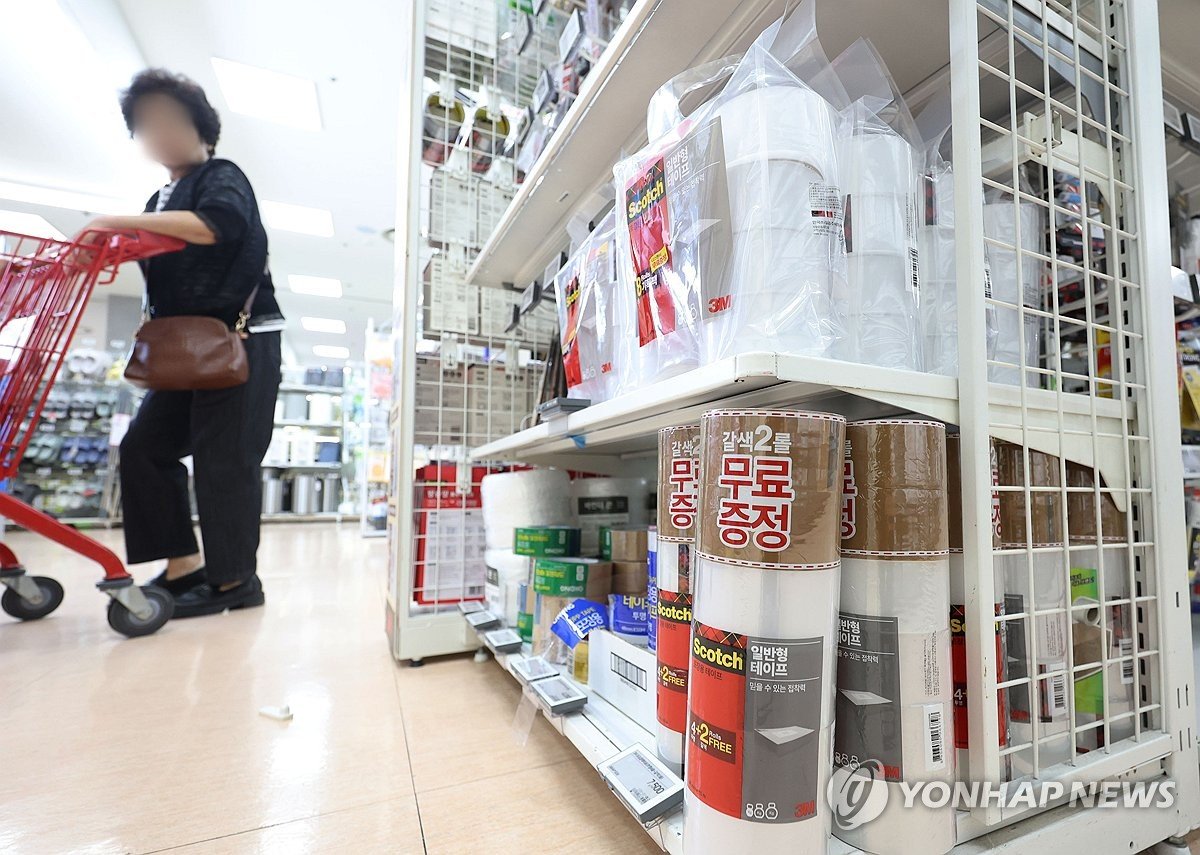
A shopper purchases goods at a supermarket in Seoul, in this file photo from June 8, 2026. (Yonhap)
colin@yna.co.kr
(END)