Higher temperatures are speeding up the melting of the ice in the Swiss Alps, new report shows.
The Swiss Alps is changing rapidly as a result of rising temperatures. And the change shows up in the glaciers.
A fifth of the ice mass in the glaciers in Switzerland has thus melted over the past five years.
This is according to a report by the Swiss Glacier Monitoring Network and the Swiss Commission for the Observation of the Cryosphere, writes The Guardian.
The report also shows that the average thickness of the individual glaciers has temporarily decreased by between 2.5 and 4 meters in 2026.
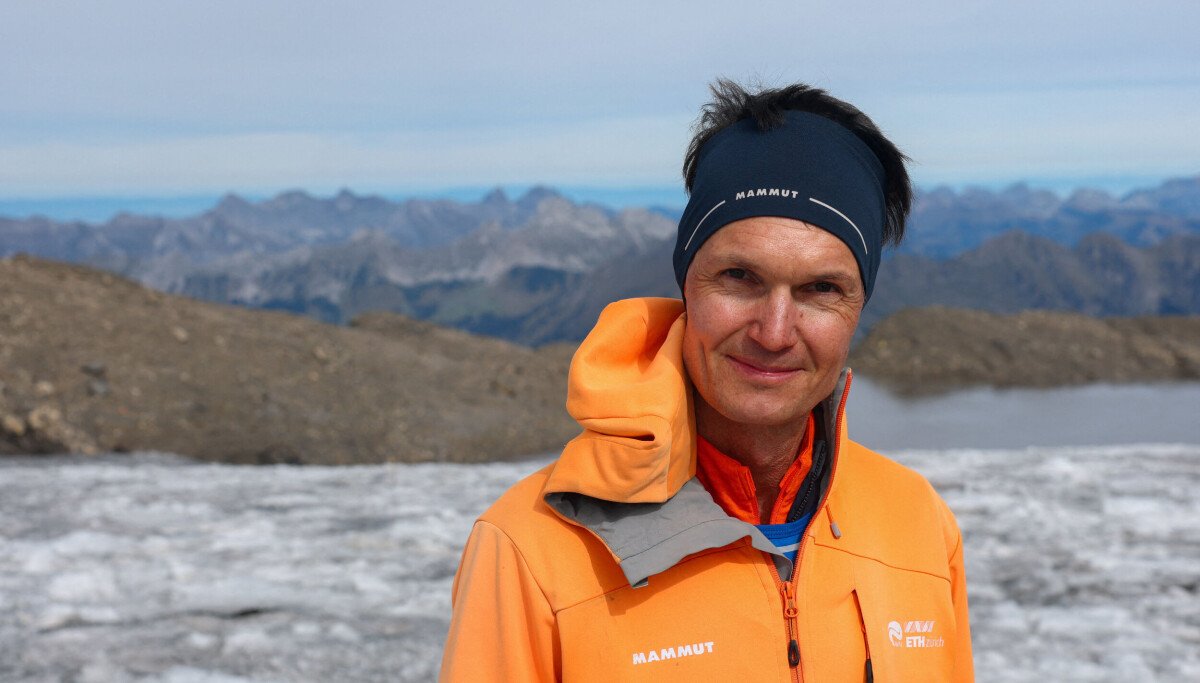
Melting leads more and more often to glaciers collapsing, says the report’s lead author, glaciologist Matthias Huss. This happens when water flows under the ice and erodes it.
When a glacier has collapsed, melting occurs even faster than when it is a massive mass of ice.
The places where the glaciers melt turn into barren rock landscapes.
– I visited one last week and it is so impressive to stand in the moon-like landscape where there was a thick layer of ice – an extensive glacier – just a few years ago.
– And now it is a rocky desert, where scattered blocks of ice lie and melt on the hot rocks, says Matthias Huss to The Guardian.
The glaciers have arisen after snow, which has never completely melted, has been compressed over time and transformed into ice.
The large masses of ice are found in many places in the Alps, where the temperature in the heights previously never rose much above the freezing point, and where the ice therefore persisted, even though there were double-digit temperatures in the valleys in the summer.
It is not only Switzerland, but also the neighboring countries of Italy, Austria and France, which are experiencing the glaciers shrinking due to rising temperatures.
This summer has been particularly hot in the Alps and Switzerland.
According to the Swiss meteorological institute MeteoSwiss, the six months from April to September were the hottest and driest recorded in Switzerland since systematic temperature measurements in the country began in 1864.
RITZAU