AI, gender shifts intensify competition, weakening labor market attachment
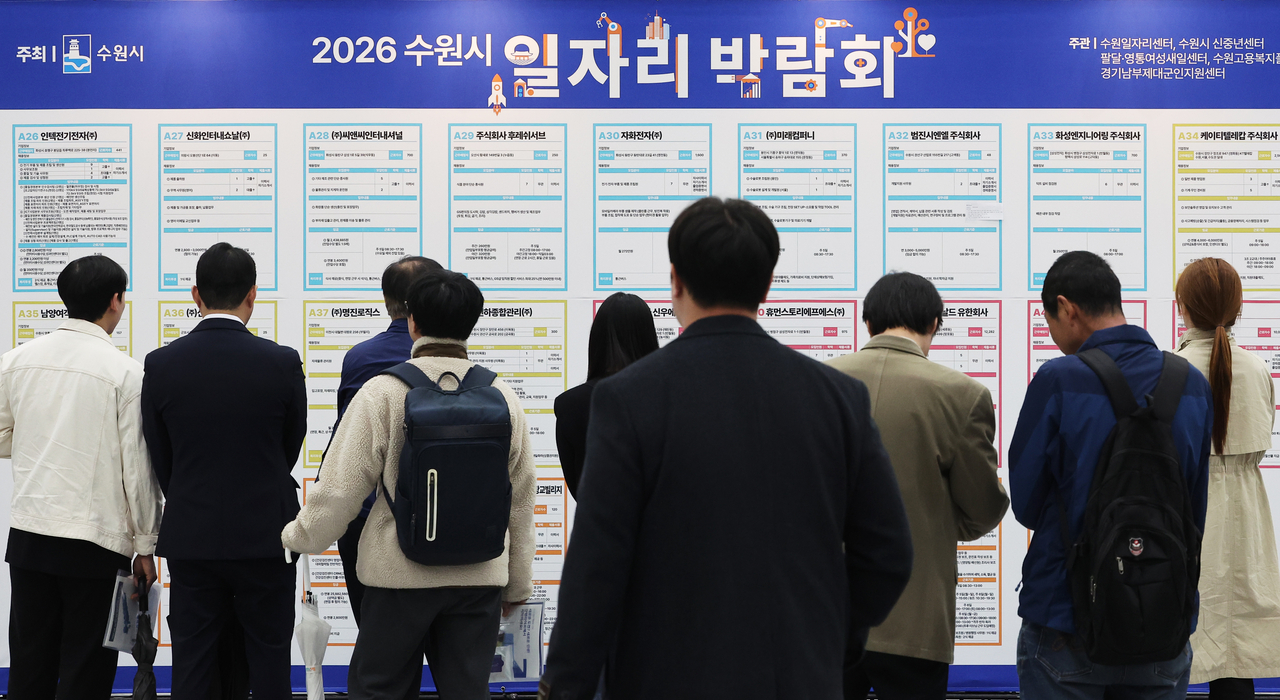
South Korea is experiencing the sharpest decline in workforce participation among young men in the OECD, as structural shifts — including rising female employment and rapid adoption of artificial intelligence — reshape the labor market.
According to a Bank of Korea report released Tuesday, the labor force participation rate for men aged 25 to 34 fell to 82.3 percent in 2025, down 7.6 percentage points from 2000 — the steepest decline among all age groups in Korea and far exceeding the average among the Organization for Economic Cooperation and Development.
Across OECD countries, participation among young men declined by just 2.6 percentage points over the same period, from 93.2 percent to 90.6 percent.
The drop stands in contrast to broader labor market trends. Korea’s overall participation rate rose from 61.2 percent to 64.5 percent, while the rate for women aged 25 to 34 jumped 25.1 percentage points to 77.5 percent, reflecting a surge in highly educated female workers.
The central bank attributed the widening gap to intensifying competition in the youth job market, driven by increased female labor supply, greater participation among older workers and job displacement linked to AI adoption.
“The number of young women in professional and clerical roles has reached levels comparable to men,” a Bank of Korea official said, noting that competition for quality jobs has intensified.
A key concern is the growing number of young men disengaging from the labor market altogether.
Among economically inactive men, those classified as “resting” accounted for the largest share — 4.8 percent for ages 25 to 29 and 3.7 percent for ages 30 to 34 — exceeding those actively preparing for employment.
The report said this points to a structural weakening of labor market attachment rather than a temporary pause in job searches.
It also warned that, unlike in the United States, lower participation at a young age in Korea is unlikely to translate into higher labor supply later in life — raising concerns as the country faces a rapidly aging population.
“The rapid decline in participation among young men and the rising share of those not seeking work are concerning,” another central bank official said.
The Bank of Korea called for targeted policy responses, including expanded training programs and more flexible labor market conditions, to help inactive young people reenter the workforce.
“With the rapid spread of AI, strengthening skills training will be essential to support young people’s entry into the labor market,” the report said.
ch0221@heraldcorp.com