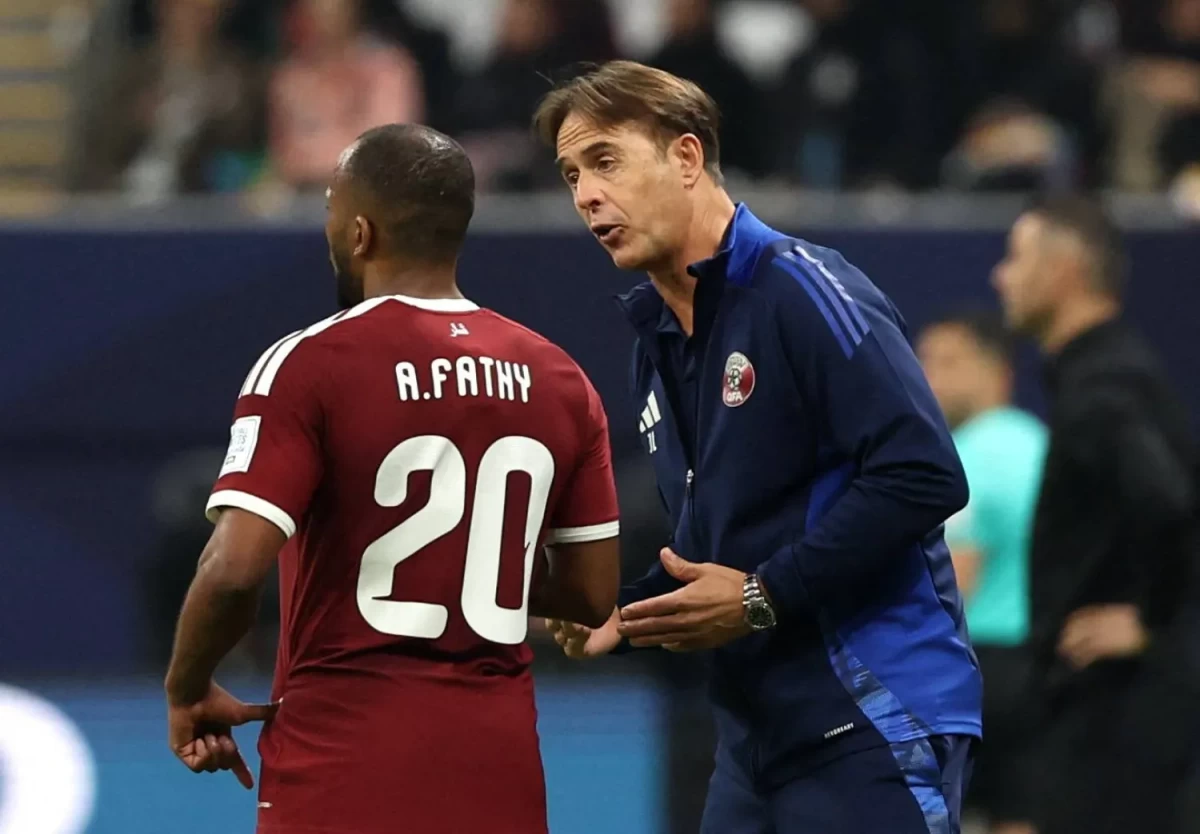
The Spanish training school continues its World Cup attendance with Al-Anabi, as Spanish coach Julen Lopetegui will lead our national team in the 2026 World Cup finals in the United States of America, Canada and Mexico.
Lopetegui’s presence at the head of our national team’s technical staff comes after his success in leading them to qualify for the World Cup through the Asian qualifiers for the first time in history, after the Qatari national team had previously participated in the FIFA World Cup Qatar 2022 as host of the tournament.
This is the second time in a row that the national team has appeared in the World Cup under the leadership of a Spanish coach, as Felix Sanchez led the “support” in the previous World Cup edition.
The success of Qatari football in the last decade was linked to the Spanish training school, where they together achieved unprecedented historical achievements, including winning the Asian Cup and qualifying for the World Cup, a clear reflection of the great compatibility between the ideas of the Spanish coaches, their training methods and their tactical methods with the capabilities of the Qatari players and their technical skills.
The Spanish training school emerged as a strategic option on which Qatari football relied in building its sports project, starting from the age groups and reaching the first team.
Work began according to this strategy with Spanish coach Felix Sanchez, who joined the Aspire Academy in 2006 from the famous “La Masia” Academy affiliated with the Spanish club Barcelona, to contribute to the development of Qatari talents within a long-term project aimed at building generations capable of competing continentally and globally.
In 2013, Sanchez took over as coach of the Qatar U-19 team, and it took him only one year to lead the team to win the Asian Youth Cup in 2014, achieving the first continental title in the history of this age group.
After this achievement, the Qatar Football Association continued to rely on the same vision, as Sanchez supervised the training of the under-20 and under-23 teams, before he was appointed coach of the first team in 2017, benefiting from his deep knowledge of the generation that he supervised its development for many years.
The fruits came quickly. In 2019, Sanchez led the Qatari team to achieve the Asian Cup title for the first time, during the tournament held in the Emirates, after an exceptional performance that dazzled the entire continent.
The Spanish coach’s success did not stop there, but he continued his mission until he led the national team to its historic first participation in the FIFA World Cup Qatar 2022, becoming the first coach to lead Al-Anabi in the World Cup finals.
This was followed by a short period during which Portuguese coach Carlos Queiroz took charge of the national team, but soon Qatari football returned to the Spanish school again by appointing Bartolomé Márquez Lopez before the start of the 2023 Asian Cup, which was hosted by Doha.
Lopez, in turn, wrote a new chapter for the success of the Spanish training school with Qatari football, as he led Annabi to retain the Asian Cup and win the continental title for the second time in a row in an unprecedented achievement.
In early May 2025, Julen Lopetegui was appointed coach of the Qatari national team, continuing the successful series of the Spanish school, where he was able, in a short period, to add a new achievement to the history of Qatari football by leading the national team to qualify for the 2026 World Cup for the first time through the Asian qualifiers.
The success of the Spanish coaches with the Qatari teams confirms that the matter is not just a coincidence or a temporary success, but rather the result of an integrated project that relied on a clear philosophy in developing players and creating a stable artistic identity for the national teams. The Spanish ideology, based on team play, possession of the ball, attention to the technical and tactical aspects, and developing skill capabilities, has found the appropriate environment for growth and development within the Qatari football system.
With the start of the 2026 World Cup approaching, Qatari fans are looking forward to continuing this successful partnership with the Spanish school, hoping for a distinguished appearance under the leadership of Julen Lopetegui that will reflect the development that Qatari football has reached and strengthen its position on the global stage.
Al-Anabi plays in the second group alongside the teams of Switzerland, Canada and Bosnia and Herzegovina. It begins its campaign by facing Switzerland on June 13 in San Francisco, USA, then moves to Vancouver to meet its Canadian counterpart on the 18th of the same month, concluding the first round matches by facing the Bosnia and Herzegovina team in Seattle, USA on June 24.
Lopetegui’s presence at the head of our national team’s technical staff comes after his success in leading them to qualify for the World Cup through the Asian qualifiers for the first time in history, after the Qatari national team had previously participated in the FIFA World Cup Qatar 2022 as host of the tournament.
This is the second time in a row that the national team has appeared in the World Cup under the leadership of a Spanish coach, as Felix Sanchez led the “support” in the previous World Cup edition.
The success of Qatari football in the last decade was linked to the Spanish training school, where they together achieved unprecedented historical achievements, including winning the Asian Cup and qualifying for the World Cup, a clear reflection of the great compatibility between the ideas of the Spanish coaches, their training methods and their tactical methods with the capabilities of the Qatari players and their technical skills.
The Spanish training school emerged as a strategic option on which Qatari football relied in building its sports project, starting from the age groups and reaching the first team.
Work began according to this strategy with Spanish coach Felix Sanchez, who joined the Aspire Academy in 2006 from the famous “La Masia” Academy affiliated with the Spanish club Barcelona, to contribute to the development of Qatari talents within a long-term project aimed at building generations capable of competing continentally and globally.
In 2013, Sanchez took over as coach of the Qatar U-19 team, and it took him only one year to lead the team to win the Asian Youth Cup in 2014, achieving the first continental title in the history of this age group.
After this achievement, the Qatar Football Association continued to rely on the same vision, as Sanchez supervised the training of the under-20 and under-23 teams, before he was appointed coach of the first team in 2017, benefiting from his deep knowledge of the generation that he supervised its development for many years.
The fruits came quickly. In 2019, Sanchez led the Qatari team to achieve the Asian Cup title for the first time, during the tournament held in the Emirates, after an exceptional performance that dazzled the entire continent.
The Spanish coach’s success did not stop there, but he continued his mission until he led the national team to its historic first participation in the FIFA World Cup Qatar 2022, becoming the first coach to lead Al-Anabi in the World Cup finals.
This was followed by a short period during which Portuguese coach Carlos Queiroz took charge of the national team, but soon Qatari football returned to the Spanish school again by appointing Bartolomé Márquez Lopez before the start of the 2023 Asian Cup, which was hosted by Doha.
Lopez, in turn, wrote a new chapter for the success of the Spanish training school with Qatari football, as he led Annabi to retain the Asian Cup and win the continental title for the second time in a row in an unprecedented achievement.
In early May 2025, Julen Lopetegui was appointed coach of the Qatari national team, continuing the successful series of the Spanish school, where he was able, in a short period, to add a new achievement to the history of Qatari football by leading the national team to qualify for the 2026 World Cup for the first time through the Asian qualifiers.
The success of the Spanish coaches with the Qatari teams confirms that the matter is not just a coincidence or a temporary success, but rather the result of an integrated project that relied on a clear philosophy in developing players and creating a stable artistic identity for the national teams. The Spanish ideology, based on team play, possession of the ball, attention to the technical and tactical aspects, and developing skill capabilities, has found the appropriate environment for growth and development within the Qatari football system.
With the start of the 2026 World Cup approaching, Qatari fans are looking forward to continuing this successful partnership with the Spanish school, hoping for a distinguished appearance under the leadership of Julen Lopetegui that will reflect the development that Qatari football has reached and strengthen its position on the global stage.
Al-Anabi plays in the second group alongside the teams of Switzerland, Canada and Bosnia and Herzegovina. It begins its campaign by facing Switzerland on June 13 in San Francisco, USA, then moves to Vancouver to meet its Canadian counterpart on the 18th of the same month, concluding the first round matches by facing the Bosnia and Herzegovina team in Seattle, USA on June 24.