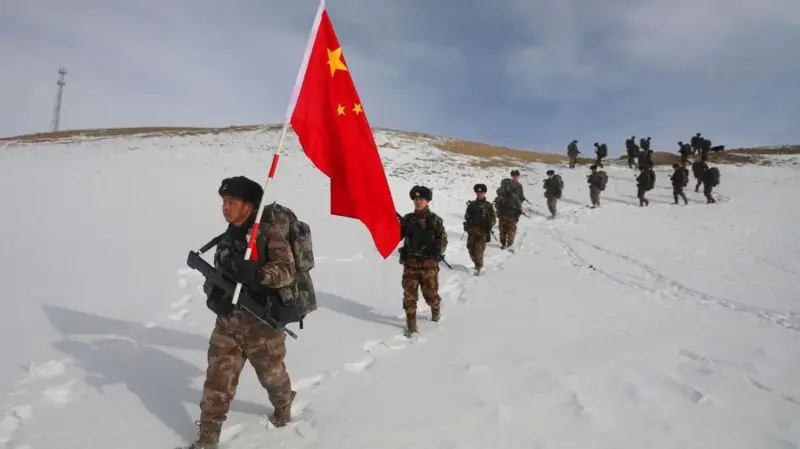
For decades, India has refused to recognize the border between Pakistan and China in a disputed Himalayan area that New Delhi claims as its own.
But last week, Pakistan and China formalized a border in a remote area of the mountainous region, prompting a strong reaction from the Indian government.
The two countries signed the Pakistan-China Joint Boundary Commission agreement, described by Pakistanis as a “significant milestone” that will deepen cooperation on border management, trade and connectivity between India’s regional rivals.
New Delhi rejected the move as lacking legal basis, saying it does not recognize any border between Pakistan and China located in territory it claims as Indian.
The announcement comes at a particularly delicate time.
India and China are seeking to stabilize their relationship after years of military tensions along the Line of Actual Control (LAC), the disputed strip that separates their forces along much of their Himalayan border.
At the same time, Beijing and Islamabad are deepening cooperation on a neighboring border stretch that India also claims.
“There is no border between Pakistan and China. We reject the so-called Joint Commission, which has no legal basis,” said Randhir Jaiswal, spokesperson for India’s foreign ministry.
A decades-old agreement
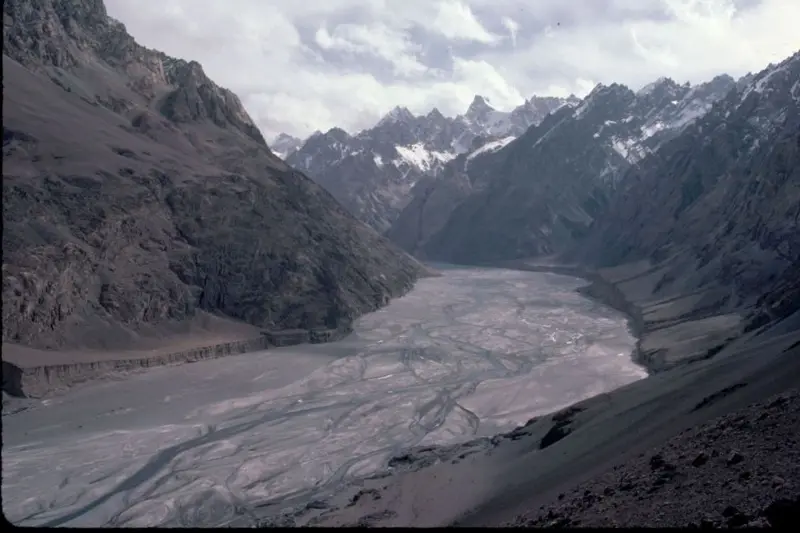
The commission deals with the Pakistan-China border, including the Shaksgam Valley, an area of about 5,180 square kilometers that Pakistan ceded to China in 1963, but which India claims as part of its territory in Ladakh.
India claims the territory was part of the former princely state of Jammu and Kashmir and was illegally occupied by Pakistan before being ceded to China.
The Indian government has never recognized the agreement and considers it illegal and invalid.
This story explains the particular sensitivity of the September 16 announcement.
“Pakistan has no legitimacy to enter into agreements relating to Indian territory which is under its illegal and forcible occupation,” the Indian Foreign Ministry stated.
Pakistan alleges that Jammu and Kashmir remains a disputed territory and argues that India therefore has no legitimacy to challenge the 1963 border agreement with China. Consider that said agreement is valid.
Jabin T Jacob, professor at the Department of International Relations and Governance Studies at Shiv Nadar University in New Delhi, explained that this agreement represents the revival of an old mechanism rather than a completely new pact.
“The 1963 Sino-Pakistani agreement provides for the creation of a joint border delimitation commission; the only outstanding issue is the timing of its implementation,” he told the BBC.
There could be several reasons for the timing, he explained, including China’s broader effort to delimit its borders and a desire to institutionalize exchanges and movement along the border at a time when Pakistan’s other delimitations have experienced conflict and instability.
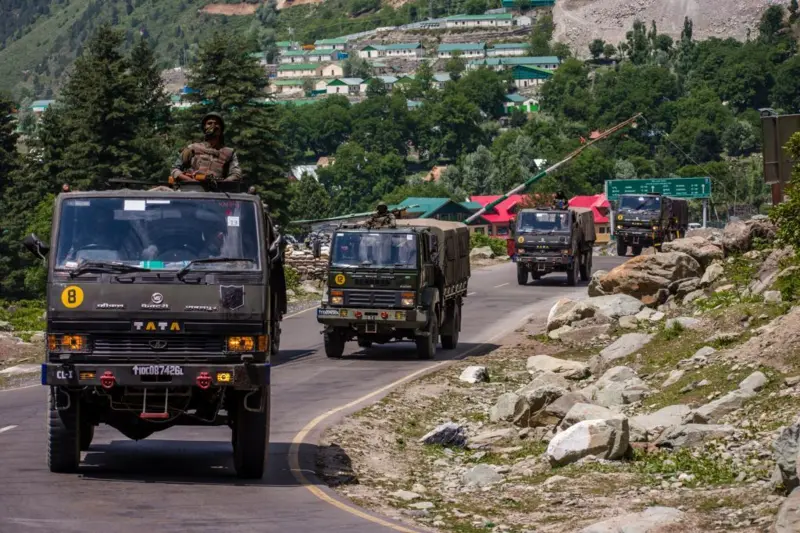
Jacob considered that India should be “concerned” about this development. More importantly, he added, the measure appears to contravene a clause in the 1963 treaty itself.
Article 6 of the agreement provided for its renegotiation once the Kashmir dispute was resolved with the country that ultimately controlled the territory, Jacob said.
According to Jacob, for India, the problem is exacerbated by the international information environment.
“China’s relative dominance in the international media and information landscape – with CGTN, CRI and social media presence – compared to India allows it to present its narrative and maps globally, while India limits itself to diatribes that other world capitals are likely to ignore,” he noted.
Border management
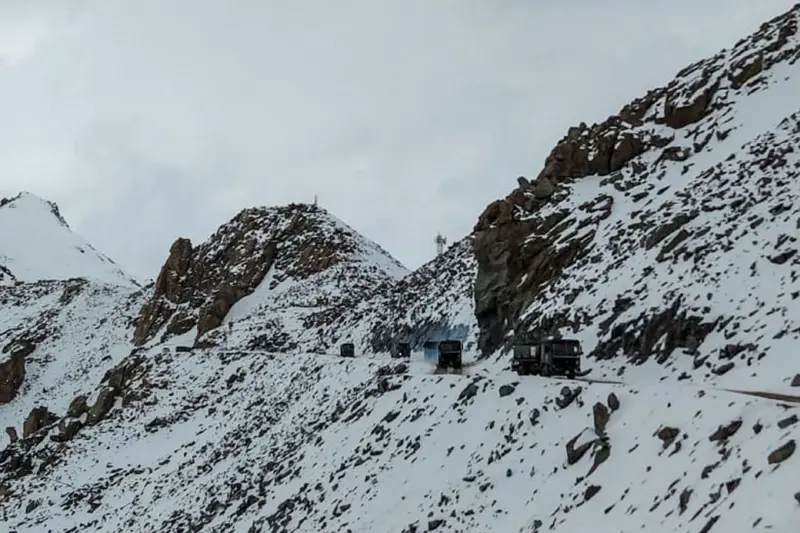
That situation is different from the practical management of the border itself.
Pakistan and China already have extensive infrastructure and connections across the region, including the China-Pakistan Economic Corridor (CPEC) and the Karakoram Highway.
Husain Haqqani, Pakistan’s former ambassador to the United States and currently a senior fellow at the Anwar Gargash Diplomatic Academy and the Hudson Institute, said the new commission is both practical and political.
“It’s a combination of both,” Haqqani told the BBC. “It is a mechanism to improve border cooperation, prevent illegal crossings and protect strategic infrastructure linked to CPEC.”
He added that it also serves as a signal to India that Beijing continues to view Kashmir through the Pakistani prism.
“China has never accepted India’s stance on Kashmir and views Gilgit-Baltistan from a Pakistani perspective, not an Indian one,” Haqqani said, referring to the Pakistani-administered Kashmir region that borders China and that India claims as part of its territory.
Haqqani claimed that Islamabad’s stance had evolved in response to developments in Indian-administered Kashmir.
“Pakistan continues to maintain that the final status of Jammu and Kashmir has not yet been decided,” he said. “But since India has made internal changes — for example, the abrogation of Article 370 — in its part of Kashmir, Pakistan sees no problem in institutionalizing what has been a de facto agreement with China since 1963.”
A sign for India
For Beijing, this agreement also fits into a broader pattern of using its relations with neighboring states to manage and signal its stance towards India.
Haqqani asserted that providing assurances to Pakistan over Kashmir has both strategic and geopolitical value for Beijing.
“At the strategic level, it further deepens ties with Pakistan, and at the geostrategic level, it reinforces India’s fear of a two-front threat from China and Pakistan, which pleases Pakistan and benefits China.”
According to experts, the timing of the statement is also significant.
“China always plans its decisions months, if not years, in advance, so the decision to launch a joint border commission must have been made some time ago,” Haqqani opined.
“The publication of this information was timed for after President Xi Jinping’s recent trip to the BRICS summit, in order to send Pakistan a message of reassurance in the strategic partnership, and remind India that multilateral participation does not translate into any change in China’s vision for South Asia.”
But Jacob cautioned against interpreting every aspect of this development as a direct military maneuver against India.
“So far, there are no immediate or apparent implications for the LAC,” he said.
This suggests that the importance of last week’s announcement lies less in an immediate change on the disputed Himalayan border than in the gradual institutionalization of agreements that India has consistently rejected.
According to Jaiswal, India’s position remains “clear and consistent”: any attempt to legitimize what New Delhi considers Pakistan’s illegal occupation of Indian territory is unacceptable and does not affect India’s sovereignty.
But Haqqani believes the dispute goes beyond border legal issues.
“The main disagreement between India and China over the border and boundaries is geostrategic, not cartographic,” he said.
“Therefore, there is a limit to what border negotiations and border management mechanisms can achieve.”
Pakistan, he added, remains “China’s secondary deterrent against India,” and Beijing’s outreach to Islamabad will continue to send that message to the Indian government.