Monday, August 10, 2026
    The GeoStrategic Consensus
    No Result
    View All Result
    • Login
    • HOME
    • AMERICAS
      • Argentina
      • Brazil
      • Canada
      • Chile
      • Colombia
      • Costa Rica
      • Cuba
      • Dominican Republic
      • Ecuador
      • El Salvador
      • Greenland
      • Guatemala
      • Honduras
      • Mexico
      • Nicaragua
      • Panama
      • Paraguay
      • Peru
      • United States
      • Uruguay
      • Venezuela
    • ASIA-PACIFIC
      • Australia
      • Brunei Darussalam
      • Cambodia
      • China
      • Federated States of Micronesia
      • Fiji
      • Indonesia
      • Japan
      • Kiribati
      • Laos
      • Malaysia
      • Marshall Islands
      • Mongolia
      • Myanmar
      • Nauru
      • New Zealand
      • North Korea
      • Palau
      • Papua New Guinea
      • Philippines
      • Samoa
      • Singapore
      • Solomon Islands
      • South Korea
      • Taiwan
      • Thailand
      • Timor-Leste
      • Tonga
      • Tuvalu
      • Vanuatu
      • Vietnam
    • CARICOM
      • CARICOM – Non-English
        • Haiti
        • Suriname
      • CARICOM Associates
        • Anguilla
        • Bermuda
        • British-Virgin-Islands
        • Cayman-Islands
        • Curacao
        • Turks-and-Caicos
      • CARICOM English
        • Antigua and Barbuda
        • Barbados
        • Belize
        • Dominica
        • Grenada
        • Guyana
        • Jamaica
        • Montserrat
        • Saint Kitts and Nevis
        • Saint Lucia
        • Saint Vincent and the Grenadines
        • The Bahamas
        • Trinidad and Tobago
    • EURASIA
      • Armenia
      • Azerbaijan
      • Balarus
      • Georgia
      • Kazakhstan
      • Kyrgyzstan
      • Moldova
      • Russia
      • Tajikistan
      • Turkmenistan
      • Ukraine
      • Uzbekistan
    • EUROPE
      • Albania
      • Andorra
      • Austria
      • Bosnia and Herzegovina
      • Bulgaria
      • Croatia
      • Cyprus
      • Czech Republic
      • Denmark
      • Estonia
      • Finland
      • France
      • Germany
      • Greece
      • Holy See
      • Hungary
      • Iceland
      • Ireland
      • Italy
      • Kosovo
      • Latvia
      • Liechtenstein
      • Lithuania
      • Luxembourg
      • Malta
      • Monaco
      • Montenegro
      • Netherlands
      • North Macedonia
      • Norway
      • Poland
      • Portugal
      • Romania
      • San Marino
      • Serbia
      • Slovakia
      • Slovenia
      • Spain
      • Sweden
      • Switzerland
      • United Kingdom
    • MIDDLE EAST AND NORTH AFRICA
      • Algeria
      • Bahrain
      • Egypt
      • Iran
      • Iraq
      • Israel
      • Jordan
      • Kuwait
      • Lebanon
      • Lybia
      • Morocco
      • Oman
      • Palestinian Territories
      • Qatar
      • Saudi Arabia
      • Syria
      • Tunisia
      • Turkey
      • United Arab Emirates
      • Western Sahara
      • Yemen
    • SOUTH ASIA
      • Afghanistan
      • Bangladesh
      • Bhutan
      • India
      • Maldives
      • Nepal
      • Pakistan
      • Sri Lanka
    • SUB-SAHARAN AFRICA
      • Angola
      • Benin
      • Botswana
      • Burkina Faso
      • Burundi
      • Cabo Verde
      • Cameroon
      • Central African Republic
      • Chad
      • Comoros
      • Cote d’Ivoire
      • Democratic Republic of the Congo
      • Djibouti
      • Equatorial Guinea
      • Eritrea
      • Eswatini
      • Ethiopia
      • Gabon
      • Gambia
      • Ghana
      • Guinea
      • Guinea Bissau
      • Kenya
      • Lesotho
      • Liberia
      • Madagascar
      • Malawi
      • Mali
      • Mauritania
      • Mauritius
      • Mozambique
      • Namibia
      • Niger
      • Nigeria
      • Republic of the Congo
      • Rwanda
      • Sao Tome and Principe
      • Senegal
      • Seychelles
      • Sierra Leone
      • Somalia
      • South Africa
      • South Sudan
      • Sudan
      • Tanzania
      • Togo
      • Uganda
      • Zambia
      • Zimbabwe
    • HOME
    • AMERICAS
      • Argentina
      • Brazil
      • Canada
      • Chile
      • Colombia
      • Costa Rica
      • Cuba
      • Dominican Republic
      • Ecuador
      • El Salvador
      • Greenland
      • Guatemala
      • Honduras
      • Mexico
      • Nicaragua
      • Panama
      • Paraguay
      • Peru
      • United States
      • Uruguay
      • Venezuela
    • ASIA-PACIFIC
      • Australia
      • Brunei Darussalam
      • Cambodia
      • China
      • Federated States of Micronesia
      • Fiji
      • Indonesia
      • Japan
      • Kiribati
      • Laos
      • Malaysia
      • Marshall Islands
      • Mongolia
      • Myanmar
      • Nauru
      • New Zealand
      • North Korea
      • Palau
      • Papua New Guinea
      • Philippines
      • Samoa
      • Singapore
      • Solomon Islands
      • South Korea
      • Taiwan
      • Thailand
      • Timor-Leste
      • Tonga
      • Tuvalu
      • Vanuatu
      • Vietnam
    • CARICOM
      • CARICOM – Non-English
        • Haiti
        • Suriname
      • CARICOM Associates
        • Anguilla
        • Bermuda
        • British-Virgin-Islands
        • Cayman-Islands
        • Curacao
        • Turks-and-Caicos
      • CARICOM English
        • Antigua and Barbuda
        • Barbados
        • Belize
        • Dominica
        • Grenada
        • Guyana
        • Jamaica
        • Montserrat
        • Saint Kitts and Nevis
        • Saint Lucia
        • Saint Vincent and the Grenadines
        • The Bahamas
        • Trinidad and Tobago
    • EURASIA
      • Armenia
      • Azerbaijan
      • Balarus
      • Georgia
      • Kazakhstan
      • Kyrgyzstan
      • Moldova
      • Russia
      • Tajikistan
      • Turkmenistan
      • Ukraine
      • Uzbekistan
    • EUROPE
      • Albania
      • Andorra
      • Austria
      • Bosnia and Herzegovina
      • Bulgaria
      • Croatia
      • Cyprus
      • Czech Republic
      • Denmark
      • Estonia
      • Finland
      • France
      • Germany
      • Greece
      • Holy See
      • Hungary
      • Iceland
      • Ireland
      • Italy
      • Kosovo
      • Latvia
      • Liechtenstein
      • Lithuania
      • Luxembourg
      • Malta
      • Monaco
      • Montenegro
      • Netherlands
      • North Macedonia
      • Norway
      • Poland
      • Portugal
      • Romania
      • San Marino
      • Serbia
      • Slovakia
      • Slovenia
      • Spain
      • Sweden
      • Switzerland
      • United Kingdom
    • MIDDLE EAST AND NORTH AFRICA
      • Algeria
      • Bahrain
      • Egypt
      • Iran
      • Iraq
      • Israel
      • Jordan
      • Kuwait
      • Lebanon
      • Lybia
      • Morocco
      • Oman
      • Palestinian Territories
      • Qatar
      • Saudi Arabia
      • Syria
      • Tunisia
      • Turkey
      • United Arab Emirates
      • Western Sahara
      • Yemen
    • SOUTH ASIA
      • Afghanistan
      • Bangladesh
      • Bhutan
      • India
      • Maldives
      • Nepal
      • Pakistan
      • Sri Lanka
    • SUB-SAHARAN AFRICA
      • Angola
      • Benin
      • Botswana
      • Burkina Faso
      • Burundi
      • Cabo Verde
      • Cameroon
      • Central African Republic
      • Chad
      • Comoros
      • Cote d’Ivoire
      • Democratic Republic of the Congo
      • Djibouti
      • Equatorial Guinea
      • Eritrea
      • Eswatini
      • Ethiopia
      • Gabon
      • Gambia
      • Ghana
      • Guinea
      • Guinea Bissau
      • Kenya
      • Lesotho
      • Liberia
      • Madagascar
      • Malawi
      • Mali
      • Mauritania
      • Mauritius
      • Mozambique
      • Namibia
      • Niger
      • Nigeria
      • Republic of the Congo
      • Rwanda
      • Sao Tome and Principe
      • Senegal
      • Seychelles
      • Sierra Leone
      • Somalia
      • South Africa
      • South Sudan
      • Sudan
      • Tanzania
      • Togo
      • Uganda
      • Zambia
      • Zimbabwe
    No Result
    View All Result
    Agentially
    No Result
    View All Result
    Home SOUTH ASIA India

    When a yak herder from India made a big impact internationally

    The Analyst by The Analyst
    August 10, 2026
    in India
    When a yak herder from India made a big impact internationally


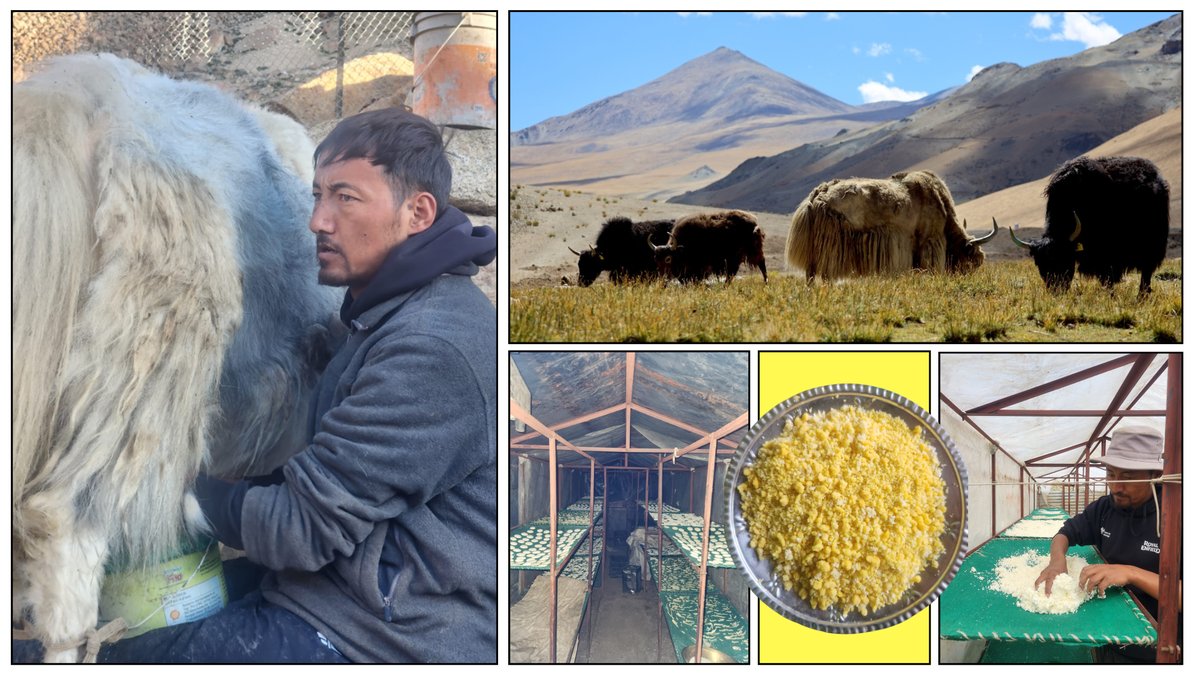
    It is 1°C in the highland pastures of Ladakh’s Changthang region, and first light is just breaking as Thenlay Nurboo bundles up in a thick yak wool sweater and steps out of his tent. At 5.30 every morning, the 36-year-old begins milking his family’s shaggy-haired yak herd grazing at 16,600 feet. The task is slow — taking around four to five hours — and entirely manual.

    Thenlay Nurboo milking his family’s yak herd

    Thenlay Nurboo milking his family’s yak herd

    His family owns around 100 yaks, of which 50 to 60 are milked each day, yielding nearly 60 litres of milk. Each yak, Nurboo says, produces 1 to 1.5 litres. For generations, this rich milk, with its distinct earthy aroma and creamy notes, has been turned into butter, buttermilk and cheese — food essential for survival in the high-altitude landscape of Ladakh. But this April, Nurboo’s chhurpe travelled much farther than Changthang, to win a gold medal at the fourth edition of the Mundial do Queijo do Brasil, a biennial international competition for cheese and dairy products. He, however, was not there to receive it.

    Thenlay Nurboo’s soft yak chhurpe

    Thenlay Nurboo’s soft yak chhurpe

    Nurboo shares that he received the invitation only 12 days before the event, and needed a yellow fever vaccination before he could travel. He went to Delhi for the shot, only to reach the centre half an hour after it had closed. Eventually, he arranged for the cheese, a softer variant of the region’s well-known chhurpe, to be taken to Brazil through the National Dairy Development Board while he stayed back. “I did not want to waste government money,” he explains. “I had already briefed the officials [of the NDDB] about the process and told them to present the cheese.”

    Then came the unexpected news: the cheese — with its dense yet chewy texture and smoky flavour — that he had been making the same way his elders had for generations, had won gold.

    Thenlay Nurboo drying chhurpe

    | Video Credit:
    The Hindu

    For him, the award was more than just recognition for a food product. It helped settle a question he had been asking himself for years: was yak herding the right career choice? “Winning the award removed that doubt,” says Nurboo, who has been herding yaks with his parents for seven years (before which he had tried his hand at making European-style cheese with milk) and, like many young people in Ladakh, has seen tourism and other professions as offering more opportunities. In many Changthang families, in fact, children are asked to herd yak as punishment (because of its arduous nature) for not studying hard enough. “Winning made me certain that this is what I want to do; I don’t want to pursue anything else,” he adds.

    India made a successful debut at Mundial do Queijo do Brasil. Nurboo’s Yak Chhurpe-Soft was one among four Indian cheeses that won. The others were from Mumbai-based Mausam Narang’s artisanal brand Eleftheria Cheese. The company partners with family-run farms and works with both cow and goat milk to make their cheeses. Narang’s Brie-style Gulmarg won super gold, while the Brunost won gold and the Kaali Miri won silver. The cheeses were judged on their visual appeal, flavour and texture, in a blind-tasting event.

    Understanding his cheese better

    At Nomadic Farm, his roadside artisanal enterprise in eastern Ladakh, the award and a letter of appreciation from President Droupadi Murmu are displayed prominently. Here, the yak cheese sells for ₹2,000 per kilo. Its distinctive character comes from the traditional way it is made, and the yaks’ natural diet.

    “A large proportion of what the animals eat are medicinal plants across the Himalayan region,” says Nurboo, adding that the judges also appreciated the cheese’s smoky flavour, which comes from using yak dung as fuel during cheesemaking. “I have not formally studied cheesemaking, but I have tried making cheeses like [French] Tomme and [Spanish] Manchego. We cannot compete with European cheeses because they require large quantities of milk. So, we will continue to follow our traditional practices.”

    Thenlay Nurboo in Ladakh’s Changthang region

    Thenlay Nurboo in Ladakh’s Changthang region

    “Now, cheesemakers around the world choose to name their cheeses, to give it an identity. Chhurpe is a generic term that refers to many different types of cheeses made across the Himalayas. It can range from something soft and fresh to the super hard variety that is sold in the U.S. as dog treats. So, I hope he names his award-winning cheese and gives it its own identity”Shalini PhilipCo-founder of The Farm

    The recognition has meant that demand for yak milk, lassi, cheese and butter has increased in the last four months, and more locals and tourists are dropping by to learn about the products. “I tell them the story behind the cheese, about the yak herds and the altitudes at which they graze,” says Nurboo, who has been receiving queries from restaurants in cities like Mumbai. But, for the moment, he wants to stay small and artisanal. “Supplying to restaurants means I have to produce cheese in large quantities. For that, I’ll need a large herd of more than 300 yaks, and enough pasture land for them, which isn’t feasible. So, exports and large orders to hotels are not possible at the moment.”

    Behind the making of chhurpe

    Chhurpe begins with fresh milk. It is heated to around 32°-35°C, depending on the weather. A few drops of culture is added, and the milk is allowed to ferment overnight. The following morning, it is churned for an hour. Traditionally, this was done using a skyalpa, a churn made from goat or sheep skin. Today, Nurboo uses a machine capable of churning 60 litres an hour.

    Once the butter and lassi are separated, the butter is sold or made into ghee, while the lassi is boiled to produce cheese, which resembles ricotta when fresh. “It is drained for three to four hours, dried [pictured above] and made into a dough,” says Nurboo. “Weather plays a critical role. In summer, when the yaks graze on fresh grass, the butter and cheese are richer, more yellow and flavourful. In winter, when grass is scarce, they are lighter in colour and contain less fat.”

    Meanwhile, the Animal Husbandry Department has helped Nurboo refine production standards to meet international hygiene and quality benchmarks. “Earlier, the cheese was dried on parachute cloth, leaving it exposed to dust and birds,” he says. “The department has now provided cheese-drying shelves that allow it to dry faster and more cleanly.” The final products include hard dried chhurpe, powdered cheese and a sweet cheese that Nurboo has recently introduced (which is sweetened with sugar before drying). The cheeses can be stored for up to two years.

    But the interest is encouraging Nurboo to understand his cheese better. For instance, he now knows that yak cheese is particularly rich in protein. “After extracting the cheese, the residue, known as churku, is also high in protein. I am planning to make protein drinks from it,” he says.

    A gutti aloo, samphire and chhurpe soup at Papa’s

    A gutti aloo, samphire and chhurpe soup at Papa’s

    Local food to tasting menus

    Nurboo is very aware of the paradox of his success. A cheese whose origin story is rooted in survival, made by a community that needed a way to preserve milk to last through their brutal winters, is now being celebrated as a luxury — with people discussing its tasting notes like they would Gruyère cheese’s caramel complexity or Iberian ham’s acorn-fed flavour. The question is: will its indigenous nature survive untouched?

    “Chhurpe has always been a part of Himalayan kitchens. But to attain a wider audience, cheesemakers may either have to adopt western techniques or evolve traditional methods into something that has international appeal,” says Shalini Philip, co-founder of The Farm, an integrated dairy farm and restaurant in Chennai, and a pioneer in India’s artisanal cheese movement. “Once it is on tasting menus and fancy tables, sometimes it could mean that the indigenous people can no longer afford their own food.”

    Smoked chhurpe hanging in a street market stall

    Smoked chhurpe hanging in a street market stall
    | Photo Credit:
    Getty Images/iStock

    On the flip side, it could become a great way to discover another side of Ladakh. “Instead of taking a flight to Leh and driving up to Khardung La Pass to check it off a bucket list, people can get an insight into aspects of the culture they wouldn’t otherwise know,” adds Philip.

    Chef Nilza Wangmo, who runs Alchi Kitchen, a popular 40-seater that serves classic Ladakhi food, sees considerable potential in the cheese. She uses dried chhurpe in soups (the potato yak cheese soup is a favourite) and fresh cheese in salads with spring onions and coriander where you can taste its “distinct, slightly tangy flavour”. Fresh chhurpe, she feels, could become an alternative to paneer, and the wider recognition it is enjoying now “could help preserve Ladakh’s pastoral traditions while improving the livelihoods of yak herders”.

    Chef Nilza Wangmo of Alchi Kitchen

    Chef Nilza Wangmo of Alchi Kitchen

    Where have the yaks gone?

    Ironically, the award comes at a time when yak herding is facing multiple challenges. Yaks are raised at altitudes between 13,000 and 17,000 feet. Climate change is altering the landscape on which the animals depend. Glaciers are retreating and snowfall has declined. “Earlier, we used to receive a lot of snow, but now there is more rain,” Nurboo says. While this has led to greener mountain slopes, in the long run, if snowfall declines further, freshwater springs could dry up.

    A yak near Tso Kar lake in Ladakh

    A yak near Tso Kar lake in Ladakh
    | Photo Credit:
    Getty Images/iStock

    Yak rearing has also reportedly declined by nearly 50% across the Changthang region. Better employment opportunities are taking youngsters away from traditional careers. In fact, Nurboo’s family is the only one selling yak milk in their village.

    “I hope the award will inspire more young people in Ladakh to see yak herding as a viable and sustainable livelihood. A farmer’s family can produce and sell many products instead of depending only on government jobs or seasonal work such as driving taxis.”Thinlay NurbooYak herder and cheesemaker

    Add to this the economics of yak herding. Yak wool has little commercial value. While pashmina, Ladakh’s most prized product, may fetch ₹6,000 to ₹8,000 a kilo, yak wool sells for only around ₹600 and has few buyers despite its potential. The wool can be used for blankets, shawls and sweaters, and to make chali or mats. The traditional rebo tent, a staple of the pastoral nomads made from woven yak wool, is waterproof and can last up to 15 years. “The quality and potential are there, the question is why are we not making better use of them,” asks Nurboo.

    Thenlay Nurboo herding yak in Ladakh’s Changthang region

    Thenlay Nurboo herding yak in Changthang
    | Video Credit:
    The Hindu

    He is part of a 13-member Yak Herders Association formed five years ago to promote yak-based dairy products and improve the livelihoods of herders. They are advocating for the legalisation of yak meat too, which could potentially double farmers’ incomes, they believe. The Association is also asking for a National Research Centre for Yak to aid in the development of yak husbandry and related products.

    The award could help change things for Changthang. “Now, young people may see the potential in dairy farming,” says Konchok Norgay, a local entrepreneur. “Today, people are health conscious, and there is a huge demand for fresh, quality products. I see a lot of scope in the dairy sector, and I believe many more youngsters will take it up in the future.”

    Sustainable livelihoods

    More than gaining a global audience, for Nurboo, the gold medal is a validation of the knowledge, food systems and livelihoods that have enabled communities to survive in one of the world’s most toughest landscapes. “If I had sold all my yaks and invested in tippers or JCBs like many others, it would not have been sustainable,” he says. For instance, during the pandemic, when tourism and businesses came to a standstill, his family’s way of life continued as usual.

    Nurboo herds his yak along with his nephew

    Nurboo herds his yak along with his nephew

    “Tourism is seasonal, but this work goes on throughout the year. We need to help young people understand the importance of sustainable livelihoods in Ladakh,” says Nurboo. The future of the yak, according to him, is tied not only to cheese, but to the survival of a way of life.

    The senior journalist from Ladakh writes on the region’s environment, culture and public affairs.
    READ ALSO

    Rishabh Pant appeals to CM Dhami: Help me buy land in Uttarakhand, I want to come home

    Don’t stop at questioning things, have courage to find solutions: PM at IIT convocation


    Source link

    Related Posts

    Rishabh Pant appeals to CM Dhami: Help me buy land in Uttarakhand, I want to come home
    India

    Rishabh Pant appeals to CM Dhami: Help me buy land in Uttarakhand, I want to come home

    August 10, 2026
    Don’t stop at questioning things, have courage to find solutions: PM at IIT convocation
    India

    Don’t stop at questioning things, have courage to find solutions: PM at IIT convocation

    August 10, 2026
    Towards nutritional literacy: navigating food labels, social media feeds and traditional wisdom to arrive at better diets 
    India

    Towards nutritional literacy: navigating food labels, social media feeds and traditional wisdom to arrive at better diets 

    August 9, 2026
    What does the Centre’s opposition to creamy layer for SC/STs entail? | Explained
    India

    What does the Centre’s opposition to creamy layer for SC/STs entail? | Explained

    August 9, 2026
    Many aspects of Ayodhya Ram temple donation ‘theft’ probe done: U.P. Police
    India

    Many aspects of Ayodhya Ram temple donation ‘theft’ probe done: U.P. Police

    August 9, 2026
    NEET-UG paper leak: What CBI chargesheet reveals about conspiracy, accused, modus operandi? | Explained
    India

    NEET-UG paper leak: What CBI chargesheet reveals about conspiracy, accused, modus operandi? | Explained

    August 9, 2026
    Next Post
    Oman steps up efforts to contain oil spill in Dhofar; no impact on desalination plants

    Oman steps up efforts to contain oil spill in Dhofar; no impact on desalination plants

    POPULAR NEWS

    2026 Regional and International Conventions of Jehovah’s Witnesses

    2026 Regional and International Conventions of Jehovah’s Witnesses

    July 7, 2026
    Løkke is personally disappointed with the United States, which is celebrating its 250th birthday

    Løkke is personally disappointed with the United States, which is celebrating its 250th birthday

    July 9, 2026
    Petkovic leaves “The Greens” with two months’ compensation – Al-Shorouk Online

    Petkovic leaves “The Greens” with two months’ compensation – Al-Shorouk Online

    July 6, 2026
    Thaksin, Yingluck and Paetongtarn meet Indonesian President Prabowo for investment talks

    Thaksin, Yingluck and Paetongtarn meet Indonesian President Prabowo for investment talks

    July 13, 2026
    India’s imports from China soar to $80 billion in first half of 2026, exports up 37%

    India’s imports from China soar to $80 billion in first half of 2026, exports up 37%

    July 16, 2026

    EDITOR'S PICK

    Education system not working, needs reform: PM

    Education system not working, needs reform: PM

    August 3, 2026
    The companies that sell the most, earn the most, lose the most, the largest and the most profitable in Colombia

    The companies that sell the most, earn the most, lose the most, the largest and the most profitable in Colombia

    July 28, 2026
    Trump picks longtime aide Will Scharf as new top White House lawyer

    Trump picks longtime aide Will Scharf as new top White House lawyer

    August 9, 2026
    STATEMENT: OECS Director General ‘In tribute to Sir Garfield St Aubrun Sobers (1936–2026)’

    STATEMENT: OECS Director General ‘In tribute to Sir Garfield St Aubrun Sobers (1936–2026)’

    July 18, 2026

    Recent Posts

    • Oman steps up efforts to contain oil spill in Dhofar; no impact on desalination plants
    • When a yak herder from India made a big impact internationally
    • Time to end GECOM’s two-party grip – Carter Center tells Govt.August 6, 2026
    • With ‘The Galloping Cure’ in Edinburgh, Missy Mazzoli Tackles the Opioid Crisis

      © 2026 Agentially - Navigating shifting sovereignties and global risk .

      Welcome Back!

      Login to your account below

      Forgotten Password?

      Retrieve your password

      Please enter your username or email address to reset your password.

      Log In
      No Result
      View All Result
      • HOME
      • AMERICAS
        • Argentina
        • Brazil
        • Canada
        • Chile
        • Colombia
        • Costa Rica
        • Cuba
        • Dominican Republic
        • Ecuador
        • El Salvador
        • Greenland
        • Guatemala
        • Honduras
        • Mexico
        • Nicaragua
        • Panama
        • Paraguay
        • Peru
        • United States
        • Uruguay
        • Venezuela
      • ASIA-PACIFIC
        • Australia
        • Brunei Darussalam
        • Cambodia
        • China
        • Federated States of Micronesia
        • Fiji
        • Indonesia
        • Japan
        • Kiribati
        • Laos
        • Malaysia
        • Marshall Islands
        • Mongolia
        • Myanmar
        • Nauru
        • New Zealand
        • North Korea
        • Palau
        • Papua New Guinea
        • Philippines
        • Samoa
        • Singapore
        • Solomon Islands
        • South Korea
        • Taiwan
        • Thailand
        • Timor-Leste
        • Tonga
        • Tuvalu
        • Vanuatu
        • Vietnam
      • CARICOM
        • CARICOM – Non-English
          • Haiti
          • Suriname
        • CARICOM Associates
          • Anguilla
          • Bermuda
          • British-Virgin-Islands
          • Cayman-Islands
          • Curacao
          • Turks-and-Caicos
        • CARICOM English
          • Antigua and Barbuda
          • Barbados
          • Belize
          • Dominica
          • Grenada
          • Guyana
          • Jamaica
          • Montserrat
          • Saint Kitts and Nevis
          • Saint Lucia
          • Saint Vincent and the Grenadines
          • The Bahamas
          • Trinidad and Tobago
      • EURASIA
        • Armenia
        • Azerbaijan
        • Balarus
        • Georgia
        • Kazakhstan
        • Kyrgyzstan
        • Moldova
        • Russia
        • Tajikistan
        • Turkmenistan
        • Ukraine
        • Uzbekistan
      • EUROPE
        • Albania
        • Andorra
        • Austria
        • Bosnia and Herzegovina
        • Bulgaria
        • Croatia
        • Cyprus
        • Czech Republic
        • Denmark
        • Estonia
        • Finland
        • France
        • Germany
        • Greece
        • Holy See
        • Hungary
        • Iceland
        • Ireland
        • Italy
        • Kosovo
        • Latvia
        • Liechtenstein
        • Lithuania
        • Luxembourg
        • Malta
        • Monaco
        • Montenegro
        • Netherlands
        • North Macedonia
        • Norway
        • Poland
        • Portugal
        • Romania
        • San Marino
        • Serbia
        • Slovakia
        • Slovenia
        • Spain
        • Sweden
        • Switzerland
        • United Kingdom
      • MIDDLE EAST AND NORTH AFRICA
        • Algeria
        • Bahrain
        • Egypt
        • Iran
        • Iraq
        • Israel
        • Jordan
        • Kuwait
        • Lebanon
        • Lybia
        • Morocco
        • Oman
        • Palestinian Territories
        • Qatar
        • Saudi Arabia
        • Syria
        • Tunisia
        • Turkey
        • United Arab Emirates
        • Western Sahara
        • Yemen
      • SOUTH ASIA
        • Afghanistan
        • Bangladesh
        • Bhutan
        • India
        • Maldives
        • Nepal
        • Pakistan
        • Sri Lanka
      • SUB-SAHARAN AFRICA
        • Angola
        • Benin
        • Botswana
        • Burkina Faso
        • Burundi
        • Cabo Verde
        • Cameroon
        • Central African Republic
        • Chad
        • Comoros
        • Cote d’Ivoire
        • Democratic Republic of the Congo
        • Djibouti
        • Equatorial Guinea
        • Eritrea
        • Eswatini
        • Ethiopia
        • Gabon
        • Gambia
        • Ghana
        • Guinea
        • Guinea Bissau
        • Kenya
        • Lesotho
        • Liberia
        • Madagascar
        • Malawi
        • Mali
        • Mauritania
        • Mauritius
        • Mozambique
        • Namibia
        • Niger
        • Nigeria
        • Republic of the Congo
        • Rwanda
        • Sao Tome and Principe
        • Senegal
        • Seychelles
        • Sierra Leone
        • Somalia
        • South Africa
        • South Sudan
        • Sudan
        • Tanzania
        • Togo
        • Uganda
        • Zambia
        • Zimbabwe

      © 2026 Agentially - Navigating shifting sovereignties and global risk .

      This website uses cookies. By continuing to use this website you are giving consent to cookies being used. Visit our Privacy and Cookie Policy.