Every bottle abandoned on a beach, every packaging washed up by the sea and every fragment of plastic that reaches the coast holds a history.
READ ALSO
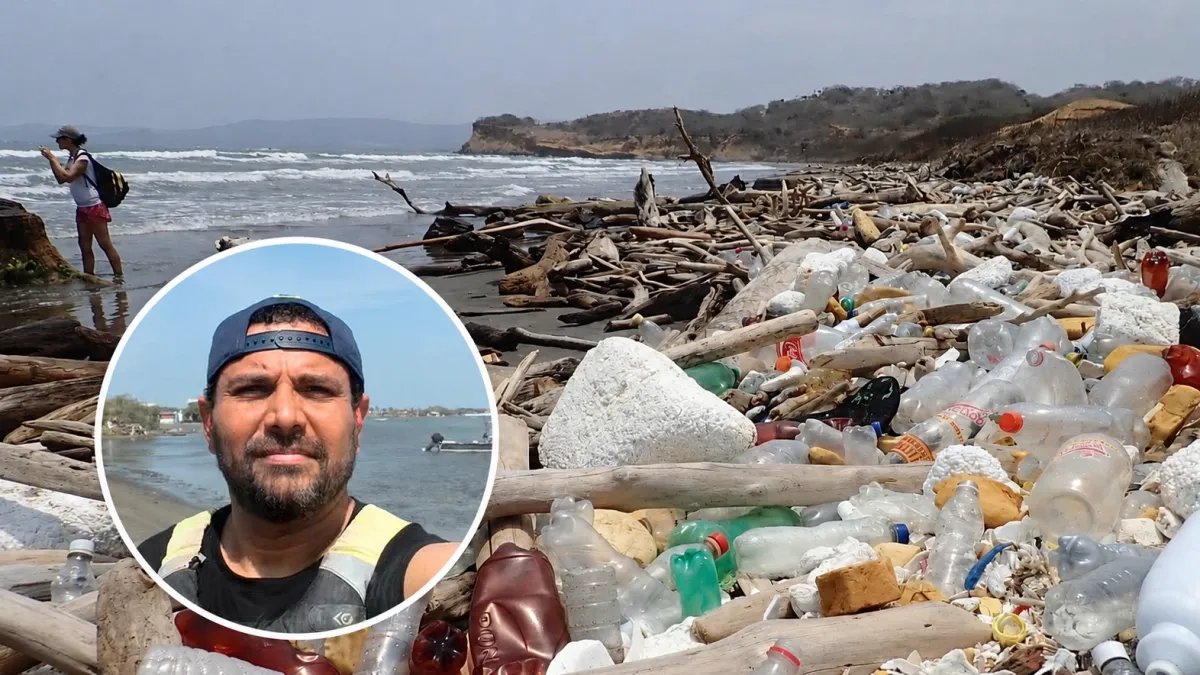
For decades, scientists simply counted this waste and measured its environmental impact. Now, a group of researchers led from Barranquilla found a way to trace them back to their origin.
The discovery, led by professor Nelson Rangel-Buitragofrom the Universidad del Atlántico, allows us to identify not only what type of plastic contaminates the beaches, but also the trademark and the company that put it into circulation.
The research was published in the international scientific journal Anthropoceneone of the publications specialized in the study of the human footprint on the planet, and poses a new methodology to understand one of the most serious environmental problems of the oceans: pollution from plastic waste.
For decades we have counted and weighed plastic trash, but rarely connected it to its industrial origin. This system allows us to read a beach as an archive of consumption and production, not just as a pile of waste.
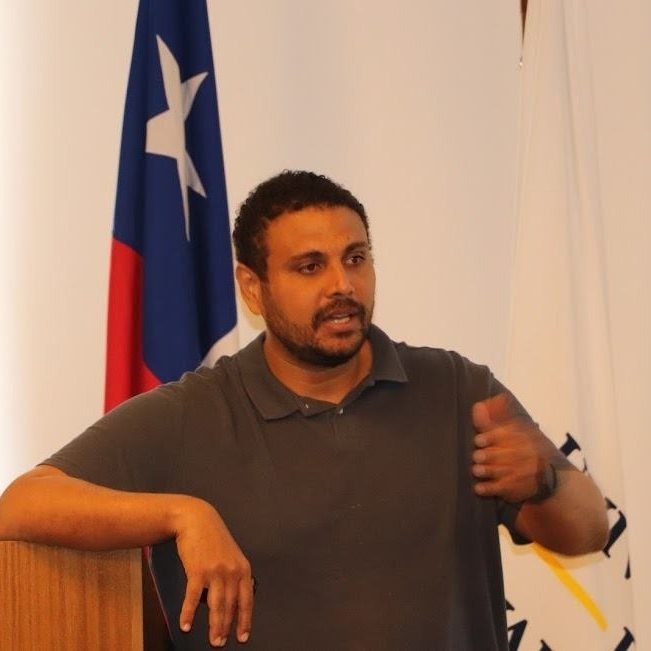
nelson rangelResearcher Universidad del Atlántico
“For decades we have counted and weighed plastic trash, but we have rarely connected it to its industrial origin. This system allows reading a beach as an archive of consumption and production“I don’t just eat a lot of waste,” he explained. Nelson Rangel-Buitragolead author of the study.
follow the trail of pollution
The scientific proposal is called Taxonomy-Inspired Hierarchical Classification of Plastic Waste (THCPL).
Remains of stranded wood and plastic on a beach. Photo:Courtesy Nelson Rangel Buitrago
The method takes as a reference the system used by biology to classify living beings and adapts it to the study of plastic waste. Just as animals and plants are organized into categories such as phylum, class, order, family, genus, and species, researchers developed a similar structure to classify plastics from its basic composition to the specific product, brand and manufacturer.
The result is a tool capable of rebuild waste traceability found in the environment and generate valuable information to understand how the production and consumption chains behind marine pollution work.
READ ALSO
For researchers, this methodology can become a fundamental instrument to strengthen public policies oriented to the reduction of waste and the application of mechanisms of Extended Producer Responsibilitythrough which companies assume part of the management of the packaging they put on the market.
He Colombian Caribbeanprotagonist of the study
The research was tested on beaches in Colombia, Panama, Brazil, Morocco, Italy and Spain, using the same international collection and analysis protocol.
However, it was a remote beach of the colombian caribbeanlocated between Galerazamba (Bolívar) and Punta Astilleros (Atlántico), which provided the most surprising results.
Galaerazamba beaches, in the department of Bolívar. Photo:Guillermo Melendez
Despite being in an area with little direct human intervention, the place registers a huge accumulation of waste dragged by sea currents and floating materials.
There, the researchers identified 118 different producers, 181 trademarks and 214 specific productsfigures that far exceeded those recorded in the other participating countries.
According to the authors, this diversity reflects the complexity of consumption patterns present in Colombia and shows how waste can travel long distances before ending up deposited on the beaches.
The most common brands found in the waste
Among the producers identified most frequently within the set of plastic waste analyzed, some of the most recognized companies of the food and beverage sector.
The Coca-Cola Company topped the list with a participation of 10.6%followed by Postobon SA with 7.9%, Bavaria-Anheuser-Busch InBev with 7.5%, Diana Group with 7.5% and PepsiCo with 6.4%.
The researchers clarify that these results They do not constitute an accusation nor an attribution of legal responsibility against companies.
General appearance of the beaches of Punta Astillero, in the municipality of Piojó, Atlántico. Photo:Atlantic Governorate
On the contrary, they explain that the system is exclusively descriptive and seeks to offer verifiable scientific evidence on the products that end up forming part of coastal pollution.
“The objective is not to point blame, but generate information that allows better understand the dynamics of production, consumption and disposal of waste,” the authors point out.
The plastics, the fossils of the future
The study also raises a background reflection about the environmental legacy that humanity is leaving behind.
Plastic waste found on a beach in the Colombian Caribbean. Photo:Courtesy Nelson Rangel
Currently, plastics represent among the 80% and 85% of all the marine litter of the planet. Their resistance to degradation makes them one of the most visible traces of the Anthropocenethe geological era defined by human influence on ecosystems.
For that reason, the research team proposes to interpret these residues as authentic “technofossils“, that is to say, material remains of our production and consumption habits that could remain for centuries or even millennia in the geological records of the future.
READ ALSO
For Colombia, where the plastic pollution increasingly affects coastal ecosystems, mangroves, beaches and marine protected areas, the methodology developed by the Universidad del Atlántico opens a new possibility: transform scattered trash into useful scientific information to make decisions and protect ecosystems.
Beyond identifying waste, the study shows that each fragment of plastic tells a story and that, for the first time, science has a tool to find out who wrote it.
LEONARDO HERRERA DELGANS journalist EL TIEMPO Barranquilla, write to me at leoher@eltiempo.com and at X:@leoher70
Don’t stop seeing
You may be interested. Photo: