Luz Stella Murgas will become president of Andi with two discussions that will test the dialogue between the business community and the Government. The tax reform and fiscal adjustment and the increase in the minimum wage will require seeking agreements between the resource needs of the State, the income of workers and the conditions to invest and generate employment.
Bruce Mac Master’s successor believes that the country needs a fiscal adjustment and warns that cutting spending will not be enough to clean up public finances. But it also calls for room for economic growth. Andi created a committee to study the rescue law and build proposals based on the impacts that its technical team has been evaluating.
In an interview with EL TIEMPO, Murgas proposes a relationship with the Government based on trust, dialogue and autonomy of judgment. It talks about energy costs, security and investment rules, as well as technological changes and international risks that companies will have to incorporate into their long-term plans.
READ ALSO
You come to Andi in a complex economic situation with great challenges, one of these, the discussion of a new tax reform. How to address that situation?
There is a national consensus on the need for fiscal adjustment to balance the deficit and debt. Without this adjustment, these indicators will grow unsustainably. But another way to boost the economy and generate balance is growth, which is achieved with investment and the competitive conditions that the country provides. Cutting public spending alone will not solve the situation of public finances. Andi will contribute, with technical rigor, to building the best adjustment for Colombia, with two objectives: immediate cash and economic growth.
How do you think the approach with the Government should be for this and other issues?
The objectives of the business sector are not different from the objectives of the country. You have to build trust and have the ability to dialogue between all actors. Andi has shown that, with autonomy of judgment, she can build consensus and point out points that need to be improved. He will continue to have dialogue with all governments and actors. The National Board of Directors formed an accidental committee for the rescue law. The technical team had already made progress in evaluating impacts and projecting scenarios, with data and figures useful for debate.
Does it mean that a specific proposal already exists?
I barely arrived, but we are working with a sense of urgency. When we have a more grounded proposal, we will consult it with all the actors in a responsible conversation.
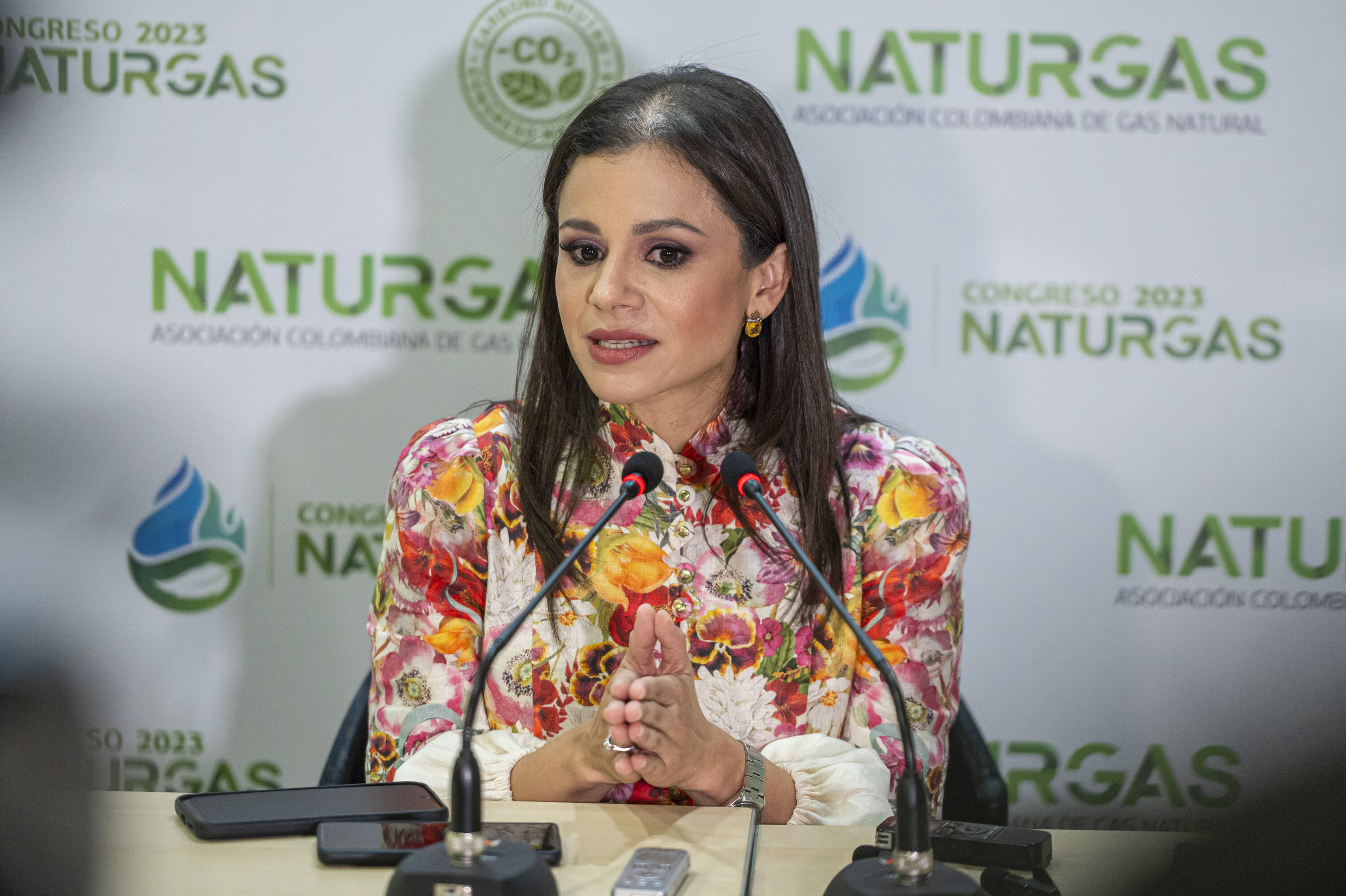
“(Andi) will continue to have dialogue with all governments and actors”: Luz Stella Murgas. Photo:Presidency
What do you think is the biggest obstacle to reactivating the industry today?
The biggest challenge is to grow, and for that we have to improve competitiveness. Today it is affected by the availability of reliable, safe and efficient energy. Not having a sufficient supply of electricity and gas has led us to import, with an impact on production costs. Also legal security. Without predictable, stable and long-term rules, the decision to invest is affected. We have had tax reforms almost every two years so far this century, and of course that affects the investment decision. Physical security affects operations, both in urban and rural areas. Our tax system has taxes on profits and on the activity itself, such as four per thousand, parafiscal taxes, wealth taxes, and industry and commerce taxes. It is a structural conversation. The business sector has the capacity to transform territories, generate employment and create opportunities.
But is there room to reduce taxes on the industry without postponing the fiscal adjustment?
I think there is a space in the process in Congress. We are reviewing the impacts to participate with a proposal that allows us to balance cash and growth objectives. The situation is critical and we are all aware. Until we have that proposal, I wouldn’t dare mention anything concrete.
You mentioned the issue of energy. How to guarantee the necessary supply for the industry?
Energy issues are no longer sectoral, they are transversal to the entire economy and the quality of life of families. We do not have enough firm supply of electricity or gas to cover the needs. With the El Niño phenomenon, more gas is required to guarantee the reliability of the electrical service. There are two new plants to add imported gas, one in Buenaventura, small-scale, which would enter at the end of this month, and another in Cartagena, large-scale, scheduled for February. It is important that there are no delays. Since October, 58 million cubic feet have also been added by the SPEC plant. These projects will allow supply to be met during El Niño. The challenge is competitiveness, because we are subject to the volatility of the international market.
Pacific Regasification Plant Photo:Pacific Regasification Plant
How does Andi arrive at the minimum wage negotiation?
Colombia needs workers to have better incomes and protect the source of employability. Beyond the number, the debate must introduce these two variables, in addition to those determined by law. The tables have not begun their formal installation. With inflation and productivity indicators we can have a sensible conversation. It would be irresponsible to talk about a number without sitting down to find out what the Government, the unions and pensioners think. It is a discussion that is related to the rescue law.
What do you think of the concept of minimum living wage?
It will be part of the debate, but the law has identified criteria on which we must work. We must focus on improving income in the face of inflation and other factors that affect the pocketbook, and protecting the source of employment. Young people arrive who also need opportunities.
How to promote the search for markets abroad?
It is a medium and long-term discussion, thinking about five or ten years. Companies transcend economic cycles and technological changes. There are two aspects that you should consider in your planning. One is digitalization and technological advances, in the face of which we have to accelerate the pace so as not to be left behind. The other is the international context. The risks of geopolitical conflicts are no longer temporary and are part of the new global order. We must include them in industrial planning and public policies to boost productivity.
READ ALSO

Three months after the earthquake, what about the contributions from the private sector for the victims and reconstruction?
Colombia is united, with businessmen, the National Government and local governments. The earthquake deepened the cash needs to recover homes, infrastructure, public services, educational institutions and small businesses. The business community has shown its commitment with its economic contribution and as part of the coordination led by the Government. We will continue to provide solutions for the affected departments.
But this reconstruction can also help economic recovery…
Without a doubt, that is why we have to work with the accelerator, because families need prompt solutions. In the earthquake there has been a concerted effort and the business sector remains committed to the recovery of these areas.